Last updated October 30, 2026
 Water damage drying
 Fire & smoke cleanup
 Mold remediation
 Storm response
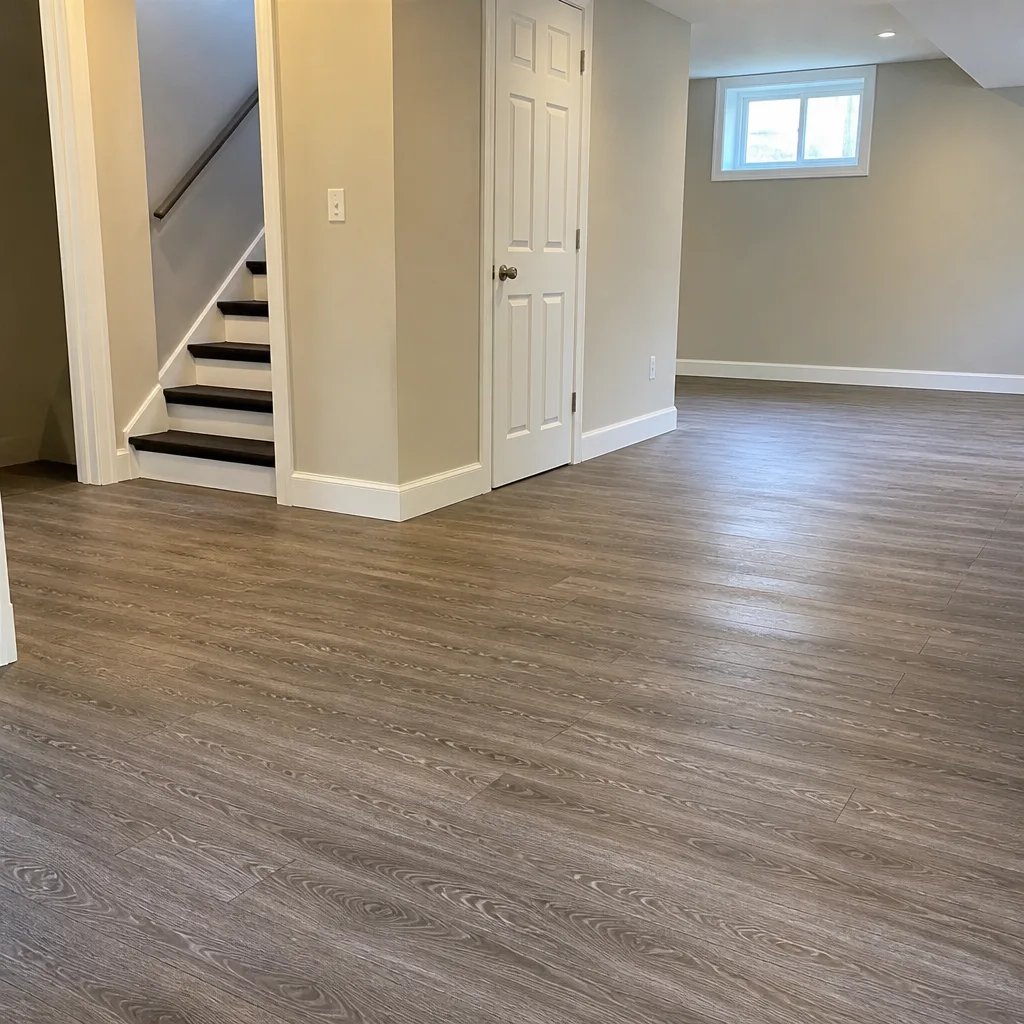 Sewage cleanup
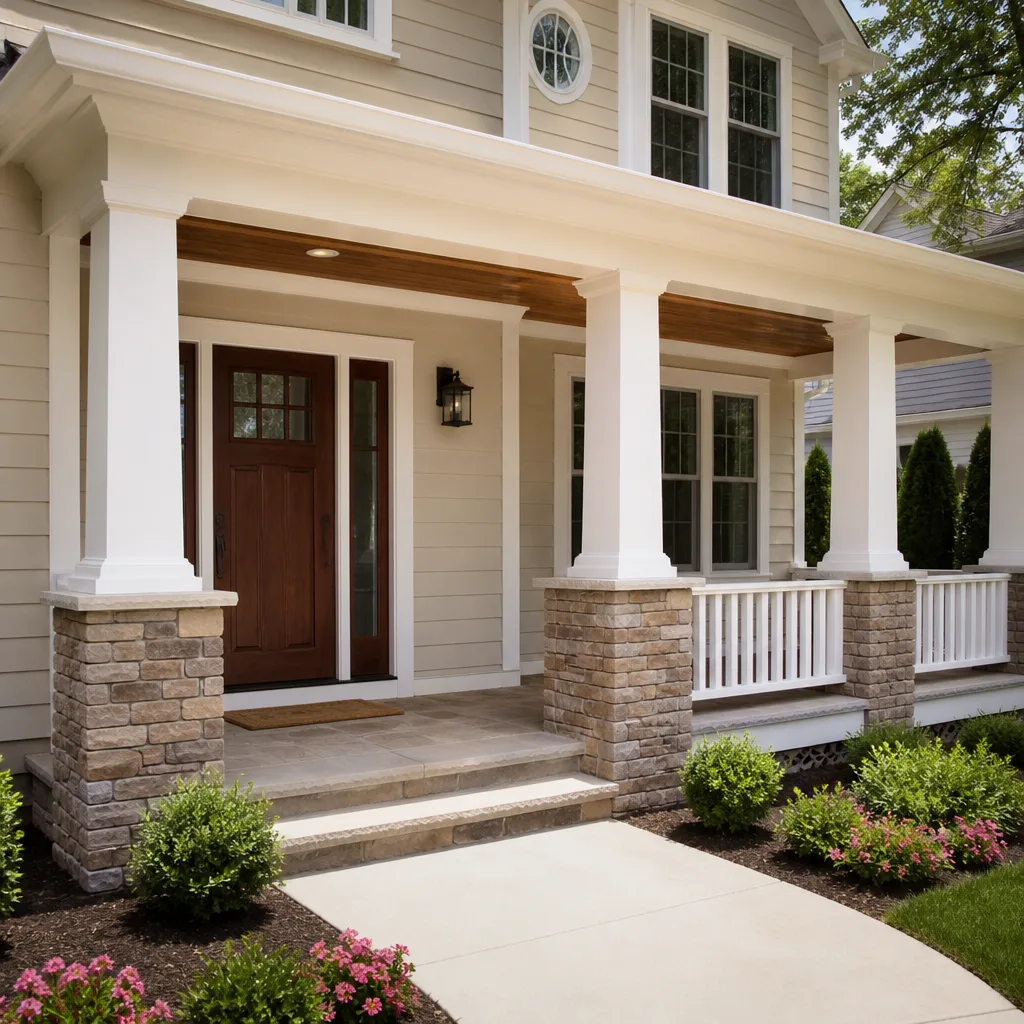 Reconstruction
Free visual inspection and a written scope of work before any mitigation begins - photos, moisture readings, and drying logs go in your claim file
The scope we write is the scope we bill. Anything new gets shown to you, in writing, before we touch it.
Get your free estimateThe Complete Water Damage Restoration Guide for Rialto Homeowners
A drywall patch and a box fan is not Water Damage Restoration services, but that’s what hundreds of Rialto homeowners receive every year, and their insurance claims prove it when mold shows up six months later. The truth is, water damage in Rialto follows predictable patterns, and the difference between a $1,500 cleanup and a $40,000 rebuild often comes down to whether the first crew on site followed a documented, verifiable process or just made the visible surface look dry. This guide gives you the contractor-level checklist we use internally, so you can verify every phase from moisture mapping to final clearance, and know exactly what should happen before anyone puts a hammer to your walls.
Quick Answer
Water damage restoration in Rialto is a multi-phase process governed by the IICRC S500 standard: emergency extraction, controlled structural drying with professional equipment, moisture monitoring with documented readings, and reconstruction only after drying goals are met. For related more guides & resources, see our blog. A legitimate restoration takes three to five days for drying alone in Rialto’s Inland Empire climate, and any contractor who skips moisture mapping, daily monitoring logs, or a final drying certificate is leaving you with a future mold problem, not a completed restoration.
Restoration work we handle
Table of Contents
- The S500 Standard: What Your Restoration Is Legally Required to Include
- Why Rialto’s Climate Changes Drying Timelines (And What It Means for Equipment)
- Moisture Mapping and the Psychrometric Report: How to Verify Drying Actually Happened
- Permits in Rialto and San Bernardino County: What Unlicensed Crews Skip
- Insurance Documentation: Speaking Xactimate So Your Adjuster Can’t Deny the Claim
- The Extraction and Drying Process, Step by Step
- Cavity Drying and Why It Saves Rialto Homeowners Thousands
- When Reconstruction Begins: The Gate You Should Never Let Anyone Rush
The S500 Standard: What Your Restoration Is Legally Required to Include
The IICRC S500 is the restoration industry’s reference document for professional water damage restoration. It’s not a law, but it’s the standard that insurance adjusters, courts, and legitimate restoration contractors use to determine whether a job was done correctly. When we say our team is IICRC-certified, that certification is specifically tied to understanding and applying this standard. Here’s what the S500 actually requires at each phase, and what cut-rate companies quietly skip.
The standard breaks water damage into three categories based on contamination level. Category 1 is clean water from a supply line or broken pipe. Category 2 is gray water with some contamination, like washing machine overflow or a toilet overflow without solid waste. Category 3 is black water, meaning sewage, flood water, or any water that has been sitting long enough to grow bacteria. Each category has different safety protocols, different antimicrobial requirements, and different demolition thresholds. A restoration company that treats every job the same is not following the S500 standard, and the consequences of disinfecting a Category 3 flood like a Category 1 spill are serious.
The S500 also mandates that any affected porous material, drywall, carpet pad, insulation, or structural wood, must either be dried to a documented moisture content that matches its pre-loss state or be removed. The keyword there is documented. A contractor can tell you everything is dry. The standard requires a moisture meter reading, recorded, with the material type and location, at multiple points across the affected area. We provide this as a daily moisture log, and we hand it to our Rialto customers and their adjusters because the S500 framework treats unverifiable drying as non-existent drying.
What do cut-rate crews skip in practice? The antimicrobial step. The containment barrier when demolition creates dust. The drying chamber air filtration. The final clearance documentation. Each skipped step shaves a few hundred dollars off the bid, and each skipped step is a documented liability when mold appears later. A box fan moves air. It doesn’t remove water vapor from the structure. If your restoration plan doesn’t include a dehumidifier sized to the affected cubic footage, it’s not restoration. It’s air circulation.
Why Rialto’s Climate Changes Drying Timelines (And What It Means for Equipment)
Rialto sits in the Inland Empire, and its drying climate is meaningfully different from coastal Los Angeles. Summer days routinely reach the high 90s with single-digit relative humidity. Fall and winter bring the Santa Ana winds, which drive humidity down further while raising temperatures. This matters because structural drying is governed by vapor pressure differential, the difference between the moisture in the material and the moisture in the surrounding air. In Rialto’s dry season, a low-humidity interior can actually accelerate surface evaporation, which sounds good until you understand that rapid surface drying can seal moisture into wall cavities and subfloor layers, creating the exact conditions for hidden mold growth behind a dry-to-the-touch surface.
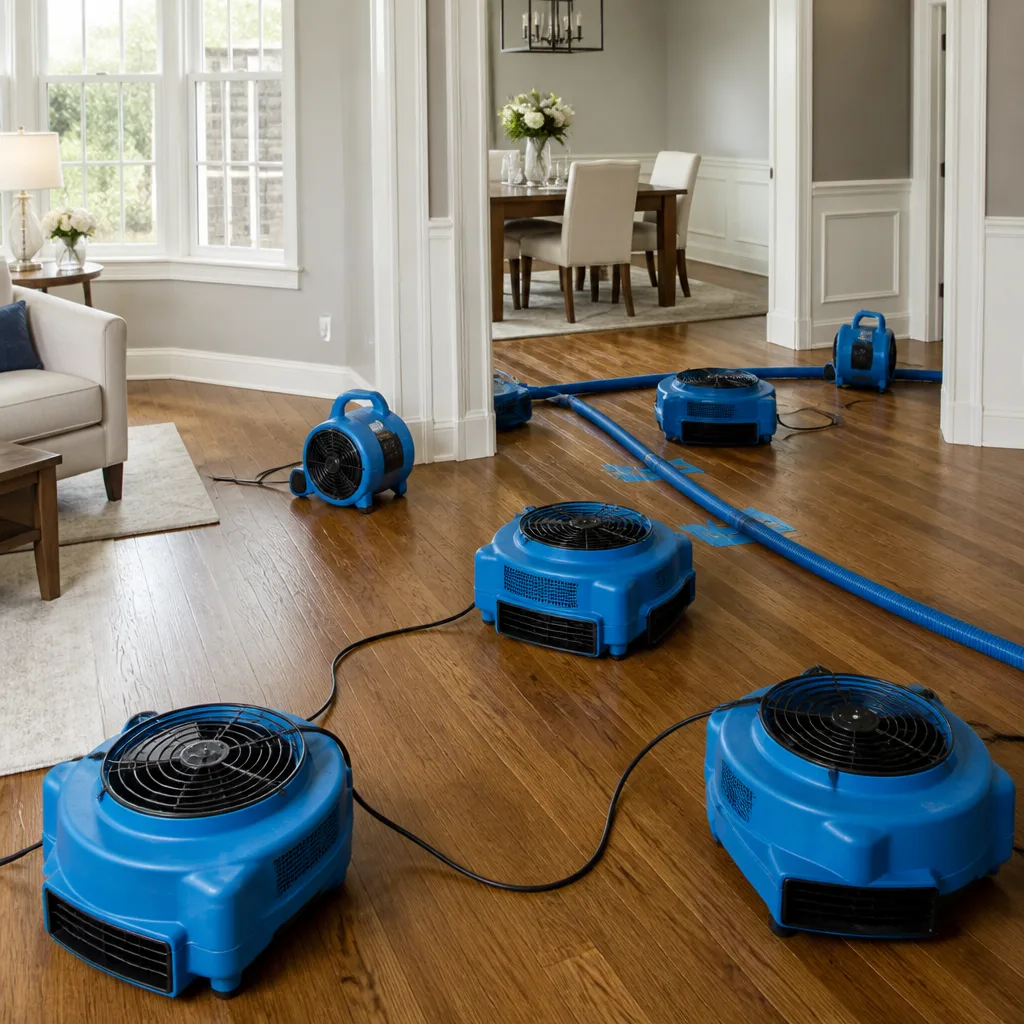
This is why we run LGR (low-grain refrigerant) dehumidifiers differently in Rialto than a coastal restoration company would. On a dry Santa Ana day, the temptation is to open windows and let nature do the work. That’s a mistake. An uncontrolled drying environment, hot, dry, and windy, will dry the surface and trap moisture beneath it. A controlled drying chamber, sealed, with LGR dehumidifiers like Phoenix or Dri-Eaz units managing both temperature and vapor removal, keeps evaporation steady through the material rather than racing across the top of it.
Our equipment fleet includes XPOWER air movers and B-Air units for air circulation, paired with Phoenix LGR dehumidifiers sized to the cubic footage of the affected space. The calculation matters: an undersized dehumidifier in a Rialto summer will cycle off and on while the wall cavity stays wet. An oversized unit can over-dry the surface and cause checking or cracking in hardwood. We map the space, calculate the affected volume, and size the equipment accordingly. That’s what professional equipment selection means in practice, not just having a machine with a brand name on it.
Rialto’s winter is mild by national standards, but homes here are built with limited insulation, and nighttime temperatures can dip into the 30s. Cold surfaces condense moisture. A wall that tested dry at 2 p.m. on a January afternoon can test wet again at 6 a.m. the next morning. Daily monitoring at consistent times catches this. Weekly check-ins don’t.
Moisture Mapping and the Psychrometric Report: How to Verify Drying Actually Happened
Moisture mapping is the single most important step in a restoration project, and it’s the step most Rialto homeowners never see performed. Before any drying equipment is placed, a legitimate restoration team uses moisture meters and thermal imaging to identify every affected area, including areas that look dry. Water travels through building materials in predictable ways: it wicks up drywall, runs along floor joists, settles into subfloor layers, and migrates through wall cavities. What looks like a small puddle in the hallway often has a hidden path running into the adjacent bedroom wall or under the kitchen cabinets.
The moisture map should be a written document, often a floor plan with moisture readings noted at each location, showing the extent of water migration. It should include readings from unaffected areas in the same room, because those establish the baseline, or dry standard, that affected materials are being compared against. Concrete slab homes found throughout Rialto present a unique challenge: moisture trapped under vinyl plank or laminate flooring can be invisible from above. We see this regularly in older Rialto neighborhoods where slab foundations mean water moves laterally under flooring before it ever shows on the surface.
Once drying begins, the psychrometric report tracks the conditions inside the drying chamber. This report records temperature, relative humidity, and the calculated grains per pound (GPP) of moisture in the air. The number that matters is the GPP, not the relative humidity. Relative humidity is what percentage of moisture the air is holding relative to what it could hold at that temperature. GPP is the actual amount of moisture in the air. A room at 55 percent relative humidity and 85 degrees holds far more actual moisture than a room at 55 percent relative humidity and 60 degrees. Drying progresses when the GPP inside the drying chamber drops steadily over time, pulling moisture out of the building materials as it goes.
At the end of the job, you should receive a final moisture log and a drying certificate. The certificate confirms that every affected material returned to its documented dry standard. If a contractor can’t produce this document, the drying was never verified. That means the reconstruction that follows is being built on an unproven foundation. In our experience working water damage restoration in Rialto, the homes that develop post-restoration mold problems are almost always the ones where the original drying was never properly documented, not the ones where the damage was too severe to handle.
Permits in Rialto and San Bernardino County: What Unlicensed Crews Skip
Permit requirements are where legitimate restoration companies separate from unlicensed operators, and Rialto homeowners are often told permits aren’t necessary when they absolutely are. The City of Rialto and San Bernardino County require building permits for any reconstruction work that goes beyond cosmetic repair, meaning any structural framing, electrical rework, plumbing alteration, or significant drywall replacement triggers a permit. The restoration industry’s own trade associations, including RIA, the Restoration Industry Association, have long advocated for clear permitting on rebuild work because unpermitted work has a way of surfacing at resale, during refinancing, or when the next insurance claim gets denied due to undocumented prior modifications.
What about the drying phase? Structural drying itself typically doesn’t require a permit in San Bernardino County. But if drying requires opening walls, and the opening becomes demolition, and the demolition becomes rebuild, the rebuild needs a permit. The line between emergency mitigation and reconstruction is where unlicensed crews skip the process. A licensed general contractor, which is the classification that pulls rebuild permits in Rialto, knows where that line is and won’t cross it without the paperwork.
We’re affiliated with RIA and IFA, the International Facility Management Association’s indoor air quality standards body, alongside our IICRC certifications. These affiliations matter because they represent three separate layers of accountability: restoration science through IICRC, industry standards and ethics through RIA, and air quality verification through IFA. A company holding none of these affiliations can still do good work, but the absence of all three means no outside body is verifying their process, their ethics, or their results.
If an unlicensed crew performs unpermitted rebuild work in Rialto and the homeowner later files a new claim, the adjuster has grounds to deny coverage on the unpermitted portion. We’ve seen homeowners end up paying twice, once to the unlicensed crew that did the work, and again to fix it properly with permits. Ask any contractor you’re considering: will you pull a permit for the rebuild phase? The answer should be an immediate yes.
Insurance Documentation: Speaking Xactimate So Your Adjuster Can’t Deny the Claim
Xactimate is the software platform most insurance companies use to price restoration claims. It’s an industry-standard estimating system that assigns line-item costs to every material, every labor hour, and every piece of equipment used on a job. Adjusters read Xactimate estimates from contractors all day long, and they can tell within minutes whether they’re reading a legitimate scope or a padded wish list. Restoration contractors who understand Xactimate produce estimates that align with what adjusters expect, which means fewer denials, fewer delays, and faster approvals.
The key to insurance documentation is building a claim file that matches what the adjuster will see when they visit. That means photo documentation of every phase, extraction in progress, moisture readings before and after drying, equipment in place, damaged materials to be removed, and the final dried state. A written scope of work that aligns with Xactimate line items. A moisture log and drying certificate. If your contractor hands you a one-page invoice with a single line reading “water damage cleanup,” your adjuster will reject it, and the rejection will be valid because there’s no verifiable scope behind the claim.
Here’s what a claim-ready documentation package includes:
- Initial moisture map showing affected areas with readings
- Daily moisture log through the drying period
- Photographs of all equipment placed, including serial numbers
- Photographs of all damaged materials before removal
- Written scope of work itemized by room and by task
- Xactimate-compatible estimate with line items for equipment, labor, and materials
- Final drying certificate confirming all materials reached dry standard
We build every documentation package this way because we see how adjusters respond. When the scope matches the standards and the paperwork is complete, the claim progresses. When it’s vague, the adjuster requests more information, the timeline stretches, and the homeowner is left living in an unfinished space while the insurance company deliberates. Documentation isn’t bureaucracy. It’s the difference between a three-week claim and a three-month one.
The Extraction and Drying Process, Step by Step
Here’s the full sequence of a professional water damage restoration, from the moment water is first discovered through the final drying certificate. Each step builds on the last, and skipping any one of them compromises everything that follows.
- Emergency Contact and Assessment. The first call determines the source and category of water, whether it’s still flowing, and what safety hazards exist. Electrical panels, wet ceilings, and sewage all require immediate shutdown or containment before anyone enters the affected space.
- Source Shutoff and Category Classification. Water source is stopped. The water is classified as Category 1, 2, or 3 per the S500 standard, and the affected area is scoped for safety. Category 3 water requires full PPE, containment, and a different set of antimicrobial protocols than Category 1.
- Moisture Mapping and Baseline Readings. Meters and thermal imaging map every affected area, including hidden migration paths. Baseline moisture readings are recorded for affected and unaffected materials to establish the dry standard.
- Extraction. Standing water is removed using truck-mounted or portable extraction equipment. This is not the time for shop vacs. Professional extraction removes 90 percent of the water mass before drying equipment is ever placed, and the remaining 10 percent is what the drying phase addresses.
- Containment and Air Filtration. Containment barriers isolate the affected area. HEPA air scrubbers are placed to capture airborne contaminants and prevent cross-contamination to unaffected rooms, especially important when demolition is required.
- Drying Equipment Placement. Air movers are positioned to create airflow across surfaces. LGR dehumidifiers are sized to the cubic footage and placed to pull moisture from the air. In Rialto’s low-humidity climate, this often means managing a drying chamber environment rather than just opening windows and hoping.
- Daily Monitoring. Moisture readings are taken every 24 hours at consistent times and recorded. Equipment is adjusted based on progress. The psychrometric report tracks GPP reduction to confirm drying is progressing through the material, not just across the surface.
- Drying Goal Verification. Final readings confirm every affected material returned to dry standard. A drying certificate is issued. Only now is the space ready for reconstruction.
- Repair and Reconstruction. This phase is separate from drying and governed by its own scope, permits, and timeline. Drying is mitigation. Reconstruction is building back.
Here’s the piece Rialto homeowners should pay closest attention to: the extraction phase and the drying phase require different equipment and different skills. A company that shows up with only fans and no dehumidifier is not equipped for extraction or drying. A company that extracts and then immediately starts hanging drywall is skipping the verification step entirely. The process above is what you should expect, and you should expect to see the documentation from each phase.
Cavity Drying and Why It Saves Rialto Homeowners Thousands
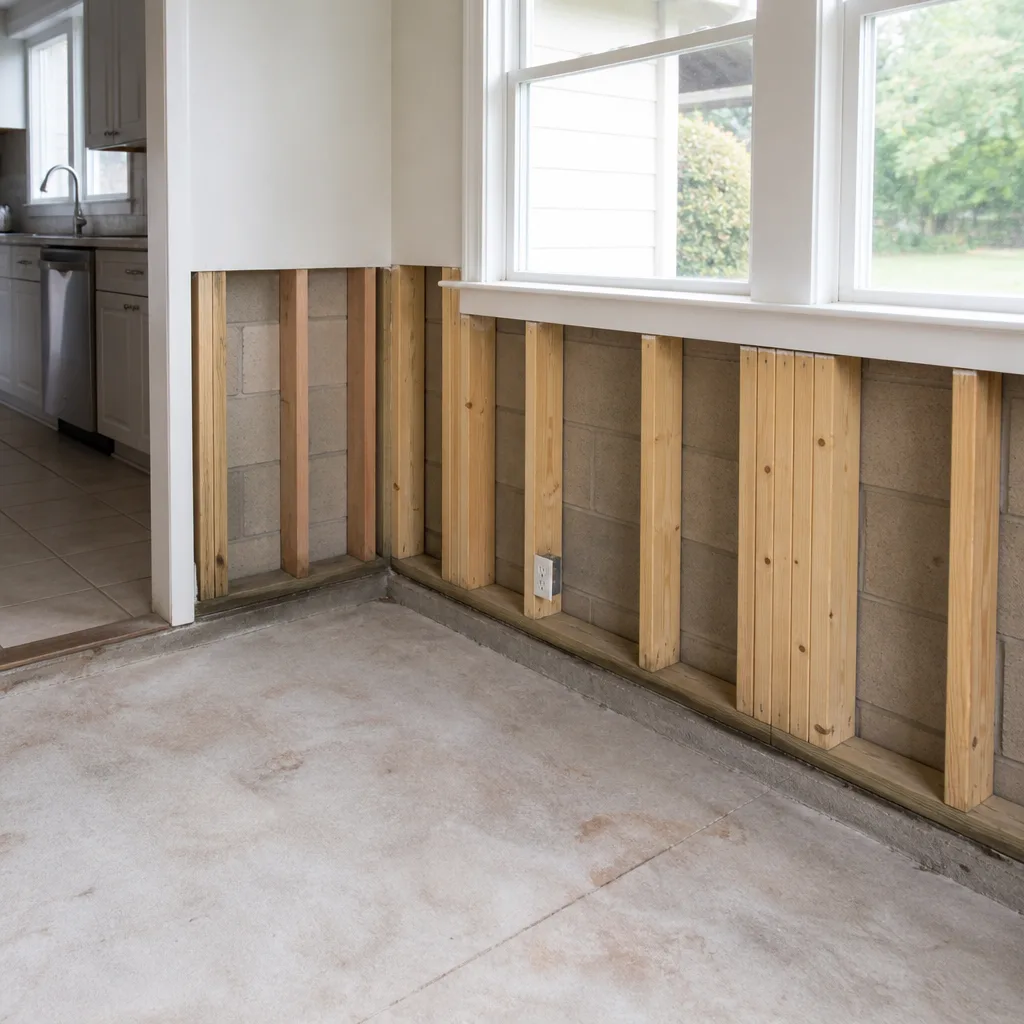
Most of Rialto’s housing stock is wood-framed construction with drywall over studs, which means water intrusion rarely stays on the surface. It travels into wall cavities, wicks up insulation, and settles into the bottom plate where the wall meets the floor. Traditional drying methods require cutting holes in the drywall to access these cavities, multiple holes per stud bay, which means extensive drywall replacement after drying completes. The demolition itself becomes a significant portion of the repair cost, often more than the drying, as detailed in our Damage Restoration Cost Breakdown: The Rialto Homeowner’s Reference for 2026.
Injectidry is a cavity-drying system that changes this equation. It forces air directly into wall cavities and under floorboards through small, strategically placed access points, drying the structural cavity without removing full sheets of drywall. The system is used by restoration professionals, including large national franchises, because it’s the most effective way to address hidden moisture while preserving building materials that don’t actually need to be removed. Water-damaged drywall that is structurally sound and not contaminated can often be saved with cavity drying. Drywall that has been saturated to the point of losing its structural integrity or that’s been contaminated by Category 2 or 3 water should still come out.
The economics of this matter for Rialto homeowners. Traditional tear-out and rebuild might run three to five times the cost of cavity drying for the same affected area. More importantly, cavity drying is often faster, because you’re not waiting for drywall to be replaced after a wet wall is torn out. You’re drying the existing structure in place. We use Injectidry systems specifically because we’ve seen the alternative too many times: walls torn open unnecessarily, homeowners paying for rebuild that could have been avoided, and project timelines stretching weeks longer than needed.
There’s a second benefit that’s easy to miss. Insurance adjusters recognize cavity drying as a legitimate line item in Xactimate. It’s not a premium service that gets denied. It’s the standard of care for preserving building materials where feasible, and adjusters prefer it because it keeps the claim total lower than full demolition and rebuild. That’s the rare alignment where what’s best for the homeowner is also what the insurance company prefers to pay for.
When Reconstruction Begins: The Gate You Should Never Let Anyone Rush
Reconstruction should never begin before drying is complete and verified. This sounds obvious, but in practice, many Rialto homeowners feel pressure to get their home back to normal as fast as possible, and some contractors are happy to oblige by hanging new drywall over a structure that still holds moisture. The result is hidden mold growth inside walls, which is worse than the original water damage because it’s invisible, it continues to spread, and it’s typically not covered by the original claim when it surfaces later.
The gate between drying and reconstruction is the drying certificate. No certificate, no rebuild. Period. If a contractor tells you they’ll finish drying after they patch the drywall, or that the remaining moisture will evaporate once the new materials are up, that contractor is telling you they don’t understand the S500 standard. Moisture trapped behind a patch or under new flooring doesn’t evaporate in a closed space. It feeds mold and it deteriorates structural materials.
Reconstruction in Rialto also requires the permits we discussed earlier. The rebuild scope should be written, approved, and permitted before work begins. This is a separate phase from mitigation, and it should be treated with the same care you’d give a remodel. If your water damage restoration company also handles mold remediation in Rialto, that’s a meaningful advantage, because the same team can address any microbial growth discovered during drying without a handoff to a separate contractor. We handle water, mold, and fire damage restoration in Rialto under one roof, which means the documentation chain stays intact from the first moisture reading through final clearance.
Here’s the contractor-level question to ask before rebuilding begins: “Show me your final moisture readings and your permit application.” If both are ready, you’re in good shape. If either is missing or delayed, delay the rebuild. Rushing this phase has never saved anyone money.
Common Mistakes to Avoid
- Assuming surface dry means structural dry. A drywall surface can feel completely dry to the touch while the wood framing behind it holds 30 percent moisture content. The only way to know is with a meter, and the only way to prove it is with a logged reading.
- Using fans instead of professional drying equipment. Box fans move air but don’t remove water vapor. Without dehumidification, the moisture stays in the building envelope and migrates to other materials. In Rialto’s dry summer air, surface drying happens fast, which makes hidden trapped moisture even more likely.
- Not documenting the damage before cleanup begins. Once you move furniture, pull up carpet, or throw away damaged materials, the evidence is gone. Your adjuster can only pay for what they can verify. Photograph everything before anything is touched.
- Hiring based on price alone. The lowest bid on water damage restoration is almost always the lowest because it skips steps, not because it’s more efficient. When mold appears later, the cheap job costs far more than the proper one would have.
- Skipping the antimicrobial step. After water is extracted and materials are dried, affected surfaces should be treated with an appropriate antimicrobial agent, especially for Category 2 and 3 water. Skipping this step leaves dormant mold spores that can reactivate with any future moisture event.
- Letting a contractor rebuild without a drying certificate. This is the single most damaging mistake we see in Rialto. No drying verification, no rebuild. The consequences are hidden mold, structural deterioration, and a much more expensive remediation down the road.
- Not asking about permit status on the rebuild. Unpermitted work in Rialto is discoverable at resale and can void future insurance coverage. A legitimate contractor will have a straight answer on permits.
See the difference
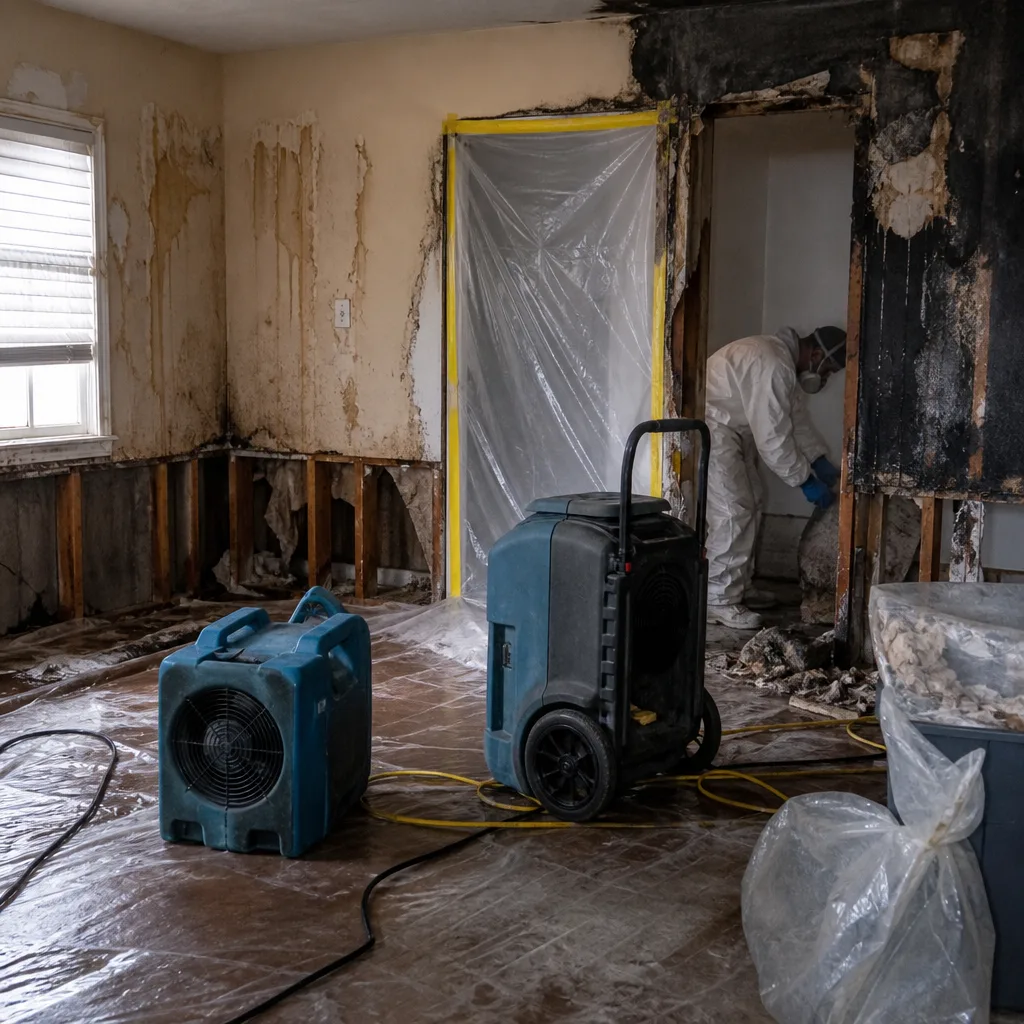 Before
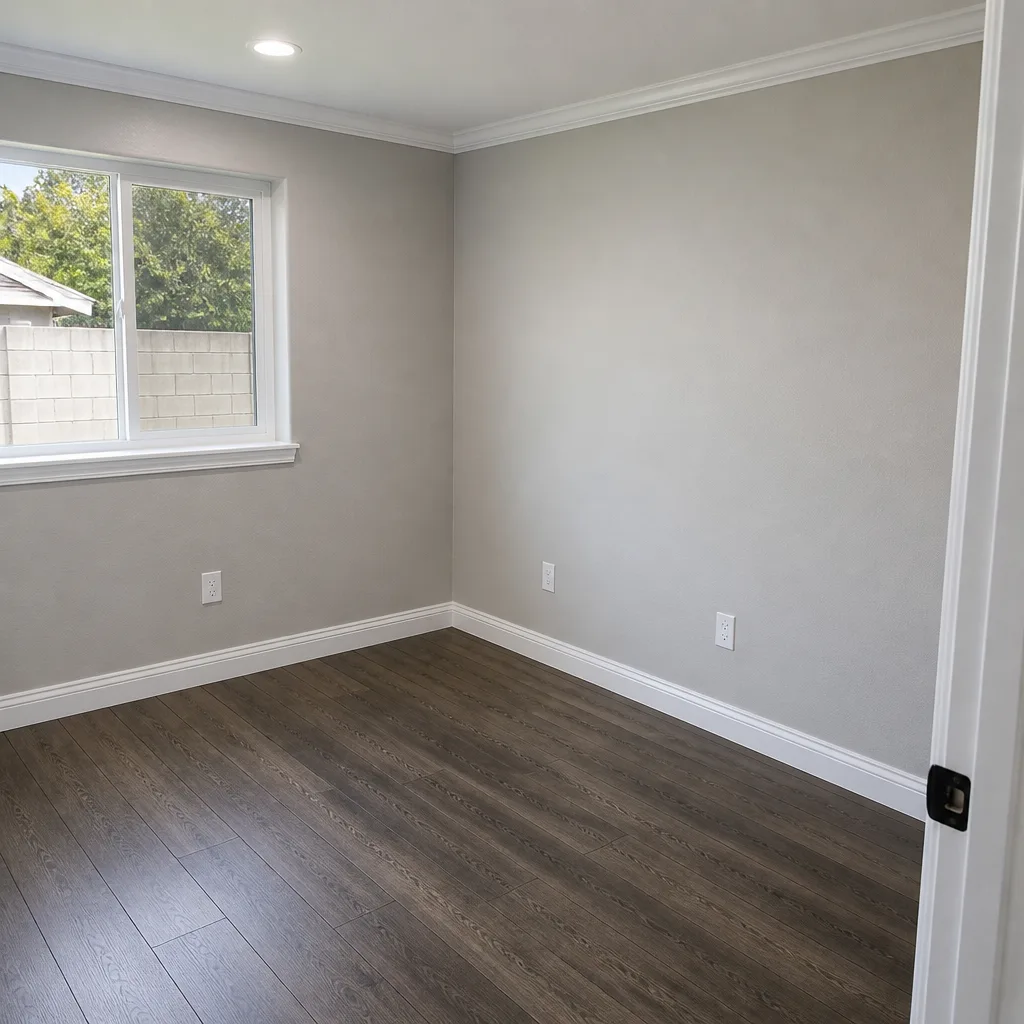 After
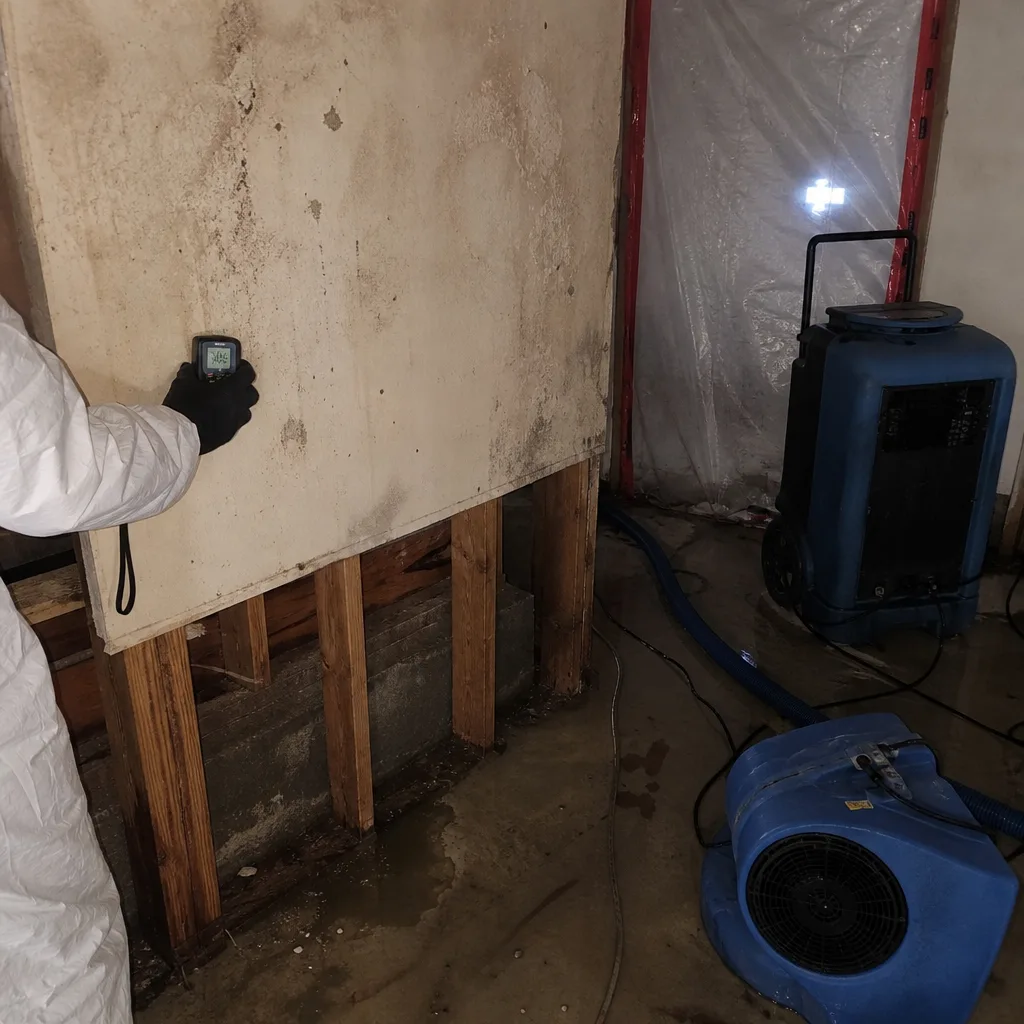 Before
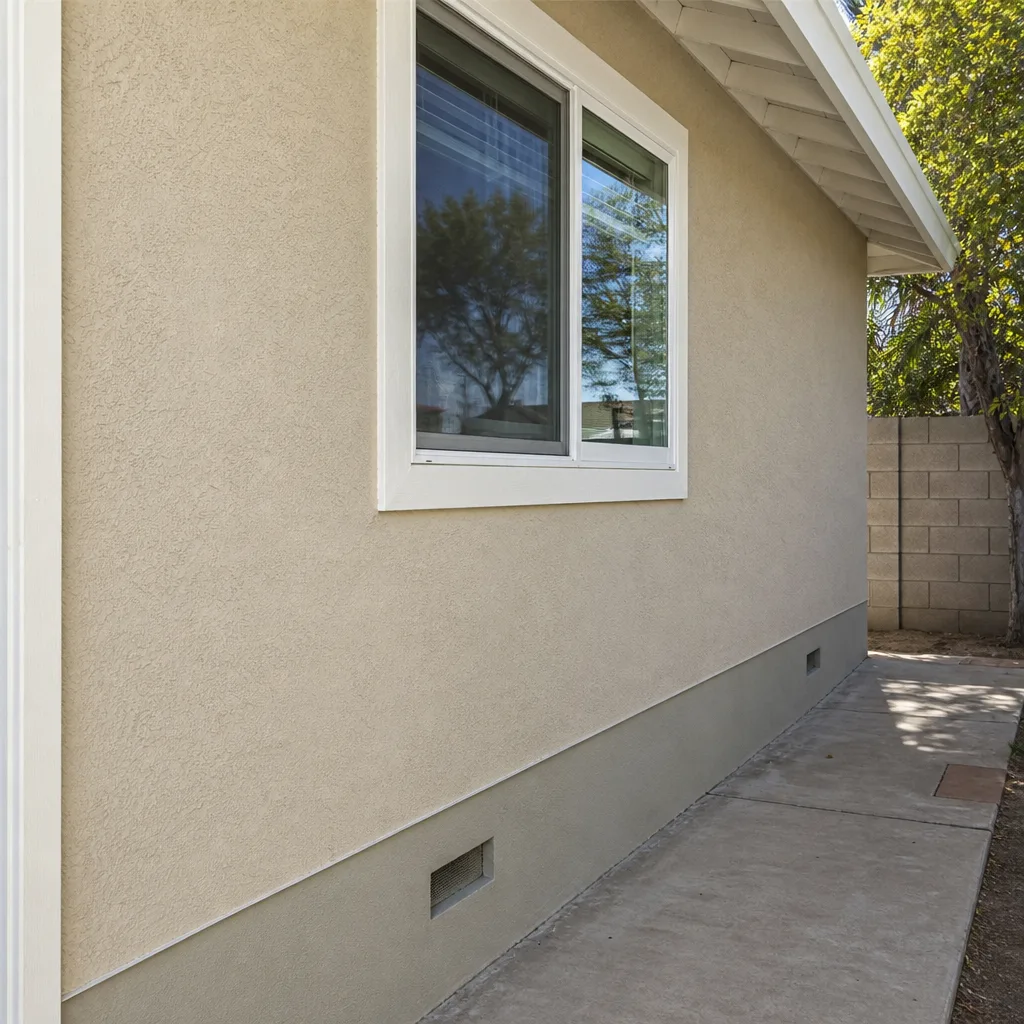 After
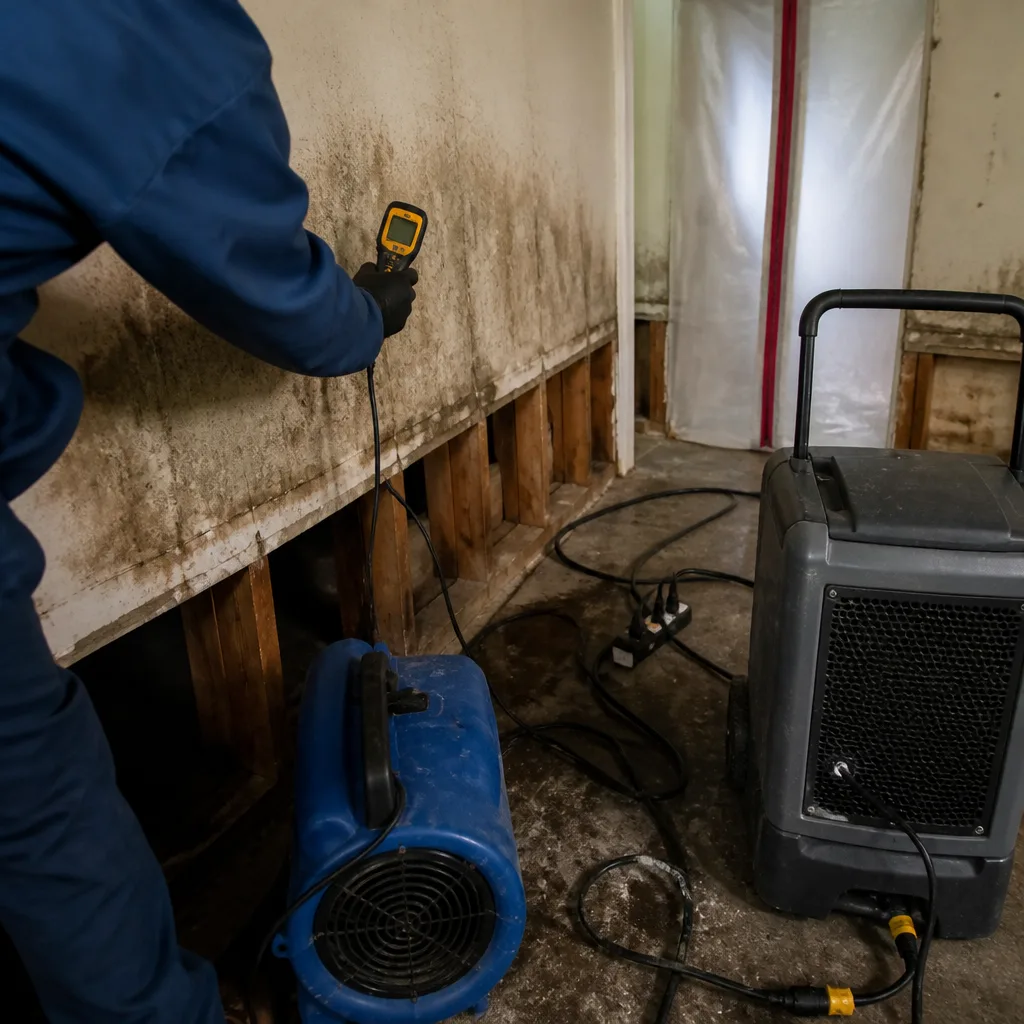 Before
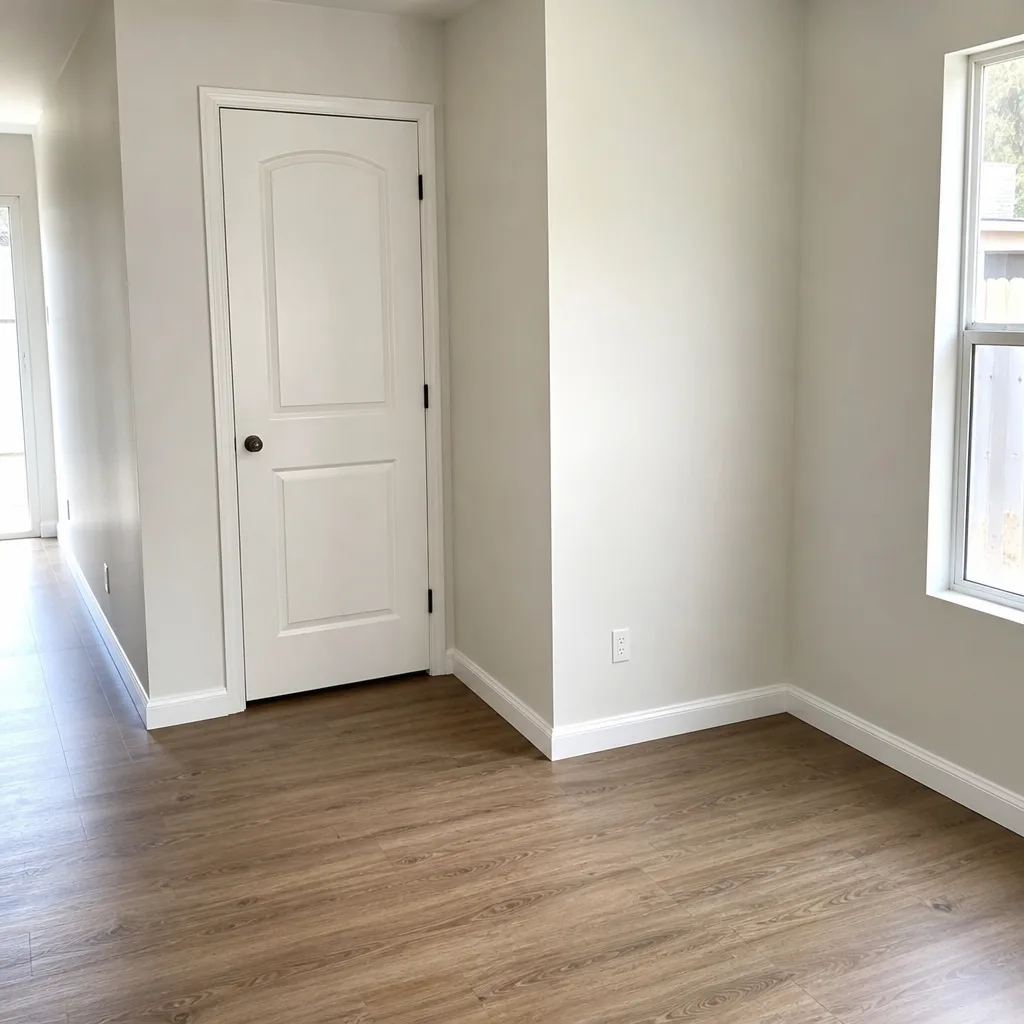 After
When to Call a Professional
If water has been sitting for more than 24 hours, or if the water source is anything other than a clean supply line, call a professional immediately. See our Damage Restoration Emergency Preparedness Guide for Rialto Homes for steps to take before help arrives. Category 2 and Category 3 water carry contaminants that require proper PPE, containment, and antimicrobial protocols. If water has migrated into walls, under flooring, or behind cabinets, even clean water needs professional drying because the affected area extends beyond what’s visible. If your insurance claim is being filed, professional documentation will determine whether the claim is approved for the full scope or denied in part. Water damage restoration is not a DIY project, and attempting it without the right equipment and training consistently makes the damage worse and the final cost higher. Trailblazer Water Damage offers free estimates in Rialto, call (866) 472-6137 and we’ll tell you exactly what you’re dealing with and what the full scope looks like.
Frequently Asked Questions
Most structural drying in Rialto takes three to five days, after which reconstruction begins as a separate phase that typically runs one to three weeks depending on scope. Drying timelines in the Inland Empire are affected by the dry Santa Ana winds and summer low humidity, which can accelerate surface drying while hiding moisture that requires controlled drying chambers to address properly. Your restoration contractor should provide a written timeline with daily moisture log updates.
Most homeowner policies cover sudden and accidental water damage, like a burst pipe or supply line failure, but not gradual leaks or flooding from an external source unless you carry separate flood insurance. The documentation your contractor provides, including moisture maps, daily logs, and a Xactimate-compatible scope, determines whether your claim is approved at full value or reduced. Call (866) 472-6137 for a free estimate and claim-ready documentation.
Fans will not dry the structural materials inside your walls, floors, or ceiling cavities, and in Rialto’s low-humidity climate they often make the problem worse by sealing moisture beneath a dry surface. Professional drying requires LGR dehumidifiers sized to the affected cubic footage, air movers positioned to create controlled airflow, and moisture meters to verify progress. Without this equipment, trapped moisture becomes hidden mold growth within weeks.
Water damage restoration addresses the water intrusion itself, extraction, drying, and the rebuild of damaged materials, while mold remediation in Rialto addresses existing mold growth through containment, removal, antimicrobial treatment, and clearance verification. Many water damage jobs require both, and hiring one company that handles both phases prevents handoffs between contractors. Trailblazer Water Damage handles the full sequence from extraction through clearance.
You should receive a final moisture log and drying certificate that shows every affected material returning to the documented dry standard established when the job began. The certificate should include specific moisture readings for drywall, framing, subfloor, and any other affected materials, not just a general statement that the area is dry. If your contractor cannot produce this document, the drying was never verified.
Shut off the water source if you can do so safely, turn off electricity to the affected area at the breaker panel, move any salvageable items away from the water, and photograph everything before anything is moved or thrown away. Then call a professional restoration company, the sooner extraction begins, the less structural damage occurs in the hours that follow. Trailblazer Water Damage offers free estimates in Rialto at (866) 472-6137.
The Bottom Line
Water damage restoration in Rialto is a documented, verifiable process governed by the IICRC S500 standard, not a vague cleanup that ends when surfaces look dry. The difference between a legitimate restoration and a patch job is measurable: moisture maps, daily logs, psychrometric reports, drying certificates, and permitted rebuilds. Rialto’s Inland Empire climate creates specific drying challenges that require controlled drying chambers and properly sized LGR dehumidifiers, not open windows and box fans. If you remember one thing from this guide, make it this: no drying certificate, no rebuild. The companies that rush this gate are the ones whose work shows up as mold claims six months later. Get the documentation, verify the process, and hold the line on the S500 standard. Your home and your insurance claim both depend on it.
Written by the team at Trailblazer Water Damage, serving Rialto since 2013.