
Last updated October 30, 2026
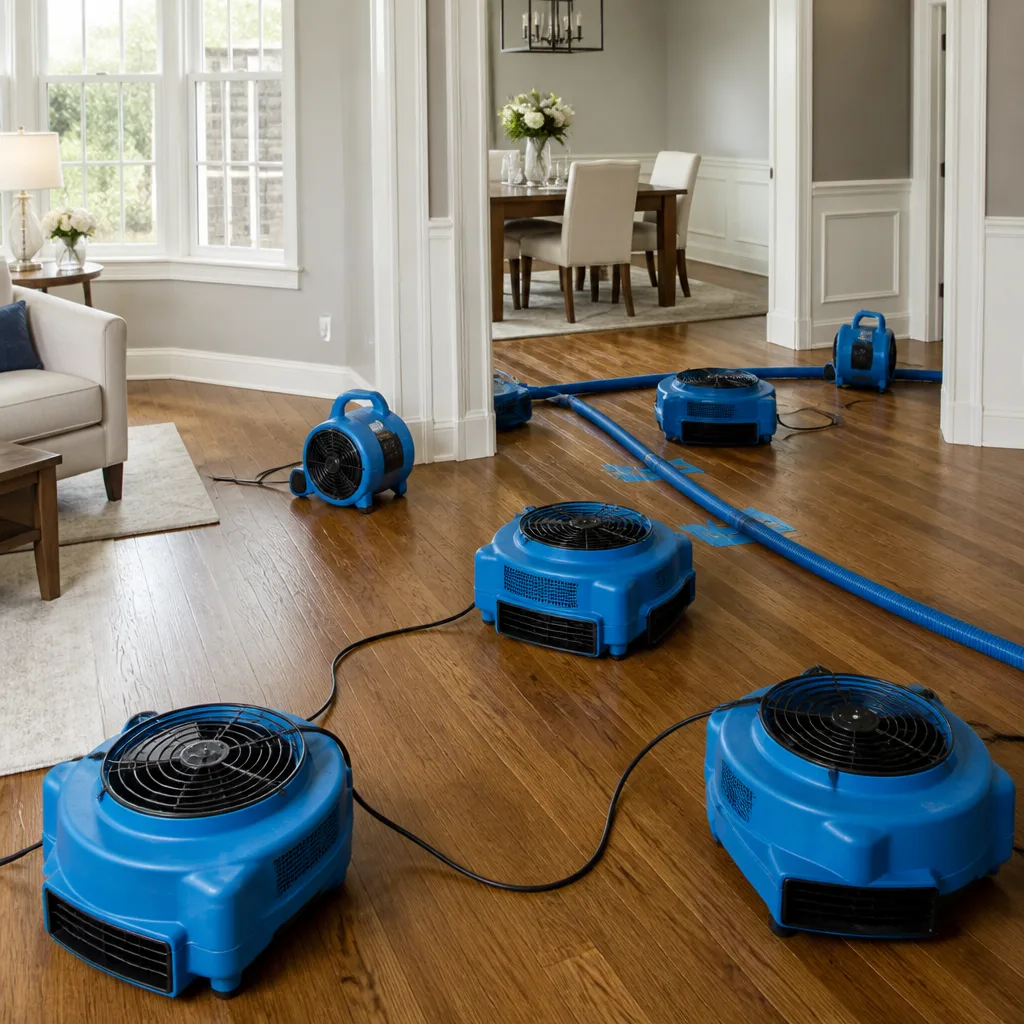 Water damage drying
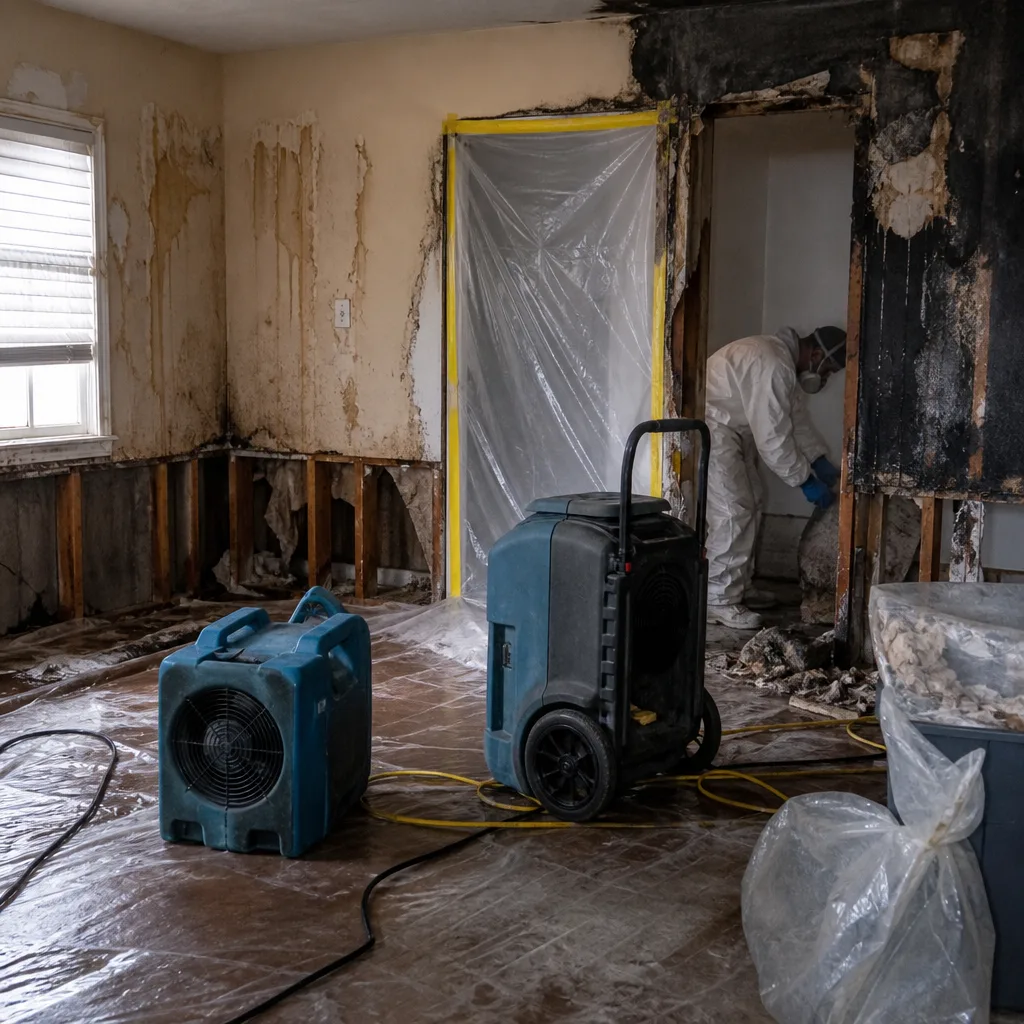
 Fire & smoke cleanup
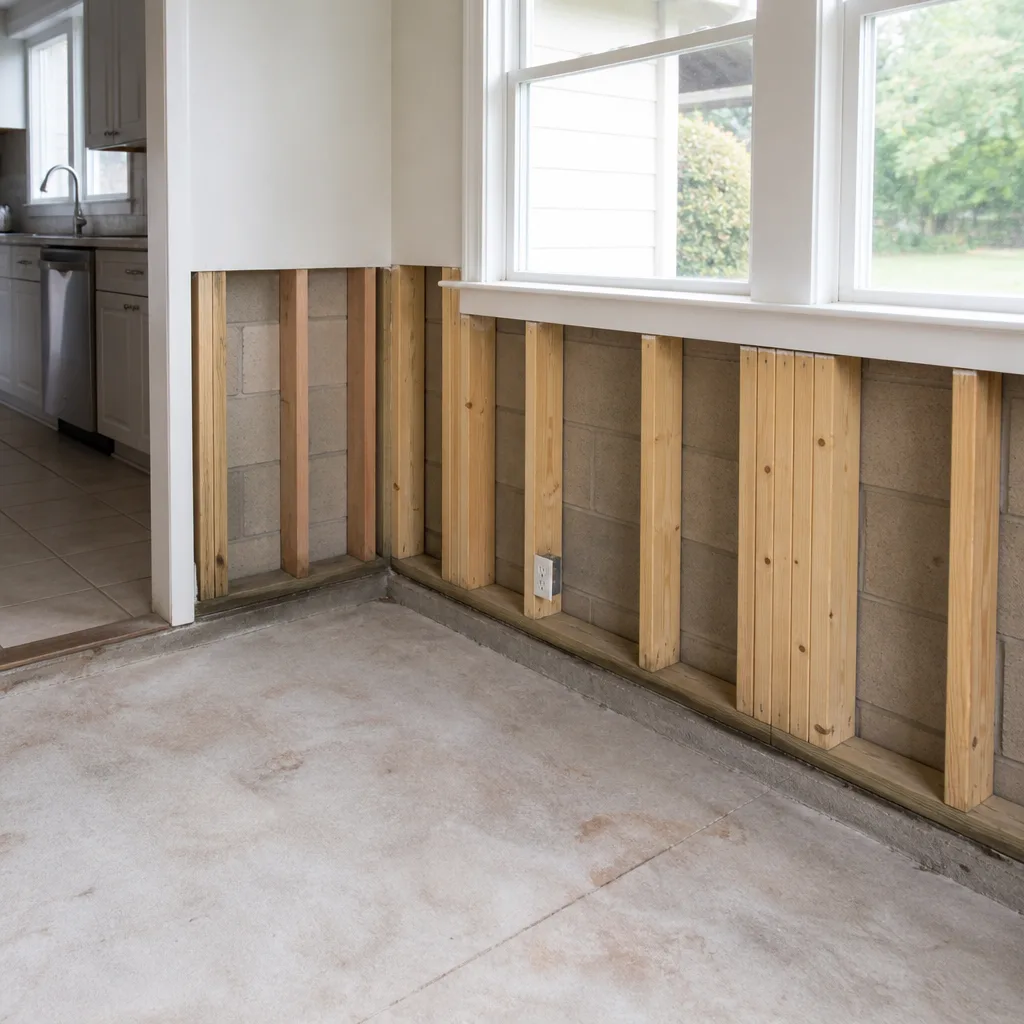 Mold remediation
 Storm response
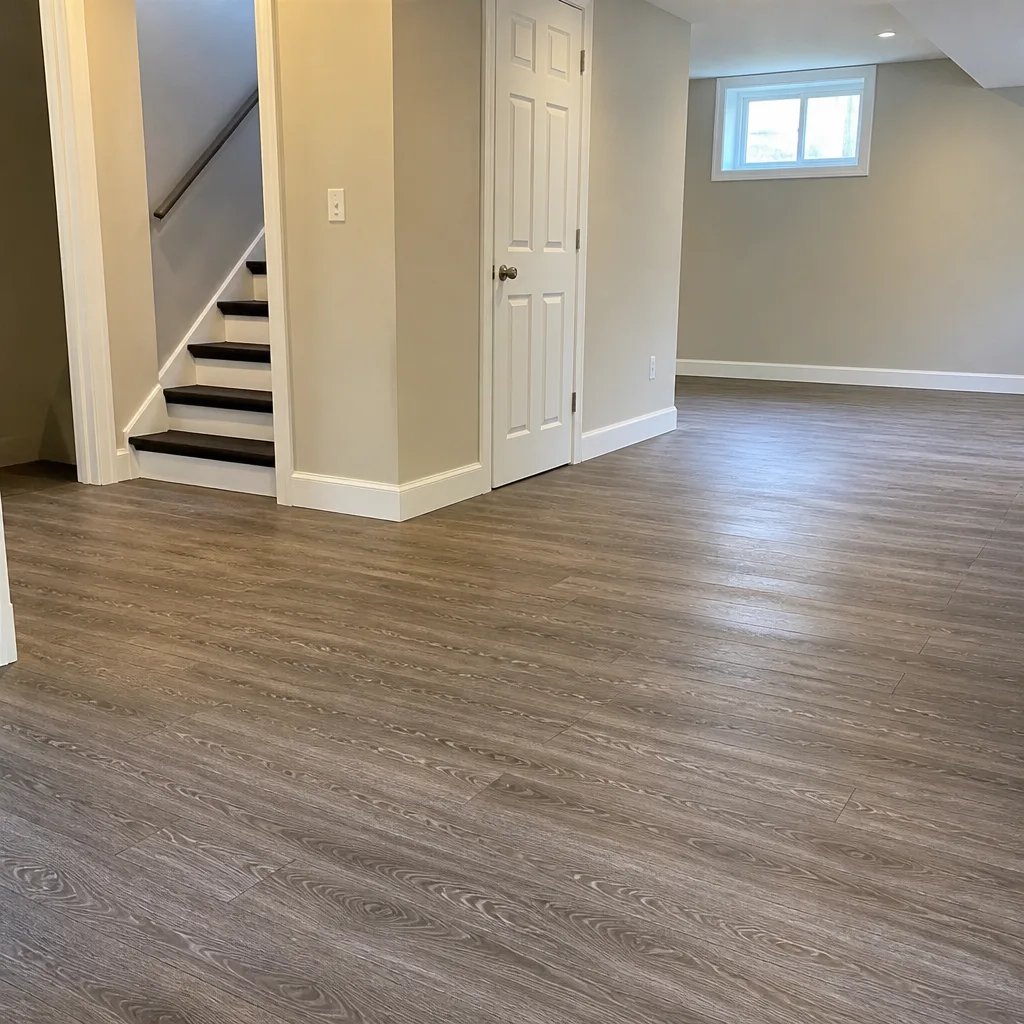 Sewage cleanup
 Reconstruction
Free visual inspection and a written scope of work before any mitigation begins - photos, moisture readings, and drying logs go in your claim file
The scope we write is the scope we bill. Anything new gets shown to you, in writing, before we touch it.
Get your free estimateSeasonal Damage Restoration Care for Rialto: Year-Round Homeowner’s Guide
Rialto averages barely 15 inches of rain a year, yet nearly every winter we pull saturated drywall out of homes here. The reason is simple: low-slope rooflines and compacted native soil are built for dry conditions, so when water actually arrives, it doesn’t drain. It ponds, it finds gaps, and it moves sideways into walls and foundations. This guide walks through the two actual risk seasons in Rialto, what fails first in local homes, and how to stay ahead of damage that most homeowners only discover after it’s already spread. For more guides & resources, see our blog.
Quick Answer
Rialto’s damage risk doesn’t follow a four-season model. It runs on a two-cycle system: late-summer monsoon humidity that pushes indoor moisture above the 60% mold threshold in July through September, and a fall-to-winter cycle of Santa Ana negative-pressure winds followed by first rains that overload drainage on compacted soil from October through February. The single most effective year-round tool is a $60 indoor hygrometer placed in the coolest, most central room of your home, checked weekly.
Restoration work we handle
Table of Contents
- Late Summer Monsoon Season (July – September): Humidity Is the First Threat
- Santa Ana Wind Season (October – December): Negative Pressure and Hidden Intrusion
- First Winter Rain (December – February): Compacted Soil and Foundation Wall Moisture
- Spring Transition (March – May): The Infrared Scanning Window
- Your $60 First-Alert System: The Indoor Hygrometer
- What Homeowners Insurance Covers in Rialto (And What It Doesn’t)
- Common Mistakes to Avoid
- When to Call a Professional
Late Summer Monsoon Season (July – September): Humidity Is the First Threat
Most Rialto homeowners don’t think about water damage in August. That’s the mistake. Beginning in July, monsoon-driven moisture from the Gulf of Mexico and the Gulf of California pushes north into the Inland Empire, and Rialto sits squarely in the path. The outdoor air gets sticky, but the real problem happens indoors, where tract homes built in the 1960s through the 1990s have minimal mechanical ventilation and no whole-house dehumidification. Indoor relative humidity creeps past 60%, and mold starts growing on drywall, behind furniture pressed against exterior walls, and inside closet corners within 48 to 72 hours.
What Actually Happens in Rialto Homes
- Warm, humid outdoor air enters through open windows at night and meets air-conditioned interior surfaces, condensing on walls and baseboards.
- Bathroom exhaust fans vent into attic spaces in older Rialto homes, pushing moist air into an unventilated cavity where it condenses on the underside of roof sheathing.
- Slab foundations in Rialto’s tract housing stock don’t breathe; they hold ground moisture that wicks upward into carpet padding and vinyl plank underlayment.
- Homes without central air leave windows open through August, letting outdoor dew points of 60°F+ raise indoor humidity well above the safe threshold.
Step-by-Step: Late-Summer Moisture Defense
- Install a hygrometer on July 1, not September 1. Place it in the hallway near bedrooms, away from bathrooms and the kitchen. Log the reading once a week.
- Check bathroom exhaust fans. Run your hand under the fan while it’s on. If you can’t feel moving air at the grate, the duct is disconnected or blocked. That’s a July problem you’ll pay for in October.
- Look at interior closet walls. Closets on exterior walls run cooler than room air, which means surface condensation forms there first. If your closet wall feels cool or clammy to the touch in August, you’re already in the danger zone.
- Move furniture off exterior walls. Sofas, bookcases, and beds pressed tight against west-facing and south-facing walls block airflow and create a microclimate where relative humidity runs 10 to 15 points higher than the rest of the room.
- Run the air conditioner, not just the fan. The “fan only” setting pulls humid outdoor air through the coil without removing moisture. Set the system to auto and keep the thermostat at 78°F or below when outdoor humidity is high.
Our IICRC-certified team has pulled mold from behind drywall in Rialto homes where the homeowner swears they never had a leak. In our experience, August humidity is the leak. It just doesn’t drip. If your hygrometer reads 62% or higher for three consecutive days despite running your AC, call us at (866) 472-6137 before the mold colony establishes. We’d rather inspect now than remediate later.
Santa Ana Wind Season (October – December): Negative Pressure and Hidden Intrusion
Santa Ana winds hit Rialto from the northeast, pushing dry desert air across the Cajon Pass and down through the foothills. These winds don’t just dry things out; they create sustained negative pressure on the leeward side of every home, which actively pulls air out of your living space and, in the process, draws outside air into wall cavities through any gap that exists. That includes gaps around electrical boxes, plumbing penetrations, window trim, and especially gaps left behind after prior remodeling or repair work. When those winds are followed by the season’s first rain, water rides those same air paths into places nobody looks until the staining shows up.
Why Santa Ana Season Sets Up Water Damage
- Negative pressure pulls humid air from crawlspaces and attics into wall cavities, where it condenses against cooler exterior sheathing.
- Leaves, dust, and debris blow into roof valleys and gutters during Santa Ana events, then act as dams once rain starts.
- Stucco cracks open wider during repeated hot-to-cool temperature swings, and wind-driven rain finds those cracks easier than gravity-fed rain does.
- Chimneys and vent pipes get sand-blasted by particulates, and micro-abrasion opens pinhole gaps around flashing.
- Prior contractor openings (old exhaust hoods, abandoned plumbing chases, pool equipment penetrations) are common on Rialto homes and rarely sealed properly.
Step-by-Step: Pre-Santa-Ana Exterior Walk
- Check every exterior penetration. Walk the home with a flashlight and look at dryer vents, hose bibs, electrical boxes, conduit runs, and HVAC line sets. If you can see daylight or feel gaps around any of them, seal them with exterior-rated polyurethane caulk before the winds return.
- Inspect stucco near ground level. Rialto’s stucco homes sit on concrete slabs, and slab-stucco junctions crack from thermal movement. Hairline cracks under half a millimeter aren’t usually urgent, but anything a credit card edge slides into needs sealing.
- Clean roof valleys and gutters after the first wind event. Don’t wait for rain in the forecast. The accumulated material from Santa Anas reduces drainage capacity exactly when you need it.
- Look at the northeast corner of your home. That’s the windward face during most Santa Ana events. It takes the most debris impact and the most wind-driven water once rain starts. Check it first, not last.
When water does get pushed into a wall cavity from wind-driven rain, you won’t always see it on the interior surface. The moisture sits inside the wall, absorbed by insulation and the back side of the drywall, breeding mold inside the cavity. That’s a scenario where a Water Damage Restoration in Rialto inspection with thermal imaging and moisture meters matters more than a visual assessment.
First Winter Rain (December – February): Compacted Soil and Foundation Wall Moisture
Rialto’s soil is dense and heavily compacted from decades of construction and dry-weather settling. It doesn’t absorb water quickly. In a moderate rain event, water can start pooling in yards and along foundation walls within 30 minutes of the first heavy downpour, long before the city’s storm drains start carrying meaningful volume. That pooled water sits against foundation walls and finds the path of least resistance, which is often the cold joint between the slab edge and the foundation wall, or gaps where plumbing and irrigation lines pass through.
What Compacted Soil Means for Your Foundation
- Water pools at the surface rather than percolating, running along grade lines toward the house instead of away from it.
- Hydrostatic pressure builds against below-grade foundation walls and pushes moisture through micro-cracks that are invisible in dry weather.
- Planter beds adjacent to exterior walls act as collection basins, holding water against stucco for days after rain stops.
- Downspouts without extensions drop water within 12 to 18 inches of the foundation, saturating the same soil repeatedly.
- Rialto’s freeze-thaw cycles are minimal but not zero; wet soil against a foundation wall still expands and contracts enough to open hairline cracks over successive winters.
Step-by-Step: First-Rain Response Checklist
- Walk the perimeter while it’s actively raining. You’ll see where water pools in real time. A lack of visible pooling on a dry Wednesday says nothing; the rain itself is your diagnostic tool.
- Extend every downspout at least 6 feet from the foundation. Flexible extensions cost under $20 each and prevent more foundation wall moisture than almost any other single fix.
- Check the interior face of exterior walls at floor level. Run your hand along baseboards in rooms that share a wall with the yard. Cool or damp baseboards after rain mean water is against the foundation wall on the other side.
- Look at your garage slab lip. In Rialto homes, garage slabs are often a step lower than the house slab, and water that pools at the garage door threshold migrates into wall cavities on either side of the door frame.
- Document everything with photos. If you do need an insurance claim, contemporaneous photos taken during the rain event are worth more than adjuster photos taken three days later in the sun.
A wet foundation wall inside Rialto is not a cosmetic issue. It’s an active moisture source that keeps feeding humidity into your floor assembly and lower wall cavities for weeks, even after the exterior dries. In homes where we’re called after the fact, we commonly find the actual damage occurring below the visible water line where the sill plate rests on the concrete. That’s also where Mold Remediation in Rialto work usually starts, because the wood stays wet the longest.
Spring Transition (March – May): The Infrared Scanning Window
There’s a roughly ten-week period in Rialto when thermal imaging for moisture actually works. From mid-March through late May, the temperature differential between a dry wall and a wet wall is at its most readable. After June, the sun bakes exterior walls to the point where thermal patterns blur, and a moisture pocket inside a wall reads the same as a warm stud. Before March, winter coolness masks subsurface temperature differences on shaded walls. If you’re going to scan your exterior walls for hidden moisture, this is the window.
Why Spring Is the Only Reliable Time to Scan
- Morning temperatures in March through May sit between 50°F and 70°F, creating a consistent baseline against which moisture anomalies show up clearly.
- Wet insulation inside a wall cavity holds heat differently than dry insulation, and that difference shows on thermal imaging when the exterior surface temperature is moderate.
- Summer heat soaks walls from the outside, so an infrared camera sees sun load and thermal bridging, not moisture, making false positives and false negatives more common.
- Rain has typically stopped by March in Rialto, so any moisture showing on a spring scan is trapped water, not surface wetness from recent rain.
Step-by-Step: Spring Exterior Wall Assessment
- Schedule thermal imaging between 6 a.m. and 10 a.m. This window minimizes solar gain on walls and maximizes readable temperature contrast.
- Focus on north walls and shaded areas first. These walls hold moisture longer because they don’t dry from direct sun, making them the most common hidden-mold locations in Rialto homes.
- Pay special attention to wall areas below windows and around hose bibs. These are the two most common water intrusion points on Rialto’s stucco homes, and both show up well on spring scans.
- Compare left and right sides of the same wall. Symmetry is your reference. If one side of a wall reads differently at the same height, investigate before summer heat makes the reading impossible.
We run Injectidry cavity-drying systems on walls with confirmed trapped moisture because the technology dries inside wall and floor cavities without cutting open drywall. On a spring scan, that means a positive reading doesn’t have to mean demolition, if it’s caught early enough. By August, the same moisture pocket has been incubating mold for three months, and the scope of work changes entirely.
Your $60 First-Alert System: The Indoor Hygrometer
The cheapest and most reliable damage sensor in your Rialto home is a digital hygrometer. Not a smart home hub, not a subscription monitoring service. A simple $60 device that reads indoor relative humidity and temperature, available at any hardware store. The data it provides, checked weekly and written down, will tell you more about your home’s seasonal moisture load than any annual inspection.
What Your Hygrometer Is Telling You
| Reading | What It Means | What to Do |
|---|---|---|
| Below 40% | Unusually dry for Rialto; common during Santa Ana events | No action needed; low humidity reduces mold risk but watch for excessive static that signals poor air sealing |
| 40% to 55% | Normal range for Rialto homes with functional HVAC | Continue weekly checks |
| 56% to 62% | Elevated; approaching mold threshold | Run AC or a standalone dehumidifier; identify source of excess moisture |
| 63% or higher | Mold growth zone; colonies can establish within 48-72 hours | Call for a professional moisture inspection; address immediately |
| 70%+ sustained | Active moisture problem present | Professional intervention required; damage is likely already occurring inside walls or floors |
Where to Place Your Hygrometer
- Not on an exterior wall. Exterior walls read artificially humid or dry depending on outside temperature.
- Not in the kitchen or bathroom. Cooking, dishwashing, and showering spike readings that don’t represent the rest of the home.
- Central hallway near bedrooms. This location captures the house-wide condition without local distortions.
- Move it once a month. Rialto homes have microclimates; one month in the living room, one month in a back bedroom, one month near the garage door. You’ll map problem zones over time.
A hygrometer that reads 58% in a back bedroom while the hallway reads 45% isn’t a device anomaly. It’s a room-level moisture problem, almost always caused by poor ventilation, an exterior wall leak, or a slab moisture issue. The device did its job; now call (866) 472-6137 and let us figure out what’s feeding it.
What Homeowners Insurance Covers in Rialto (And What It Doesn’t)
Standard homeowners policies in California cover sudden and accidental water damage from burst pipes, appliance failures, and wind-driven rain that enters through storm-created openings. They generally do not cover gradual water intrusion, ground seepage, or mold that developed because of deferred maintenance. That last one is the gap that catches Rialto homeowners. A slow foundation-wall leak that’s been feeding moisture into a wall for six months before discovery is often classified as gradual seepage, not a covered event. The way you document and report matters as much as what actually happened.
How to Position a Claim the Right Way
- Report the event the day you discover it. A two-week delay reads as gradual damage to an adjuster, even if the actual leak happened overnight.
- Photograph everything before you touch anything. Wide shots showing the room context, close-ups of the wet materials, and photos of the exterior where you believe water entered.
- Don’t rip out wet materials before the adjuster documents them. Removal before documentation weakens your claim. We handle this every week in Rialto; the sequence is established.
- Keep the hygrometer log. Weeks of normal readings followed by a sudden spike corroborates the “sudden event” narrative that gets claims approved.
- Let us talk to your adjuster. We work at insurance-adjuster level from day one, and our documentation is built for exactly the questions adjusters ask. We handle direct communication with the carrier so you don’t have to translate construction terms into policy language.
For fire damage claims, the dynamic shifts. Fire claims involve smoke, soot, and often water from suppression efforts, and the insurance process runs through a different set of questions. See Fire Damage Restoration in Rialto for how we sequence that work, from board-up through content cleaning to structure drying.
Common Mistakes to Avoid
- Waiting for visible water before acting. By the time you see staining on drywall in a Rialto home, moisture has been inside that wall for weeks. A hygrometer reading above 60% is your early signal, not the wet spot on the wall.
- Treating August humidity as “just how it is.” Rialto’s late-summer humidity is a measurable, predictable moisture intrusion event. Ignoring it means accepting mold growth in closets and behind furniture as a normal part of living here.
- Sealing stucco cracks without finding why the crack formed. Cracks from thermal movement can be caulked. Cracks from foundation movement will reopen and keep leaking. Know which one you’re dealing with before you spend money on sealant.
- Running a box fan on wet carpet instead of extracting the water. Air movement over wet carpet pushes moisture into the pad and subfloor. Extraction comes first; drying comes second. This sequence is why we run Dri-Eaz and Phoenix extraction and drying equipment rather than consumer-grade fans.
- Assuming the Santa Anas dry things out, so no action needed. Santa Anas dry surface water while simultaneously pulling humid air into wall cavities through gaps. The dryness outside is masking moisture that’s accumulating inside the wall assembly.
- Putting the hygrometer in the “average” spot and forgetting it. A single reading from a central hallway won’t catch room-level problems. Move the device monthly and log readings from multiple rooms over the year.
- Delaying the call because “it’s just a small leak.” In Rialto’s dry climate, small leaks dry slowly indoors and feed mold for months. The repair cost from a small leak found early is almost always lower than mold remediation three months later.
When to Call a Professional
Call a restoration professional if your hygrometer sustains readings above 62% for three consecutive days. Call if you find active water intrusion during or immediately after rain, even if it looks small. Call if you smell mustiness in a room that has no visible water source. Call if you discover mold on a surface larger than roughly one square foot. Call if your insurance carrier asks for moisture documentation and you don’t have professional-grade meters to provide it. Trailblazer Water Damage, the right damage restoration brand for Rialto, offers free estimates. Call (866) 472-6137, and we’ll come out, assess the moisture condition of your home with the same equipment we use on full-scale restoration jobs, and tell you honestly whether you have a problem that needs action or a home that’s healthy and dry.
See the difference
 Before
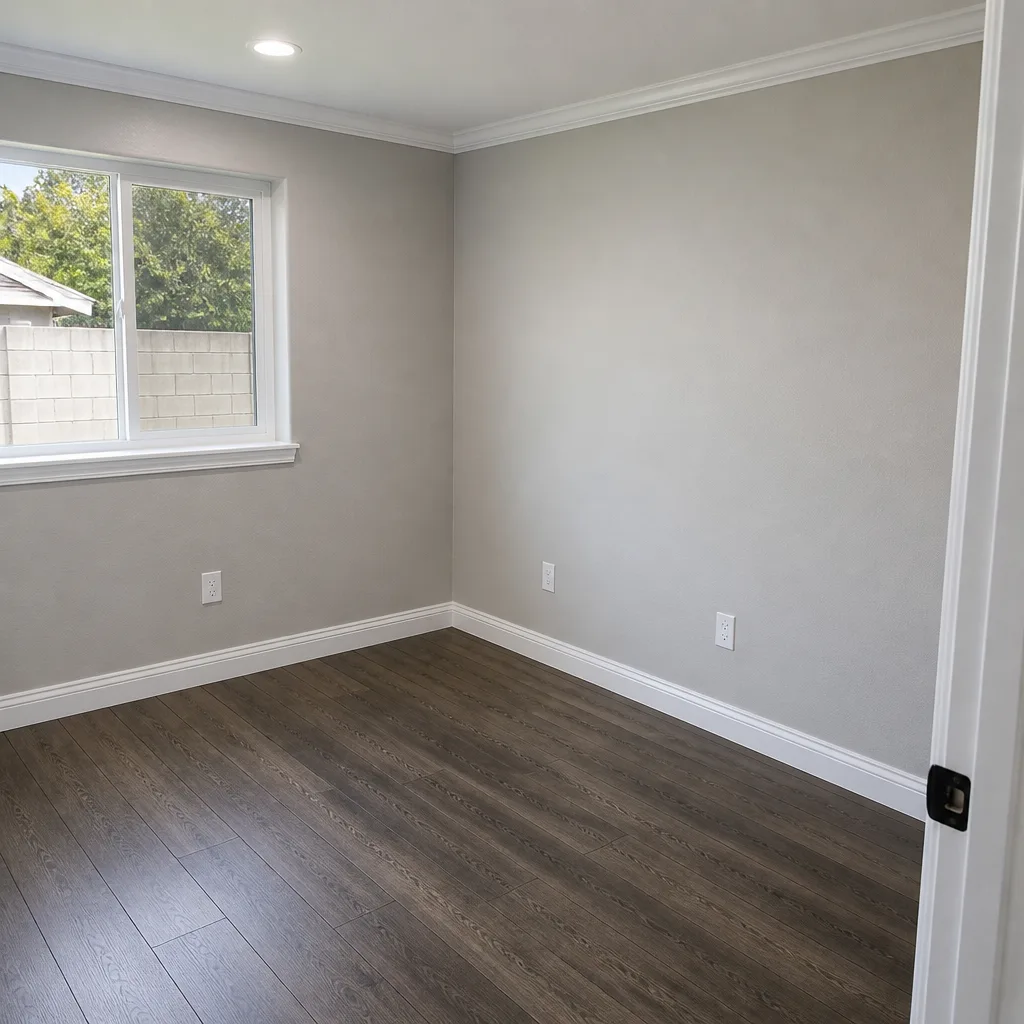 After
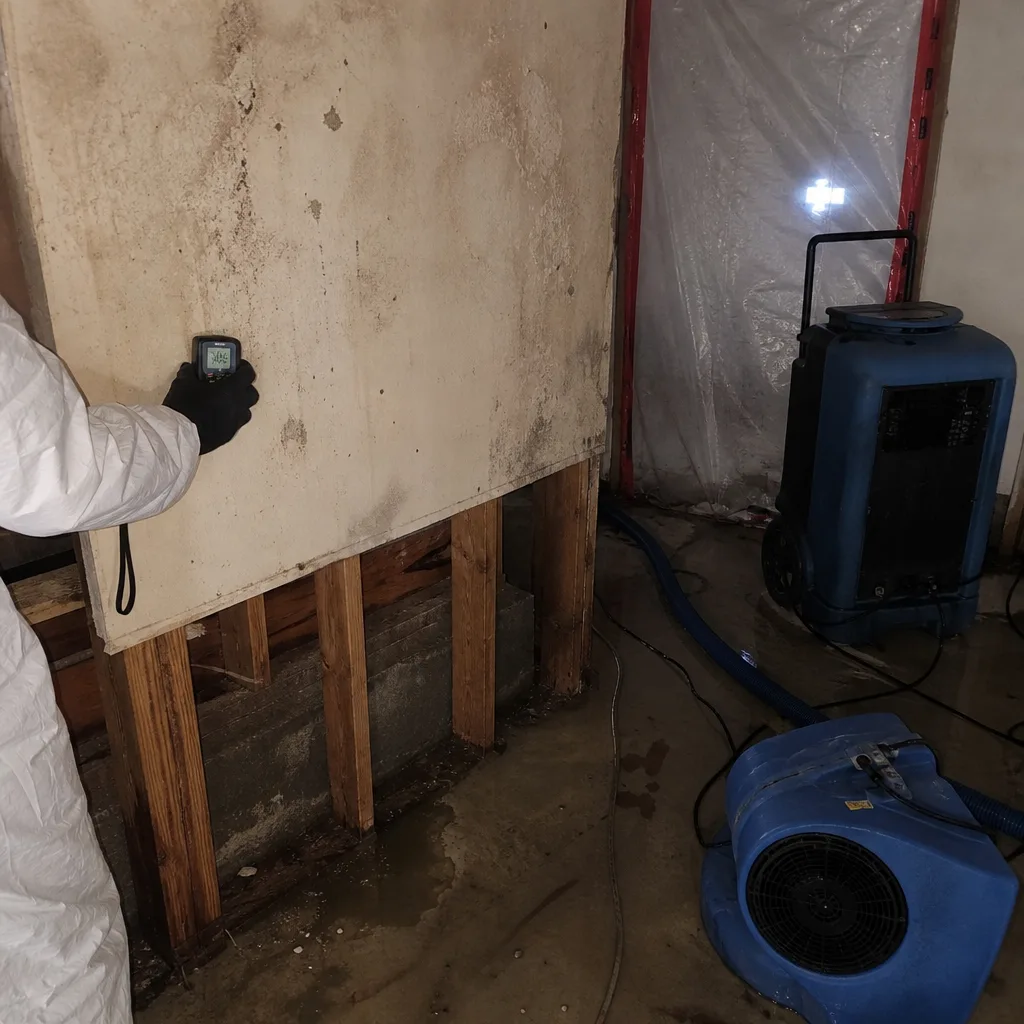 Before
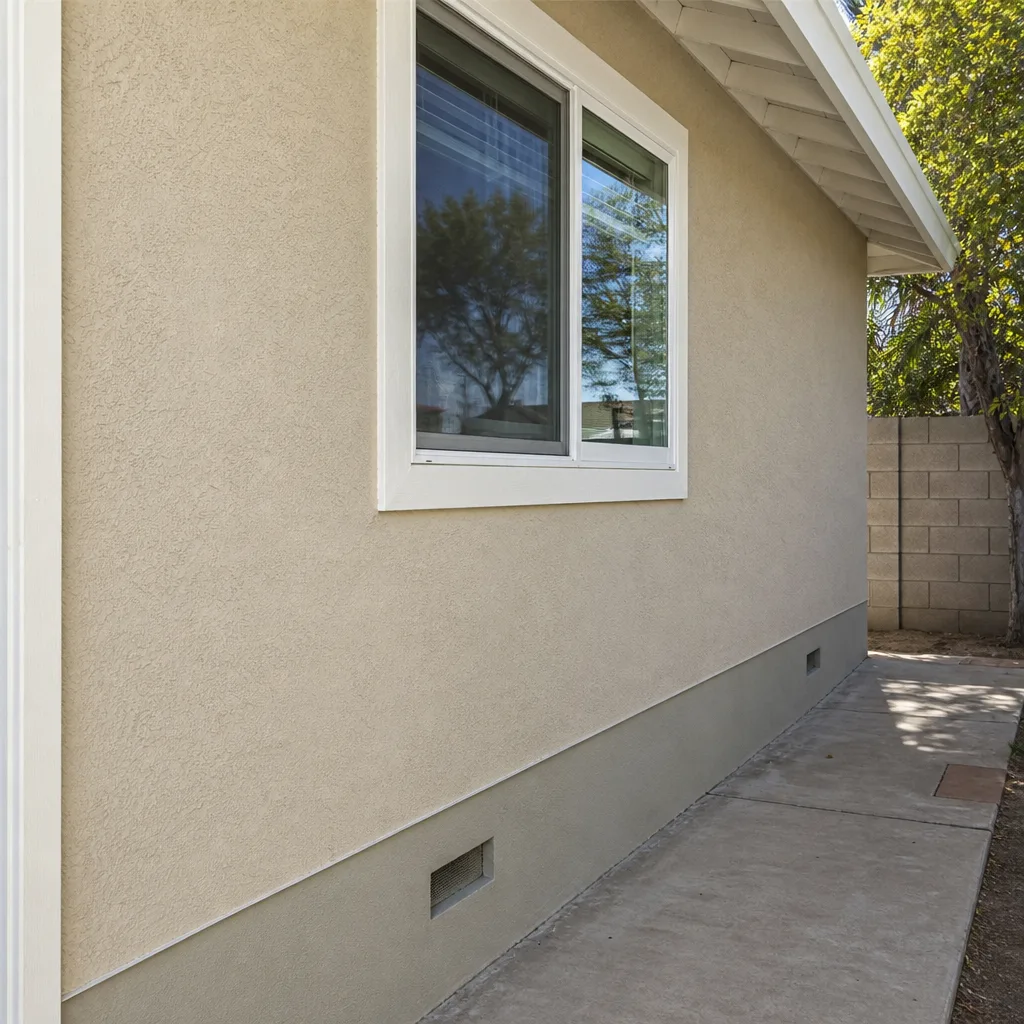 After
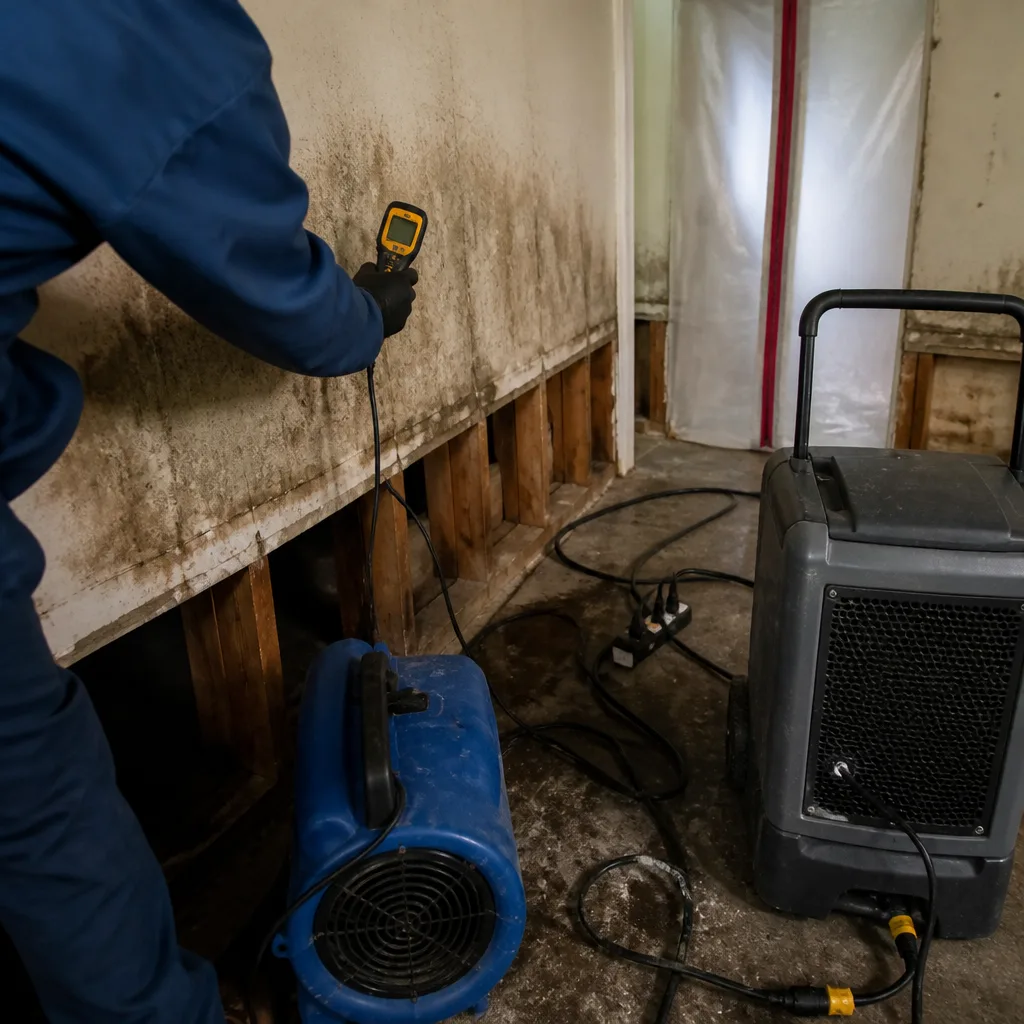 Before
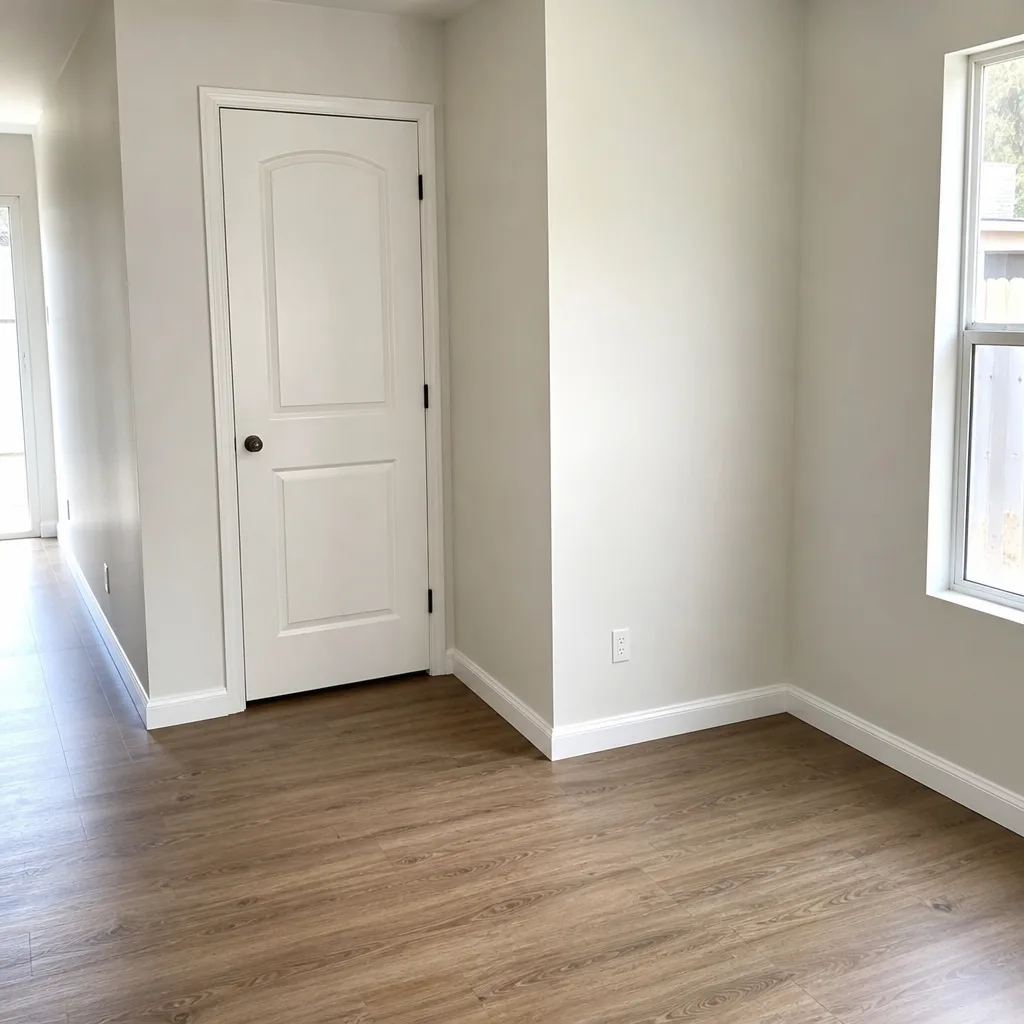 After
Frequently Asked Questions
The highest volume of water damage calls in Rialto happens between December and February, when the first significant winter rains hit compacted soil and drainage systems that haven’t been used in months. However, the most preventable damage happens in July through September, when monsoon humidity pushes indoor conditions past the mold threshold without any visible water event.
Yes. Sustained indoor relative humidity above 60% is sufficient for mold to begin growing on drywall, clothing, wood furniture, and carpet backing within 48 to 72 hours, even without a leak. This is the most common form of preventable mold we encounter in Rialto tract homes during late summer.
Use an infrared thermal scan during the spring window between mid-March and late May, when temperature differentials make trapped moisture readable. Before that window, check with a moisture meter on suspect walls, or look for secondary signals like peeling baseboard paint, a musty odor, or hygrometer readings that stay elevated in specific rooms.
Yes. Rialto’s heavily compacted, low-permeability soil pools water at the surface during moderate rain rather than absorbing it, and that pooled water builds hydrostatic pressure against foundation walls, forcing moisture through micro-cracks and cold joints. This is a predictable, recurring condition in Rialto, not a rare anomaly.
Buy a $60 digital hygrometer, place it in a central hallway, and start logging weekly readings. If the reading comes back above 60%, run your AC or a dehumidifier immediately and call a professional for a moisture inspection. Most of the damage we remediate in Rialto would have been caught weeks earlier with this one device.
Generally no. Mold that develops from ambient humidity or gradual moisture intrusion is typically excluded from standard California homeowners policies as a maintenance issue. Coverage applies to mold resulting from a sudden, covered water event, like a pipe burst or storm-created opening. We document every step of our water damage work at claim-grade standards so the mold that follows a covered event stays within your claim as well, and we coordinate directly with your adjuster. Call (866) 472-6137 to talk through your specific situation.
The Bottom Line
Rialto’s damage calendar is predictable. Late-summer humidity pushes indoor moisture into the mold zone; fall Santa Anas create the gaps and negative-pressure conditions that usher in water during the first winter rain; compacted soil turns moderate rainfall into foundation-wall flooding. The tools to stay ahead of all of it cost under $100 and take under an hour a month to use. A hygrometer, a seasonal exterior walk, downspout extensions, and a spring thermal scan will keep most Rialto homes dry year-round. When problems do surface, we operate at the same level as the national restoration franchises, with Dri-Eaz, Phoenix, XPOWER, B-Air, and Injectidry systems on hand, and the IICRC, RIA, and IFA credentials to back the work. Call (866) 472-6137 when you need us. Trailblazer Water Damage home is your resource for full-scope restoration, from extraction to clearance.
Written by the team at Trailblazer Water Damage, serving Rialto since 2013.