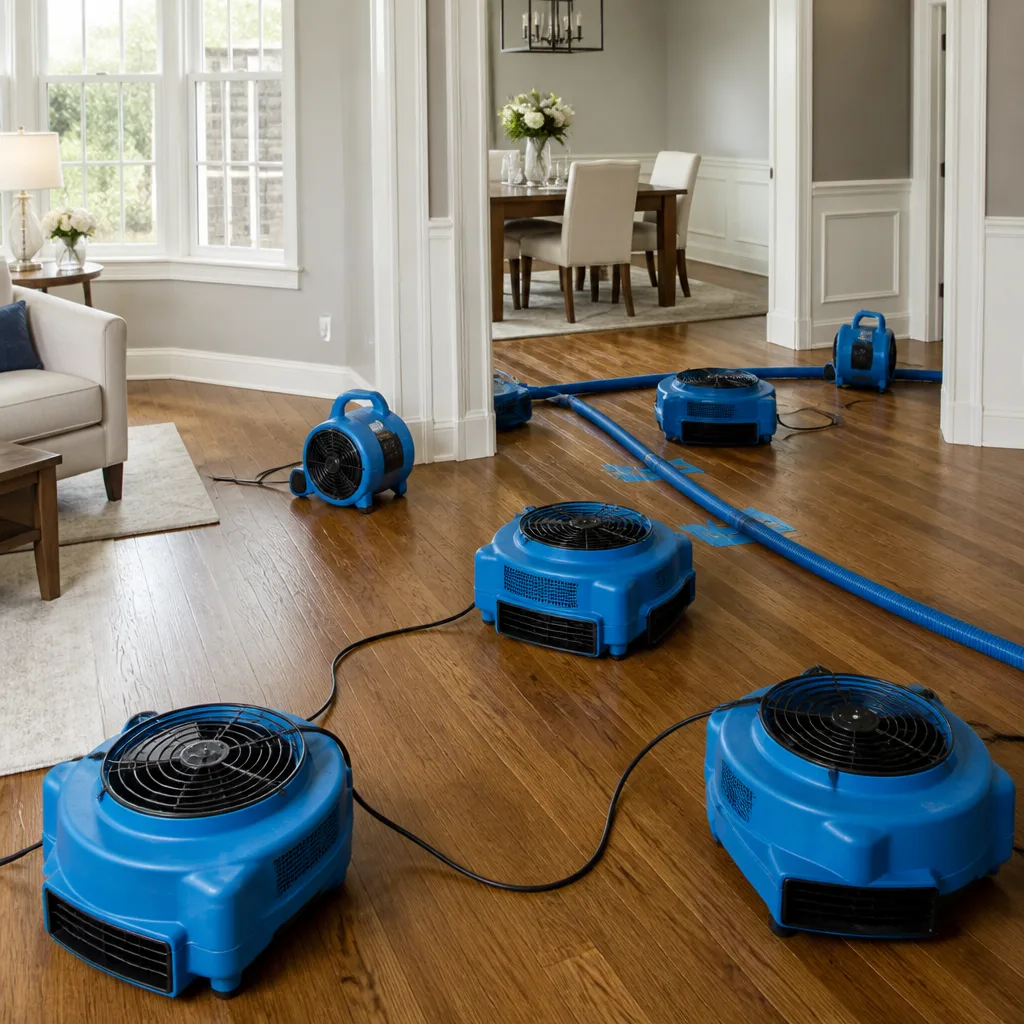
 Water damage drying
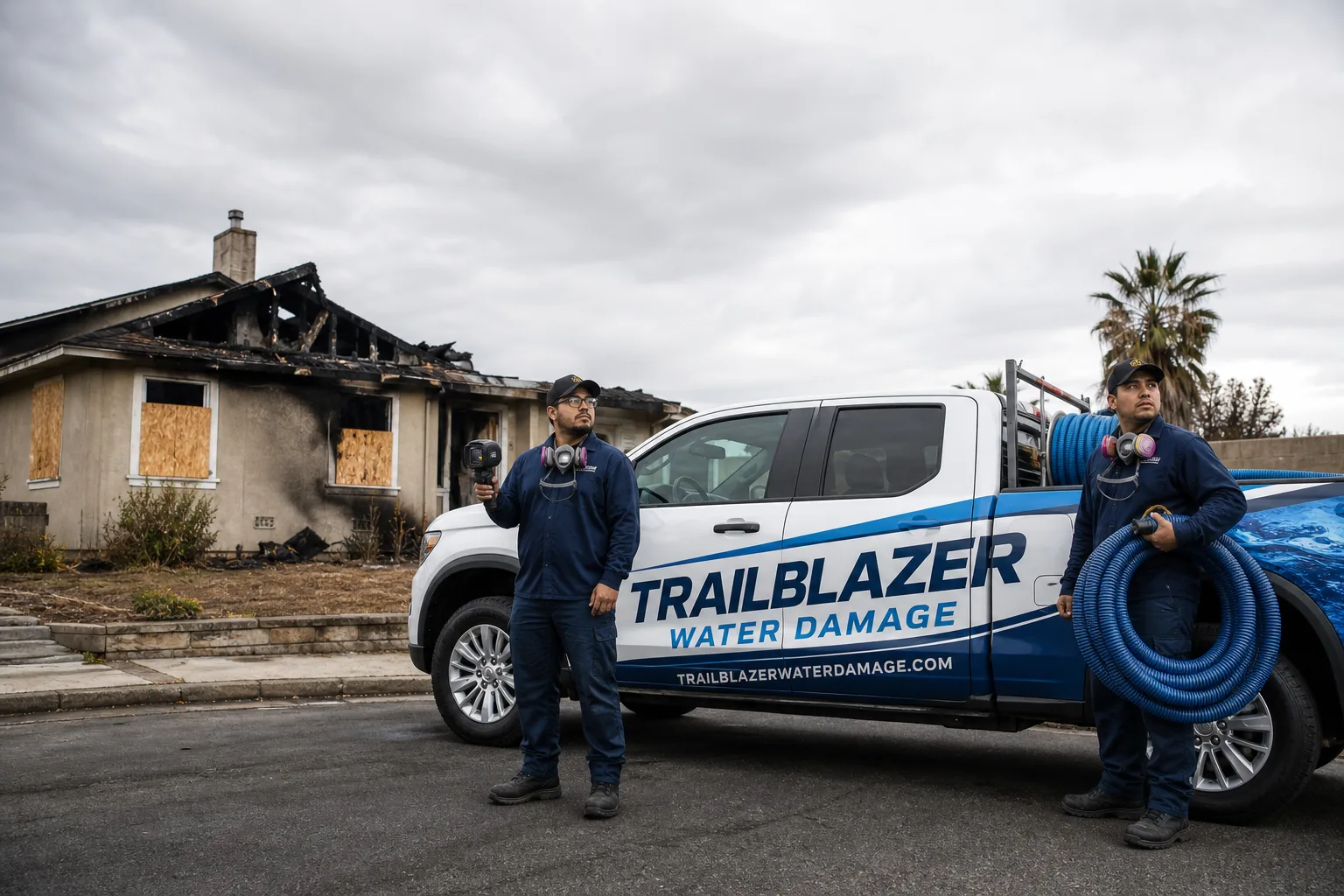
 Fire & smoke cleanup
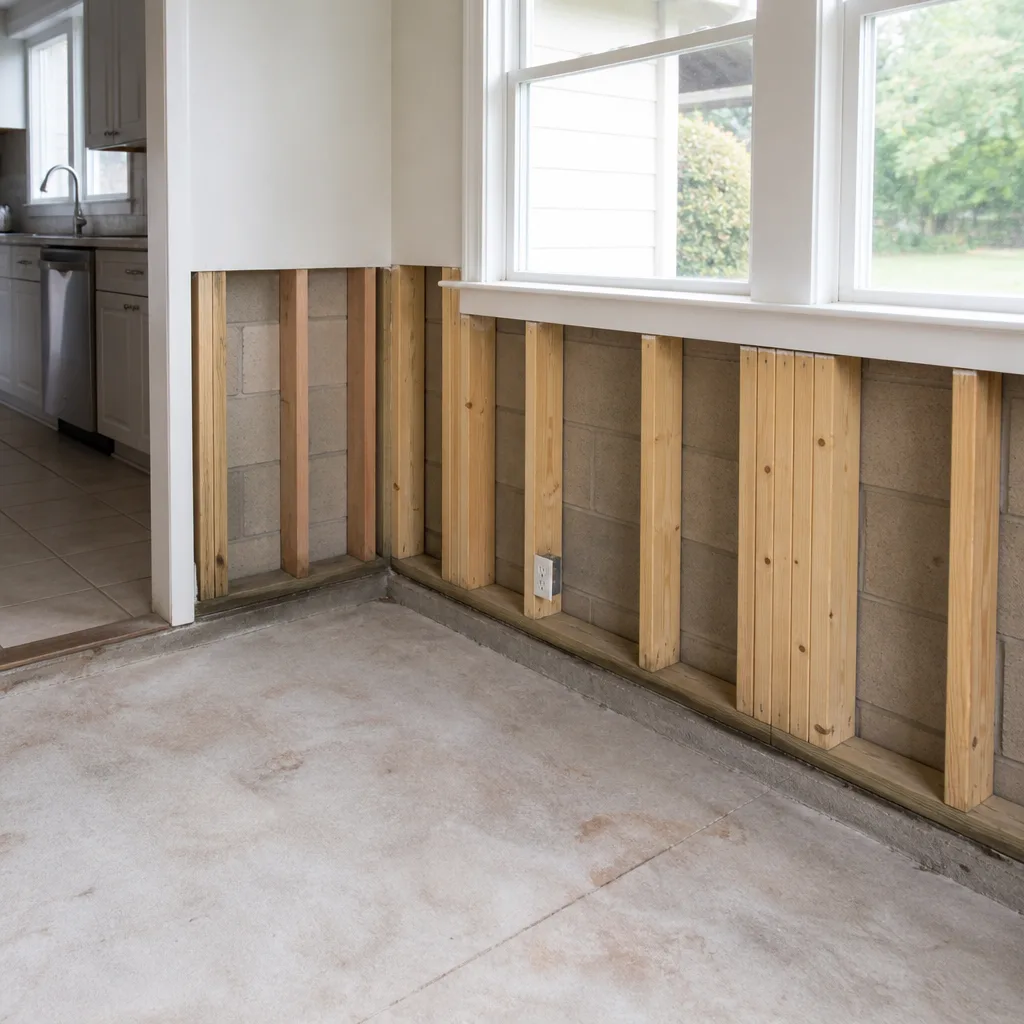 Mold remediation
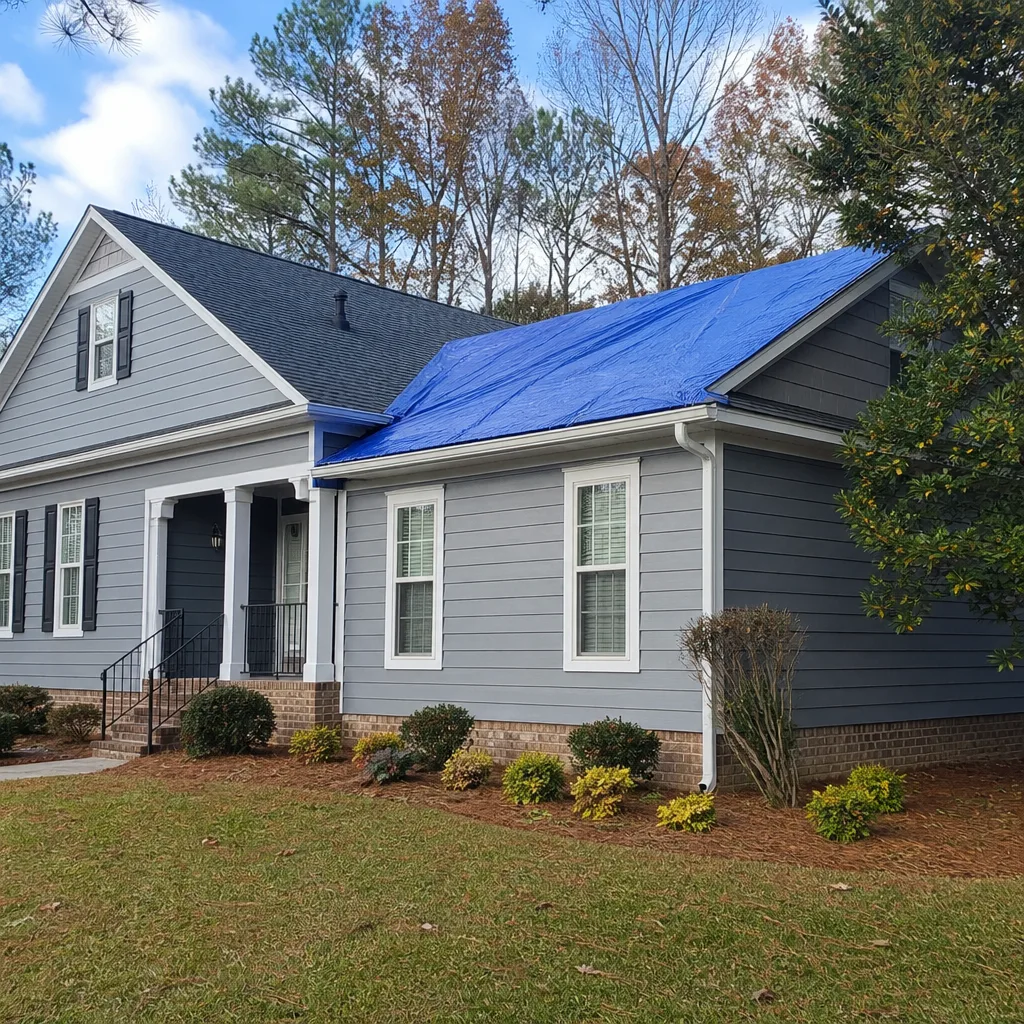 Storm response
 Sewage cleanup
 Reconstruction
Free visual inspection and a written scope of work before any mitigation begins - photos, moisture readings, and drying logs go in your claim file
The scope we write is the scope we bill. Anything new gets shown to you, in writing, before we touch it.
Get your free estimateFast, Reliable Water Damage Restoration Across San Antonio Heights
Water damage restoration in San Antonio Heights costs between $1,800 and $6,500 for most residential jobs, with emergency extraction starting around $450. Our IICRC-certified team reaches homes off Euclid Avenue and Mountain Avenue within 90 minutes, carrying Dri-Eaz extraction units and Phoenix dehumidifiers sized for the larger foothill lots here. San Antonio Heights homes face a specific threat most restoration companies in the valley never see: post-wildfire debris flows that push mud, ash, and category 3 water into downhill properties. Call (866) 472-6137 the moment you see water where it shouldn’t be. We handle the full damage sequence in-house, from extraction to structural drying to mold clearance.
Key Takeaways:
- Most San Antonio Heights water damage jobs we respond to involve post-fire runoff, not plumbing failures
- We run Dri-Eaz and Phoenix equipment sized for large hillside homes and tight canyon access
- Our team handles extraction, drying, and mold work under one roof so you never hand off mid-crisis
- We provide insurance-level photo documentation and work with your adjuster directly
Why Trailblazer Water Damage Is San Antonio Heights’s Preferred Water Damage Restoration Company
Led by Troy Vandenberg, our team brings IICRC-certified restoration protocols to every San Antonio Heights job, whether it’s a flooded lower level on a Ridgeview Drive hillside or a ceiling collapse in a mid-century rancher near 24th Street. Homeowners here tell us the same thing: the damage started as mud and ash moving down a slope, not as a burst supply line inside the house. That’s a different failure mode than what Upland or Ontario contractors train for. We understand the alluvial fan drainage patterns, the original hillside grading that’s now decades old, and where water actually goes when a burn scar upstream lets go. That local knowledge changes how we set up equipment and how we document the loss for your insurance carrier.
Our Water Damage Restoration team arrives with the same equipment stack used by national franchises, but backed by an independent crew that knows these canyons. Dri-Eaz extraction, Injectidry cavity drying, and Phoenix dehumidifiers get deployed based on moisture mapping, not guesswork. We hold affiliations with RIA and IFA in addition to IICRC, which means the processes we run meet restoration industry standards and indoor air quality protocols. For San Antonio Heights specifically, our crews understand unpaved driveway access, hillside retaining wall drainage, and stucco-over-wood-frame construction typical of homes built from the 1950s onward. When you call, you get a team that treats your foothill property as a foothill property, not a generic suburban slab house.
Restoration work we handle
Flood Damage Restoration in San Antonio Heights
Flood damage restoration in San Antonio Heights runs $2,500 to $7,000 for a typical single-family home event, with the higher end reflecting debris removal, category 3 water handling, and antimicrobial treatment after mudflow intrusion. Homeowners here call us when a sudden winter storm carries saturated soil, ash, and debris down the channels that crisscross the community’s hillside lots. The work involves extraction, containment setup, structural drying, and disinfecting surfaces that contacted contaminated runoff. What sets San Antonio Heights apart is where that water comes from: naturally dry washes above the community become debris paths after a burn scar forms, and the first real rain sends that material directly toward homes built on the lower fan.
Post-Fire Debris Flow Response
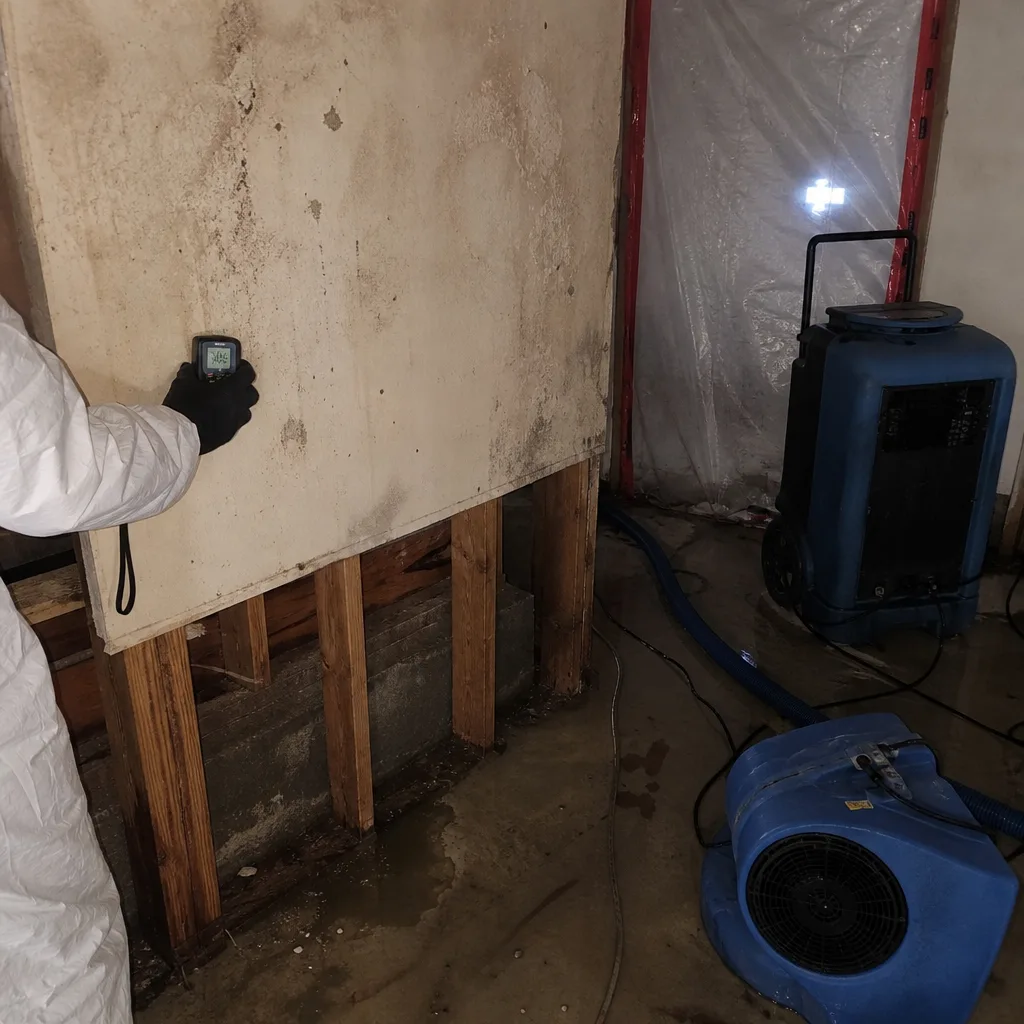
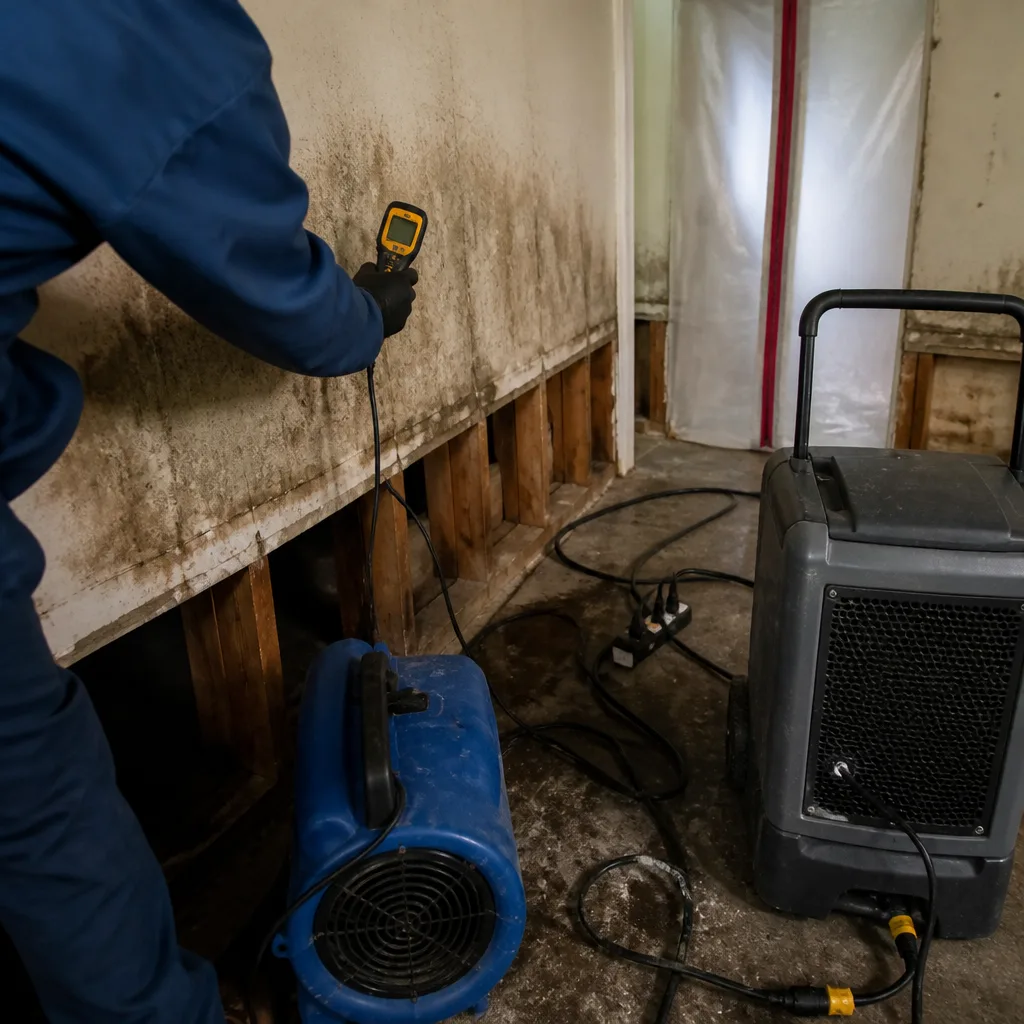
After the San Gabriel Mountains see a fire, the slopes lose the root systems that held soil in place. The next significant storm turns dry creek beds and driveway drainages into moving channels of mud and ash. When that material enters a home, it’s classified as category 3 water, meaning it carries contaminants that require full extraction, structure drying, and antimicrobial treatment. We run moisture mapping on stucco walls and framing because debris-laden water hides in wall cavities where a standard fan setup won’t reach.
Hillside Grade and Drainage Failure
Many San Antonio Heights homes on the upper fan rely on original drainage systems installed decades ago. When those swales and culverts fill with debris or simply fail from age, water sheets across the property instead of flowing around it. We inspect grading and drainage as part of every flood damage restoration job here, because the restoration is incomplete if the next storm just repeats the damage.
Water Damage Cleanup in San Antonio Heights
Water damage cleanup in San Antonio Heights costs $1,800 to $5,500 for most interior events, including extraction, drying, and antimicrobial treatment for affected surfaces. The cleanup phase addresses what happens after the initial intrusion: saturated drywall, wet insulation, buckled flooring, and hidden moisture in wall cavities. In San Antonio Heights homes built with stucco-over-wood-frame, moisture hides behind plaster and stucco long after the visible water is gone. Without injectidry-style cavity drying and proper moisture mapping, that hidden water becomes mold growth within 24 to 48 hours in our hot foothill summers.
Structural Drying With Cavity Systems
We deploy Injectidry cavity-drying systems on almost every San Antonio Heights cleanup job because of the construction type. Stucco-clad wood frame homes don’t dry the way open drywall does. The Injectidry setup forces air through wall cavities and under flooring without destructive tear-outs, which saves you repair costs and gets the structure dry faster. It also lets us dry in place rather than cutting out every wet wall, a significant advantage when you’re already dealing with hillside property access.
Category 3 Water Handling and Disinfection
When water comes from post-fire runoff or sewage backup rather than a clean supply line, cleanup means more than drying. We run extraction followed by antimicrobial treatment on affected structural surfaces. The goal is a home that’s dry and biologically safe to live in again, with documentation that shows your adjuster exactly what was done.
Trusted Brands We Service in San Antonio Heights
We keep our San Antonio Heights equipment calibrated and stocked for the specific jobs out here, whether that means Dri-Eaz extraction units on a flooded lower level or a Phoenix dehumidifier run in a hillside garage. Our team works on all major water damage and drying system brands, and we arrive with the right setup the first trip rather than making a second run to a supply house. IICRC-certified restoration means the equipment we use meets the standards your insurance carrier expects to see. If you’re dealing with a burst pipe in a mid-century rancher, a mudflow intrusion on a canyon-edge lot, or a ceiling leak in a Euclid Avenue home, we’ll bring the right gear and get it running. Call (866) 472-6137 and we’ll talk through what’s happening before we even arrive.
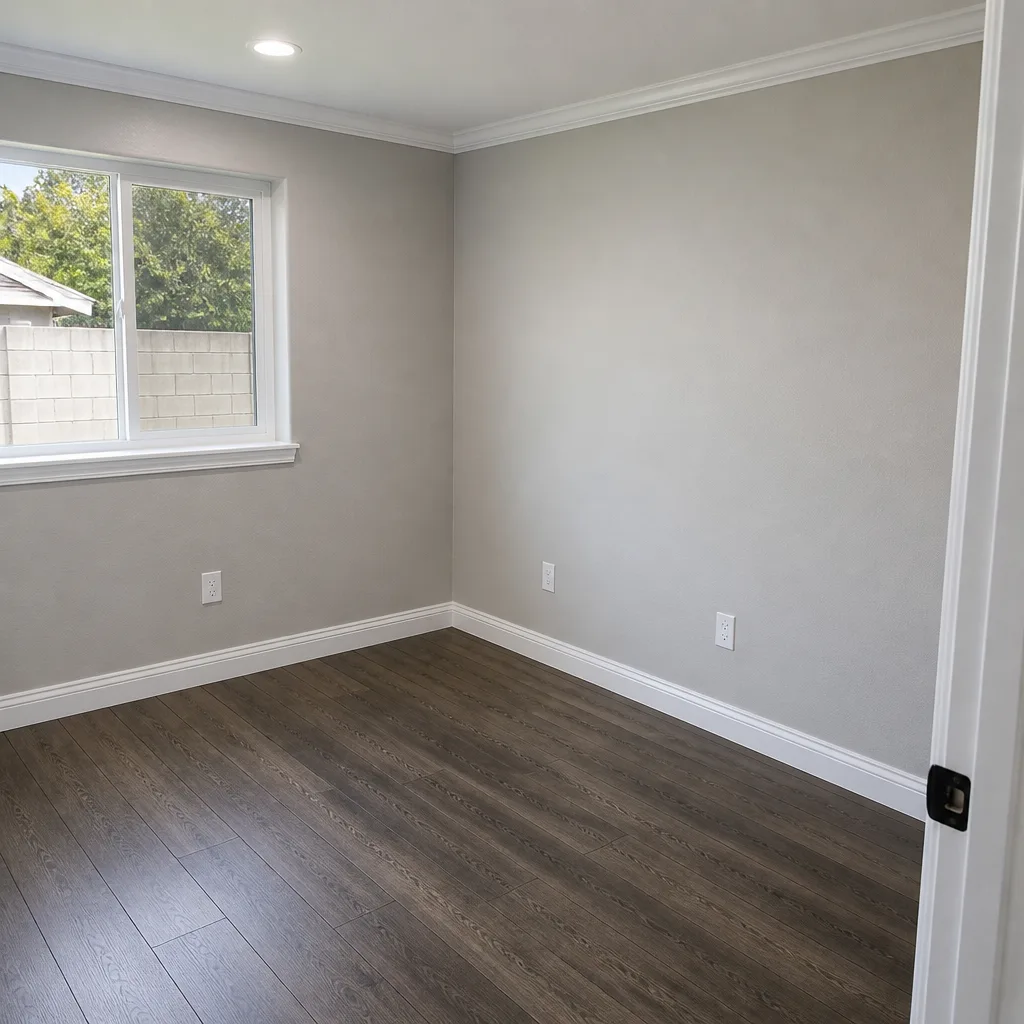
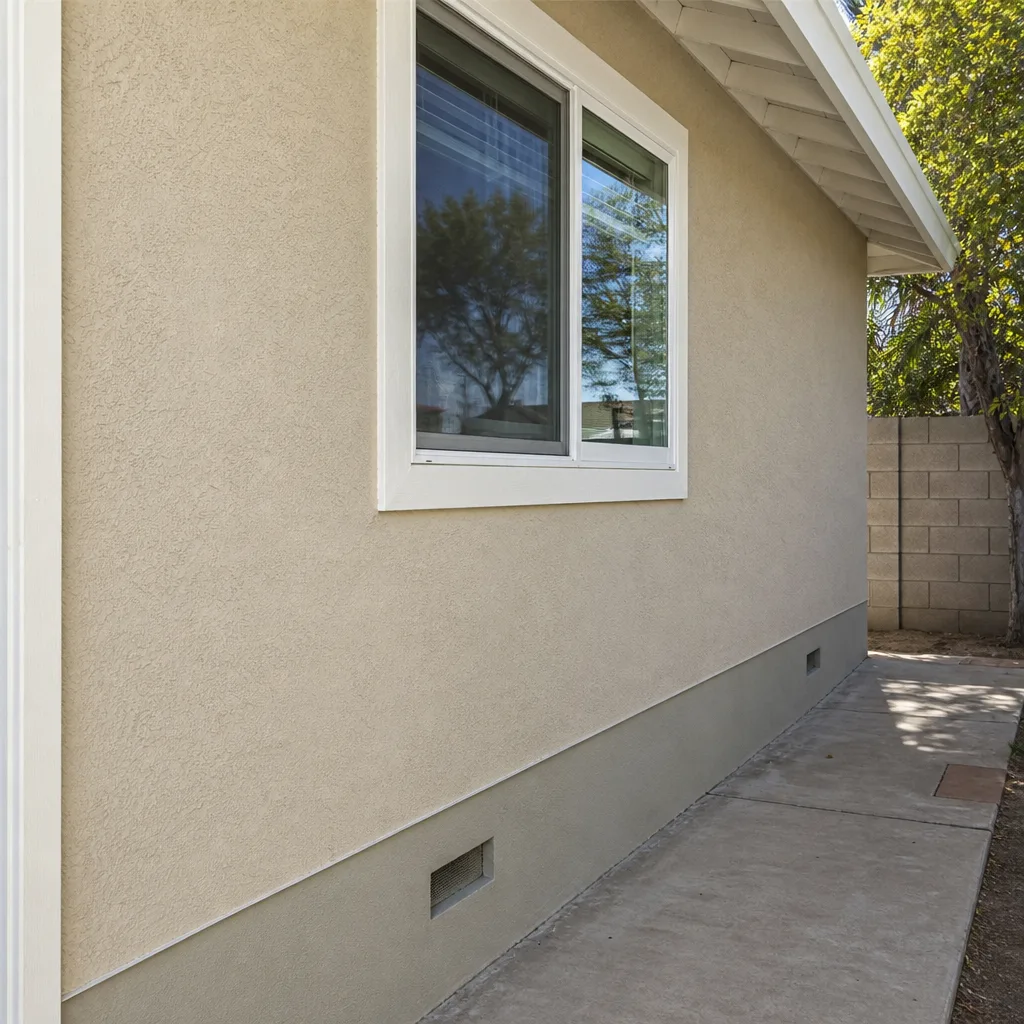
See the difference
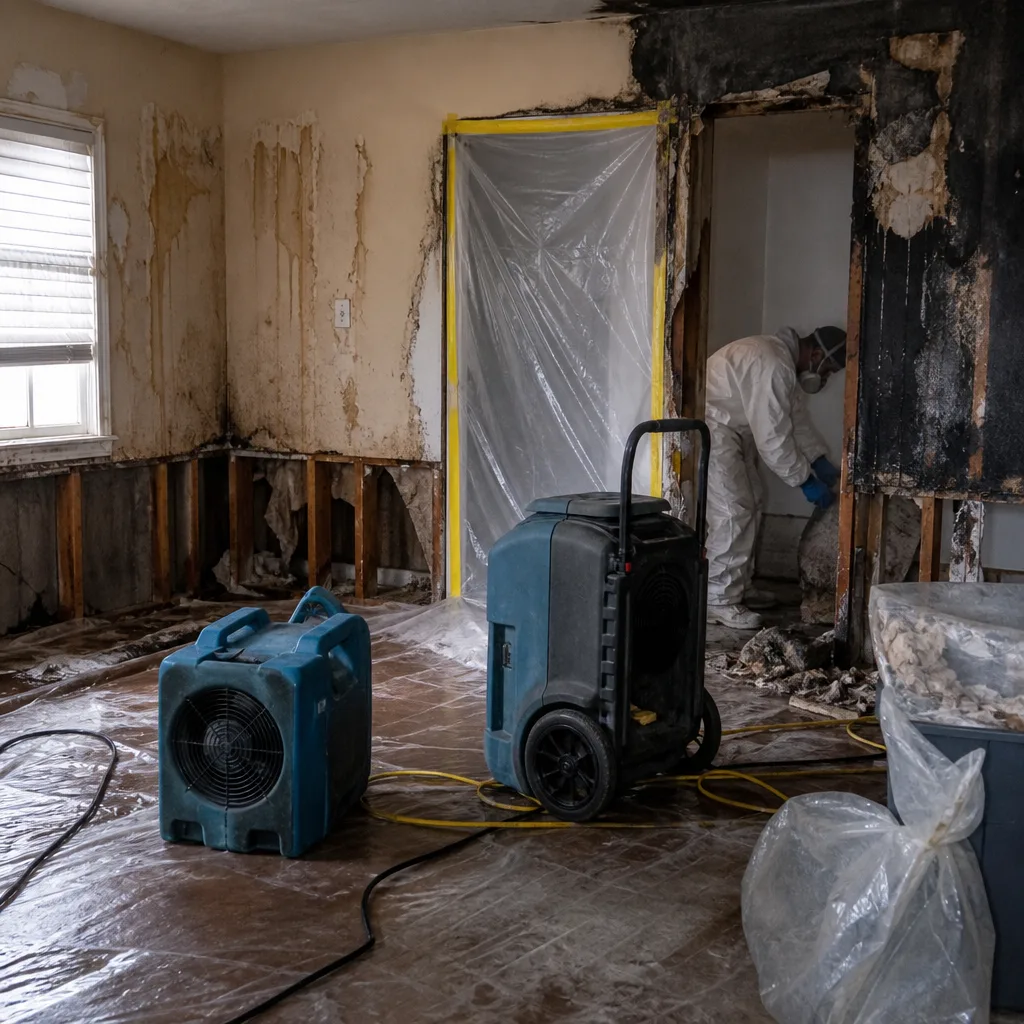 Before
 After
 Before
 After
 Before
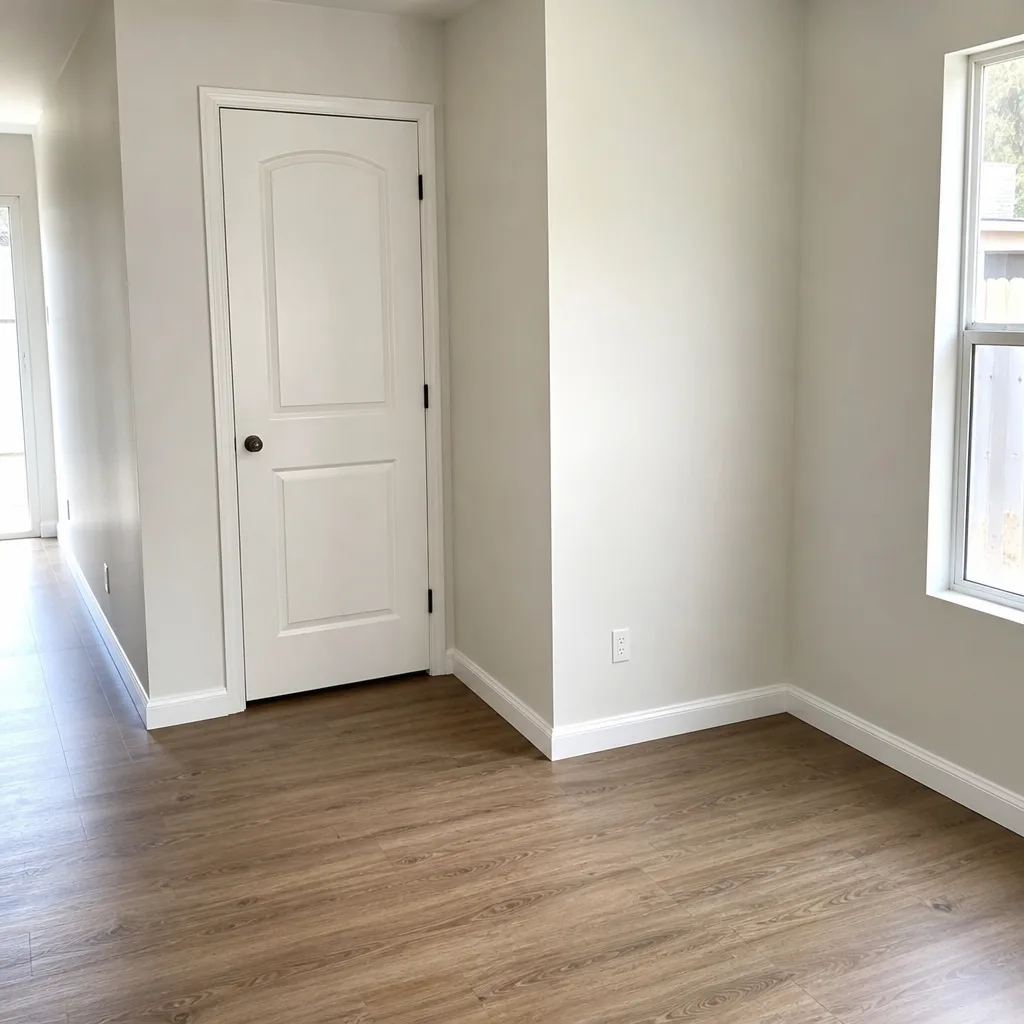 After
Common Water Damage Restoration Problems We See in San Antonio Heights Homes
- Post-fire erosion turning dry washes into debris channels. When a burn scar sits above the community, the first heavy rain pushes mud, rocks, and ash downhill. Homes on the lower alluvial fan or near natural drainage paths see water intrusion that is not a plumbing problem at all, and treating it as one leaves debris and contamination in place.
- Hillside grading and original drainage systems failing after decades. Many San Antonio Heights properties were built with swales and culverts designed for a different climate intensity. Today’s winter storms overwhelm those systems, sending water toward foundation walls and into lower levels.
- Moisture hiding behind stucco walls and original framing. The stucco-over-wood-frame construction common here traps water in wall cavities after roof leaks or exterior runoff. Surface drying won’t touch it. Without cavity-drying systems and moisture mapping, mold appears within two days of the intrusion.
- Tight or unpaved access that standard restoration crews can’t manage. Hillside homes with narrow driveways and unpaved access paths complicate equipment deployment. We plan trailer placement and hose runs differently for San Antonio Heights jobs than we would on a flat Upland cul-de-sac.
Pricing for Water Damage Restoration in San Antonio Heights, CA
Here’s what you can expect to pay in San Antonio Heights. Emergency water extraction runs $450 to $900 for most homes. Structural drying with professional equipment is $1,200 to $3,200 depending on square footage and how many areas are affected. Flood damage restoration with debris removal and category 3 water handling runs $2,500 to $7,000. Full cleanup including antimicrobial treatment and cavity drying is $1,800 to $5,500. These ranges reflect the rooms affected, the level of contamination, and the hidden moisture we find behind stucco walls. Every job starts with a free estimate and a written scope before work begins, so you know what you’re paying for. Call (866) 472-6137 and we’ll walk you through the numbers for your specific situation.
We Also Serve Cities Near San Antonio Heights
Our team covers the foothill communities around San Antonio Heights, including Upland, Rancho Cucamonga, Montclair, and Ontario. If your property sits in one of these neighboring cities or in the unincorporated area of San Antonio Heights itself, you can learn more about our local approach at Water Damage Restoration in San Antonio Heights. We know how the terrain changes across these communities and we plan each job accordingly.
Serving San Antonio Heights, CA — Our Local Coverage Area
We’re based in the San Antonio Heights area and know this community well. Use the map below to see our service coverage — if you’re nearby, we can almost certainly help.
FAQs About Water Damage Restoration in San Antonio Heights
Wildfire risk in the San Gabriel foothills directly causes the most distinctive water damage pattern in San Antonio Heights. After a fire strips vegetation from the slopes above the community, the next significant rain carries ash, soil, and debris down the alluvial fan and into downhill homes. That water is category 3, meaning contaminated, so restoration requires full extraction, structural drying, and antimicrobial treatment rather than simple water removal. A restoration team that understands the burn-scar cycle will document the loss correctly for your insurer, which matters because flooding caused by post-fire erosion often triggers different coverage language than a standard plumbing leak. Call (866) 472-6137 if you see muddy water coming toward your home after a fire season.
Post-fire erosion is a bigger concern in San Antonio Heights because the community sits directly below burn-scarred slopes, and the first rain after a fire turns dry washes into debris-and-mud channels aimed at downhill homes. A pipe leak is a contained plumbing event; post-fire runoff is a landscape-scale event that can carry rocks, mud, and ash into your home from entirely outside your property. When that happens, the water is not clean, and standard extraction equipment alone won’t address the contamination in your walls and flooring. We run category 3 protocols and moisture mapping on every San Antonio Heights job that involves runoff intrusion. Call (866) 472-6137 for an assessment if runoff has entered your home.
Yes. We plan San Antonio Heights hillside jobs around the access reality of each property, including narrow driveways and unpaved paths that can’t accommodate a full trailer. That means positioning equipment trailers where the surface allows, running extraction hoses and power lines over longer distances, and staging drying equipment inside the home in a way that does not block your access. The Ridgeview Drive crew we worked with during a winter storm muddy runoff event had to navigate exactly that kind of access. We got the water out, set up containment, and dried the structure without full tear-outs. Call (866) 472-6137 and we’ll assess your access during the free estimate.
Mold can begin growing within 24 to 48 hours after water intrusion in San Antonio Heights homes, especially during the hot summer months when interior temperatures stay high. The stucco-over-wood-frame construction common here traps moisture inside wall cavities, and that hidden water is exactly where mold thrives. We use moisture mapping to find those pockets and Injectidry cavity-drying systems to dry them without cutting out every affected wall. The faster you call, the less of your home we have to open up. Call (866) 472-6137 the same day you see water and we’ll put the drying plan in motion.
We run Dri-Eaz extraction units, Phoenix dehumidifiers, XPOWER air movers, and Injectidry cavity-drying systems on San Antonio Heights jobs. These are the same professional-grade brands national restoration franchises deploy, not consumer-grade rental equipment. The difference is that we’re an independent team, which means the crew you see on day one is the crew that finishes the job. Our IICRC certification and RIA and IFA affiliations back the equipment choices we make. Call (866) 472-6137 and we’ll walk you through the exact setup your home needs.
When a winter storm sent muddy runoff down a driveway channel on Ridgeview Drive, our crew used water extraction and category 3 water protocols to remove the debris-laden water from a hillside home’s lower level. We set up containment and air movers, then performed antimicrobial treatment on the affected stucco and framing after moisture mapping showed saturation behind the walls. The homeowner was relieved we understood the foothill drainage pattern and worked around the narrow, unpaved access. That’s the standard we bring to every San Antonio Heights job.
If you’re dealing with water damage in San Antonio Heights right now, call (866) 472-6137. We’ll get a team to your property, assess the damage, and put a drying plan in writing before work starts. Free estimates, insurance-level documentation, and a crew that knows these foothills.
Written by Troy Vandenberg, Owner at Trailblazer Water Damage, serving San Antonio Heights and the surrounding foothill communities.