

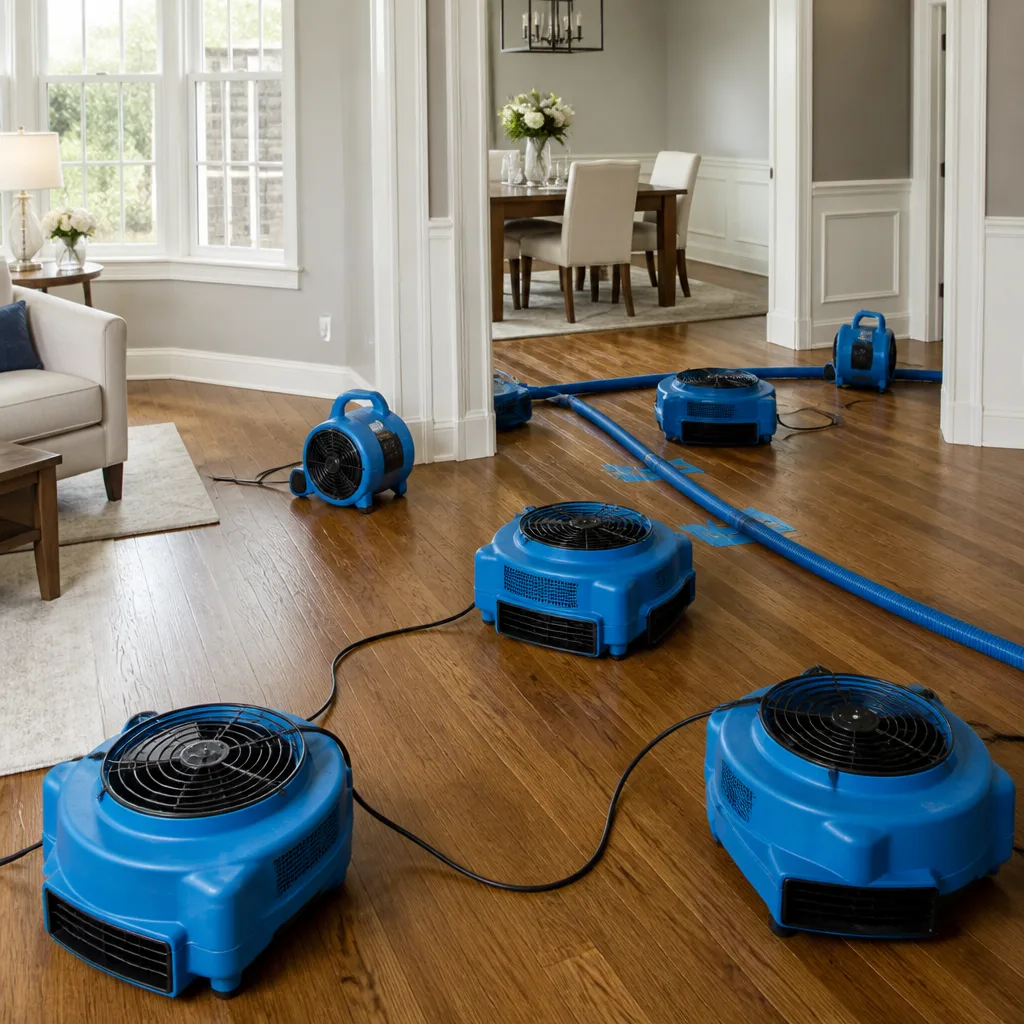
 Water damage drying
 Fire & smoke cleanup
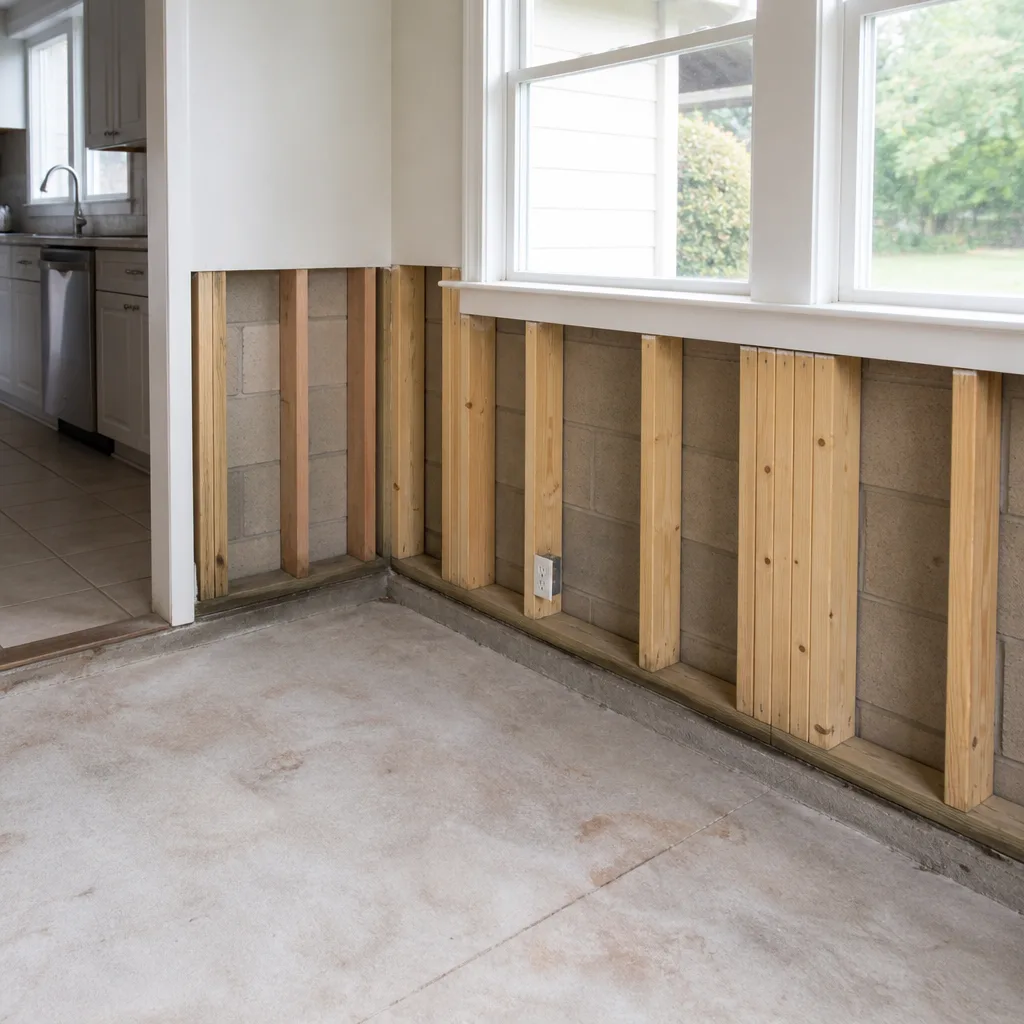 Mold remediation
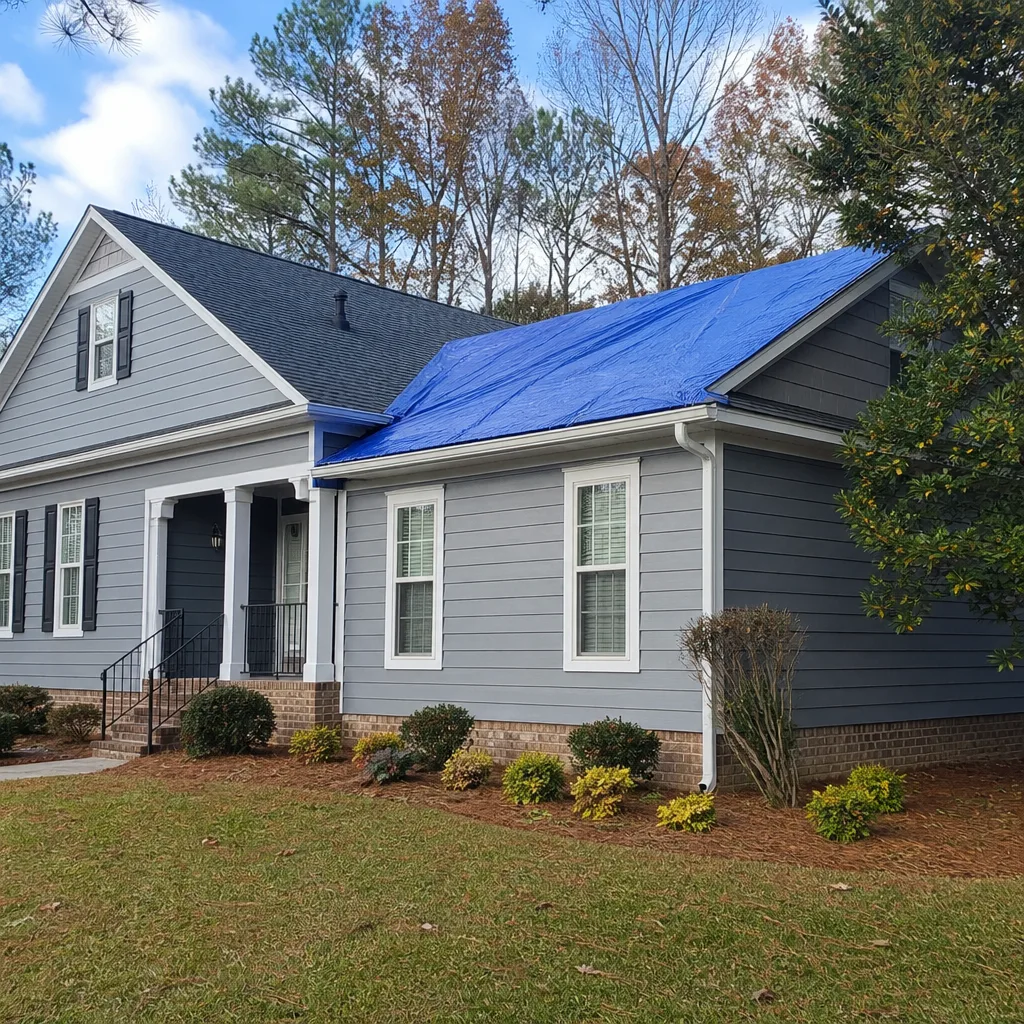 Storm response
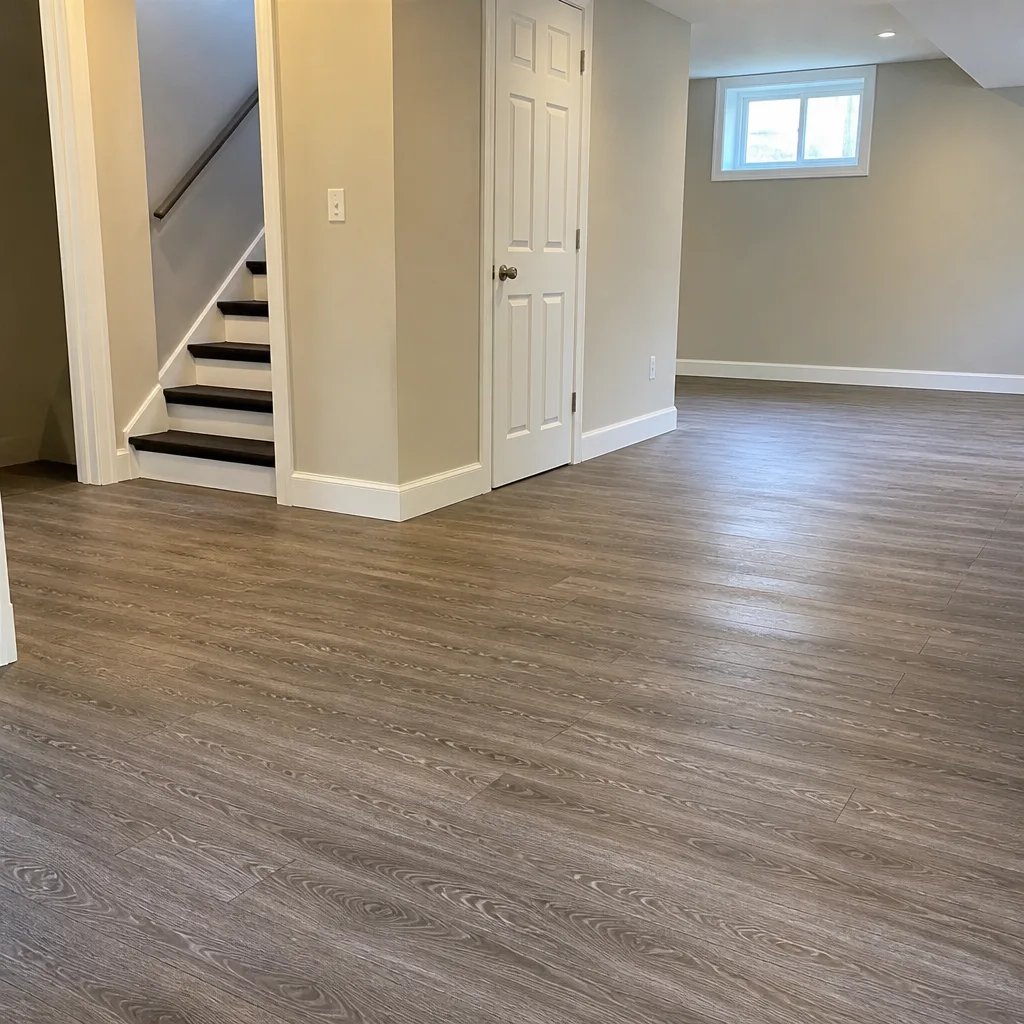 Sewage cleanup
 Reconstruction
Free visual inspection and a written scope of work before any mitigation begins - photos, moisture readings, and drying logs go in your claim file
The scope we write is the scope we bill. Anything new gets shown to you, in writing, before we touch it.
Get your free estimateFast, Reliable Water Damage Restoration Across Home Gardens
Water damage restoration in Home Gardens typically costs $1,800 – $4,200 for a standard supply-line failure with structural drying, and $4,500 – $9,800 for a full room flood with pack-out and antimicrobial treatment. That’s the honest range in the 92879 ZIP, where slab-on-grade construction and aging galvanized plumbing shape almost every job. Call (866) 472-6137 and we’ll have an IICRC-certified crew from Trailblazer Water Damage dispatched to your street within hours, not days.
We know Home Gardens not just as a service area, but as a specific set of houses built in a specific era with specific failure patterns. The 1950s to 1970s stucco ranchers along Magnolia, the add-on rooms that trap humidity, the original supply lines sleeping under concrete slabs. We’ve dried enough of these homes to know where the water actually goes. Our shop in Rialto keeps us close enough to reach any Home Gardens address quickly, and our equipment fleet means we arrive ready to work, not ready to quote.
Key Takeaways:
- Emergency water extraction in Home Gardens starts around $450 – $900 for a contained leak, before structural drying.
- Most older Home Gardens homes need slab-edge moisture mapping, not just surface readings, to catch hidden migration.
- We use Dri-Eaz dehumidifiers, XPOWER air movers, and Injectidry cavity drying systems to dry legacy construction without unnecessary tear-outs.
- Troy Vandenberg leads a team that handles water, mold, and fire under one roof, so no mid-crisis handoffs.
Why Trailblazer Water Damage Is Home Gardens’s Preferred Water Damage Restoration Company
Home Gardens homeowners call us because we show up with the same equipment stack national franchises run, but with an independent team that answers to one person: Troy Vandenberg. Our IICRC certification means we train to restoration science standards, not handyman guesswork. Our RIA affiliation keeps us plugged into the broader restoration industry’s evolving protocols. And our IFA connection matters when a water loss turns into an indoor air quality question, which in a 1960s stucco rancher with add-on rooms happens faster than you’d think.
We’ve worked on supply-line failures off Magnolia Avenue, roof leaks in the denser tracts near the 91 corridor, and slab leaks in the older streets where original galvanized plumbing is just waiting for its end-of-life moment. Home Gardens isn’t a new-build suburb where drying is straightforward. These houses hold water in wall cavities, under vinyl and laminate, and along slab edges. We know that. Our techs carry thermal imaging and moisture meters as standard, because in this ZIP code, the visible wet spot is rarely the whole story.
From extraction to clearance, we handle every phase, including the documentation your adjuster needs. Photo logs, daily moisture readings, a written scope before work starts. That’s how we earn trust in a trade where homeowners have every right to be skeptical.
Restoration work we handle
Emergency Water Removal in Home Gardens
When a supply line lets go inside a Home Gardens wall or a water heater fails in a laundry nook off the kitchen, Emergency Water Removal is the first thing that has to happen, and it has to happen fast. In Home Gardens, where most homes sit on slab foundations, standing water doesn’t drain downward, it spreads laterally across finished floors and wicks into drywall. In a 1965 rancher, water that’s been standing for two hours has already started soaking into baseboards, door casings, and the lower wall plates.
We arrive with truck-mounted and portable extraction units, pull the standing water, and immediately start mapping the perimeter for migration. The extraction itself for a contained leak in Home Gardens runs $450 – $900. Adding full structural drying with containment typically brings the first phase to $1,800 – $3,500. The goal is to hit pre-loss moisture readings before demolition becomes necessary. In a slab home, that means measuring along the slab edge, not just the center of the wet room.
Slab-Edge Extraction Protocol
What we do differently here: we treat the slab edge as the real battleground. In the 92879 ZIP, a pinhole leak in a galvanized supply line under the hallway can wick upward for weeks before any surface stain appears. By the time you see it, water has traveled under adjacent flooring, into wall plates, and sometimes under a shared fence line if the failure is on an exterior wall. We moisture-map the entire slab edge before we even set up the extractors.
Quick-Response Equipment Deployment
Our equipment choices for older Home Gardens construction are specific. Dri-Eaz dehumidifiers are workhorses in tight, humid stucco assemblies where air doesn’t move naturally. XPOWER air movers placed at low angles force air across the floor-to-wall junction where water hides. In wall cavities that won’t open easily, Injectidry systems push dry air inside without destructive tear-outs, which matters a lot in homes with original tongue-and-groove subflooring or hand-set tile you don’t want to lose.
Flood Damage Restoration in Home Gardens
When a Home Gardens kitchen floods from a failed appliance line or a winter storm overwhelms a low-slope porch roof, Flood Damage Restoration means more than just drying. It means category assessment, containment, pack-out of affected contents, controlled demolition if needed, and antimicrobial treatment before rebuilding. In a 1950s stucco home with original framing and add-on rooms, a flood event can introduce category 2 or 3 water, and the standard for what gets dried versus what gets cut out is a technical decision, not a preference.
Flood restoration in Home Gardens typically runs $4,500 – $9,800 depending on square footage, water category, and whether pack-out and content cleaning are required. The lower end is a clean-water laundry overflow caught quickly. The upper end is a roof failure that sat overnight, or a sewage backup that requires full decontamination. Either way, the sequence is the same: extract, contain, dry, clean, clear. We do all of it with the same team, so the adjuster talks to one contractor, and you do too.
Containment and Pack-Out Before Demolition
Here’s the failure we see all over Home Gardens: a crew starts cutting wet drywall without containing the work area, and now every floor in the house is covered in aerosolized debris and maybe mold spores. We don’t operate that way. We set negative-air containment with a HEPA-scrubbed boundary, pack out salvageable contents with a documented inventory, and only then do we cut. This is insurance-level protocol on every job, whether it’s $4,500 or $9,800.
Antimicrobial Treatment and Moisture Verification
We don’t declare a Home Gardens flood job done when the floors feel dry. We declare it done when moisture readings at the slab edge, inside wall cavities, and under cabinetry hit pre-loss levels and the antimicrobial application has been logged. That’s the clearance standard your adjuster will respect, and it’s the same standard Troy Vandenberg signs off on personally.
Trusted Brands We Service in Home Gardens
When you call Trailblazer Water Damage for Water Damage Restoration in the 92879 ZIP, you get a team that runs Dri-Eaz, Phoenix, and XPOWER equipment, not rental-store dehumidifiers. That matters in Home Gardens because older stucco homes with add-on rooms and minimal crawlspace hold moisture stubbornly. We keep replacement parts and drying accessories stocked for the brands we run, so a failed air mover or a plugged dehumidifier line doesn’t stall your drying timeline. Fast turnaround on equipment swaps, not a two-day wait for a part from a supplier across the county. That’s the advantage of a local operation with a professional-grade fleet.
See the difference
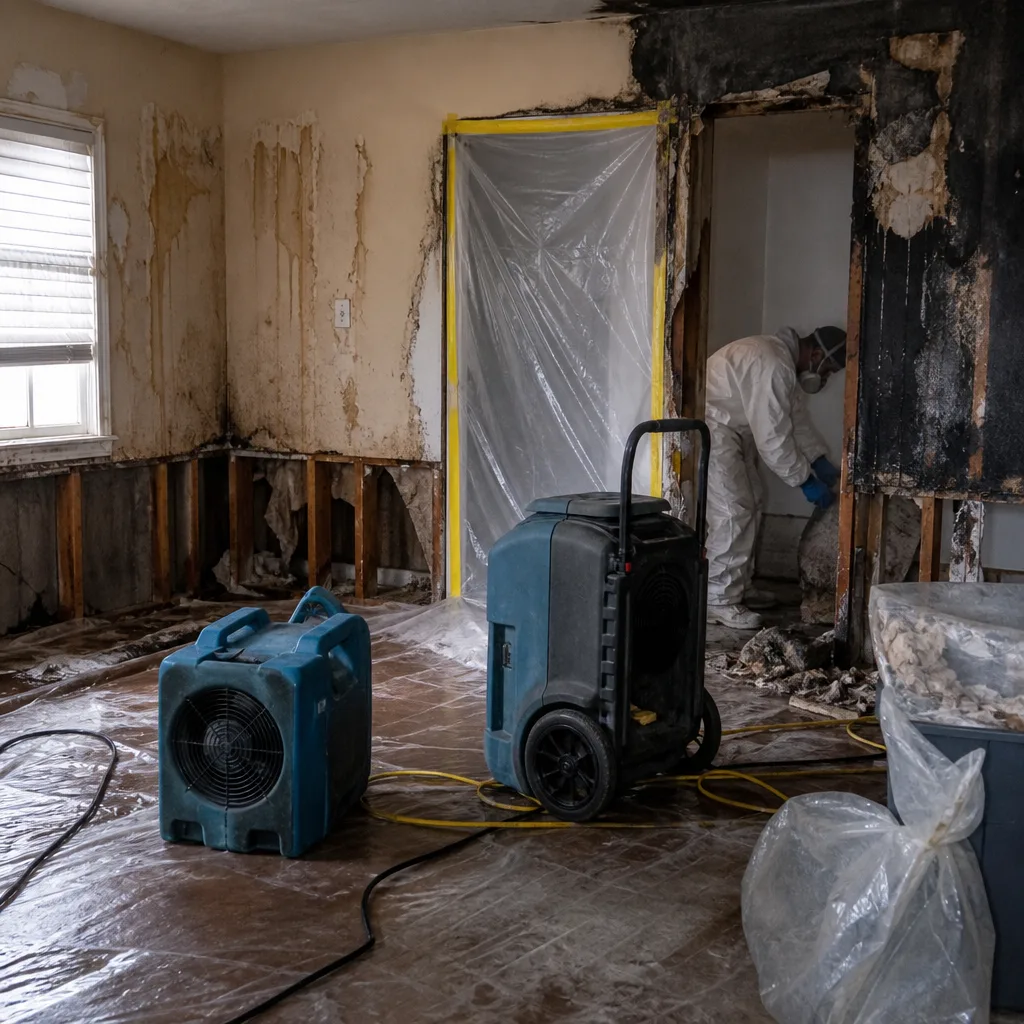 Before
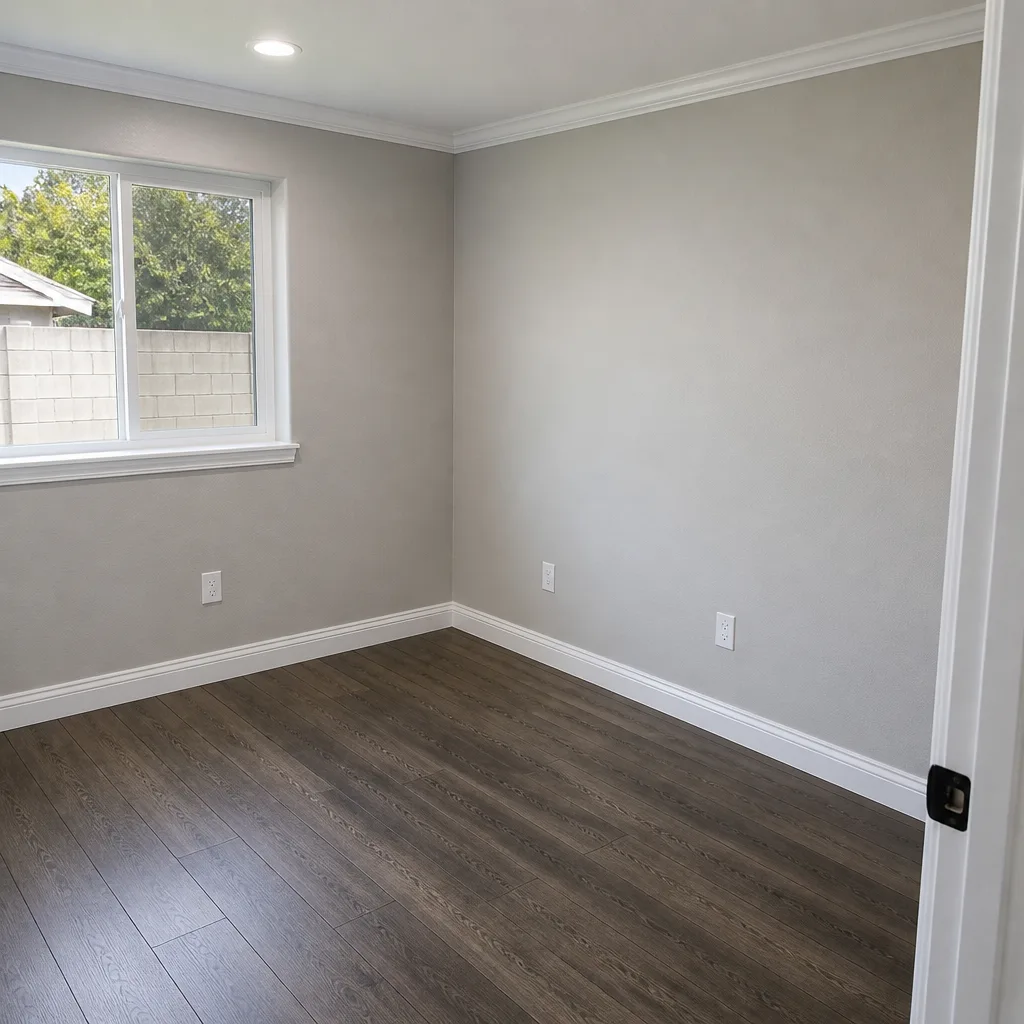 After
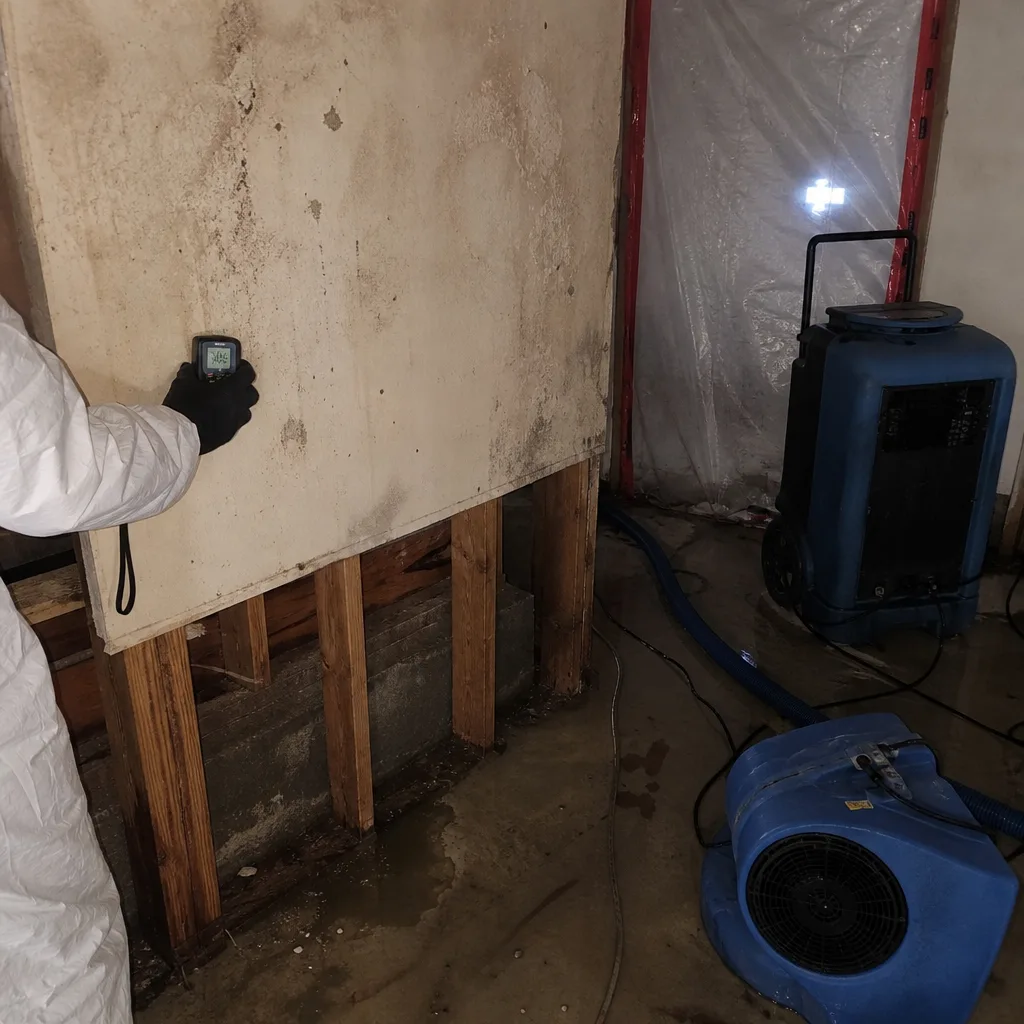 Before
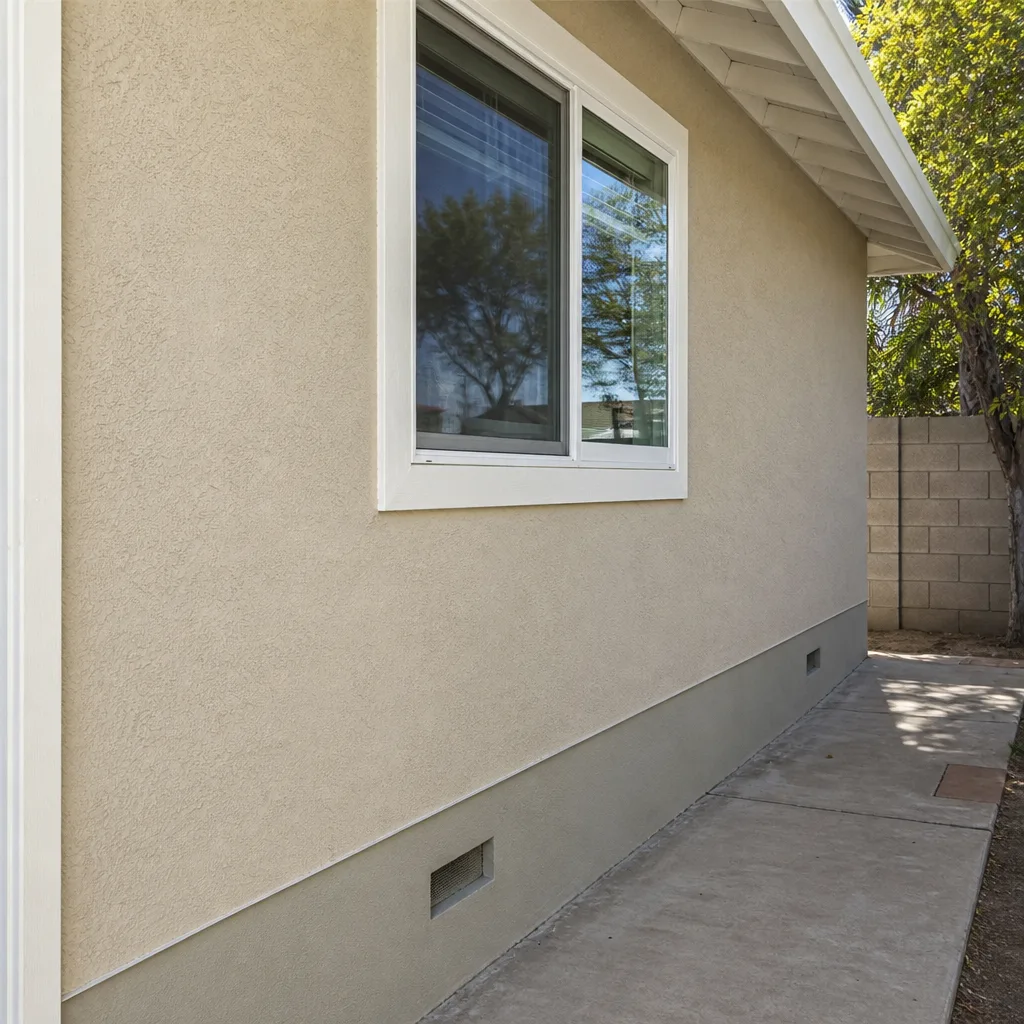 After
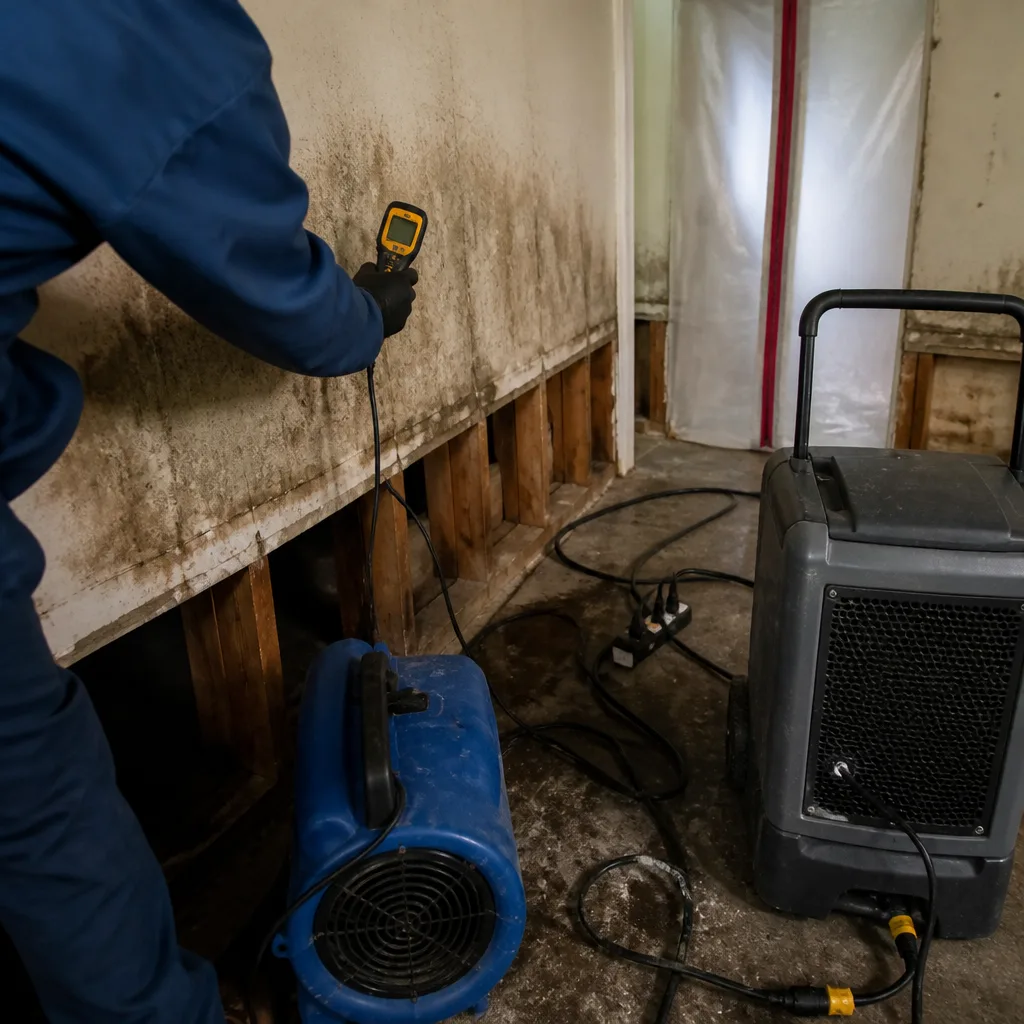 Before
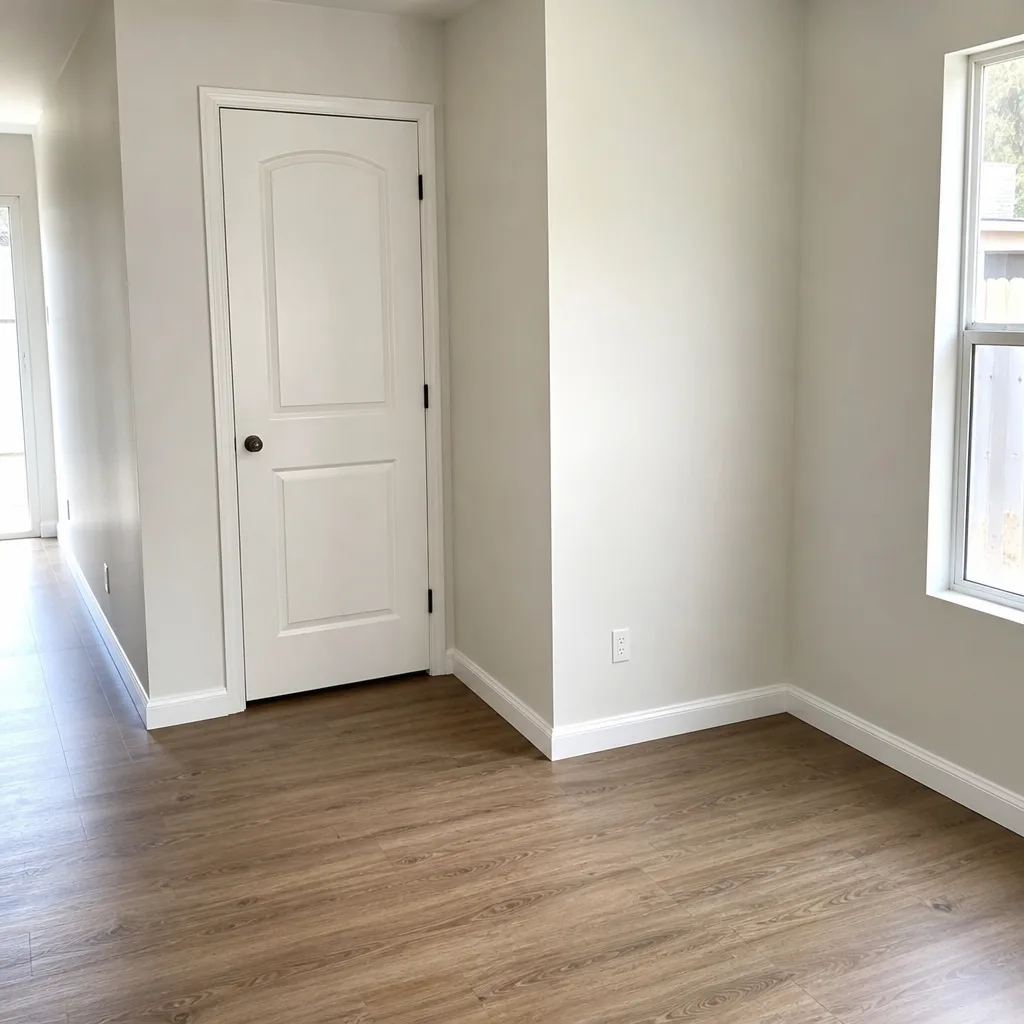 After
Common Water Damage Restoration Problems We See in Home Gardens Homes
Every city has its failure patterns. In Home Gardens, these four dominate the call log:
- Hidden slab leaks from original galvanized supply lines. Water travels under the slab and wicks up through the concrete, ruining laminate and carpet before any surface stain appears. The fix is slab-edge moisture mapping, not just a glance at the wet room.
- Roof leak clusters after summer heat and winter storms. Inland Riverside County heat bakes original asphalt shingles, and thermal cycling cracks flashing on low-slope porch roofs. When winter rain hits, water finds those cracks and saturates ceilings and walls.
- Humidity-trapping add-on rooms. Poorly vented add-ons built onto 1950s and 1960s ranches hold moisture after a water event, and secondary mold growth can start within 24 to 48 hours if drying isn’t aggressive enough.
- Shared-fence and neighbor-migration water damage. Dense single-family lots along Magnolia and near the 91 corridor mean water doesn’t always stop at the property line. A slab leak on one side can push moisture into an adjacent unit or against a shared fence, complicating the drying scope.
Pricing for Water Damage Restoration in Home Gardens, CA
Let’s put numbers on it. Emergency water extraction in Home Gardens: $450 – $900 for a contained leak. Full structural drying with containment and daily monitoring: $1,800 – $3,500 depending on rooms affected and slab-edge migration. Flood restoration with pack-out: $4,500 – $9,800. Roof-leak drying in a stucco home with possible Injectidry cavity work: $2,200 – $4,800. What moves the number? Square footage, water category, the number of add-on rooms that trap humidity, and whether contents need pack-out and cleaning. You’ll get a written scope before work starts, not a verbal guess. Call (866) 472-6137 for a free estimate, and we’ll line-item it.
We Also Serve Cities Near Home Gardens
Trailblazer Water Damage covers more than just Home Gardens. We’re on call for water damage in Eastvale, Norco, Jurupa Valley, and Riverside, so if you’re managing a rental property across the 91 corridor or a family member’s home in one of these neighboring cities, one phone call covers it.
Serving Home Gardens, CA — Our Local Coverage Area
We’re based in the Home Gardens area and know this community well. Use the map below to see our service coverage — if you’re nearby, we can almost certainly help.
FAQs About Water Damage Restoration in Home Gardens
Yes. We moisture-map the entire slab edge on every Home Gardens job where the home is on a slab foundation, because galvanized supply-line leaks under concrete can migrate far from the visible wet spot. This means taking readings at wall plates, door casings, and the perimeter of the finished floor, not just in the room where you see the stain. If we skip that step, we leave water behind to keep wicking. Call (866) 472-6137 and ask for a slab-edge assessment.
We dispatch from Rialto and can typically start extraction at a Home Gardens address within a few hours of your call, depending on traffic and call volume. When you call, we tell you the realistic ETA before you commit. Same-day response is standard for supply-line failures, because in slab homes, every hour of standing water means more flooring and drywall that has to be replaced.
Most roof leaks in Home Gardens introduce category 1 or category 2 water, depending on how long the water has been sitting and whether it passed through insulation or attic debris. Category 1 is clean rainwater; category 2 is water with some contamination. If the leak sat long enough to grow mold, we escalate the scope and bring in our mold remediation protocol, which we handle in-house.
Often yes, and that’s where Injectidry cavity-drying systems earn their keep. We can push dry air into wall cavities and under flooring in a 1960s stucco rancher without cutting open every wall, provided the water is category 1 or 2 and the framing is sound. But we’ll be straight with you: if the drywall is saturated, delaminating, or showing mold, controlled demolition is the cheaper long-term fix. We write the scope so you can see the old-school line item and the dry-wood line item side by side.
Yes. Pack-out, contents cleaning, antimicrobial treatment, and moisture verification are all part of our flood restoration scope in Home Gardens. We inventory your salvageable contents before they leave, clean and treat what can be saved, document everything for your adjuster, and bring it back when the structure clears. No third-party handoff. One team, one phone number: (866) 472-6137.
Written by Troy Vandenberg, Owner at Trailblazer Water Damage, serving Home Gardens and the Inland Empire.