
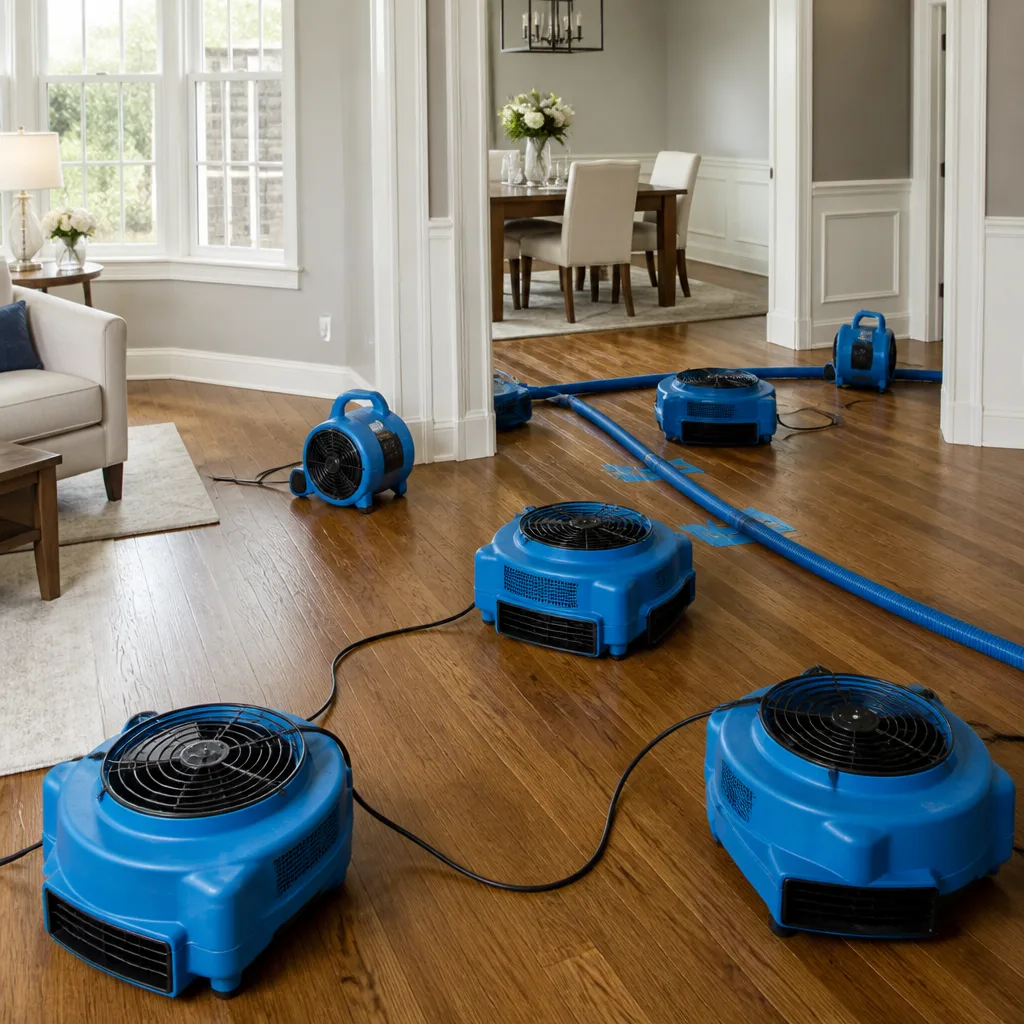
 Water damage drying
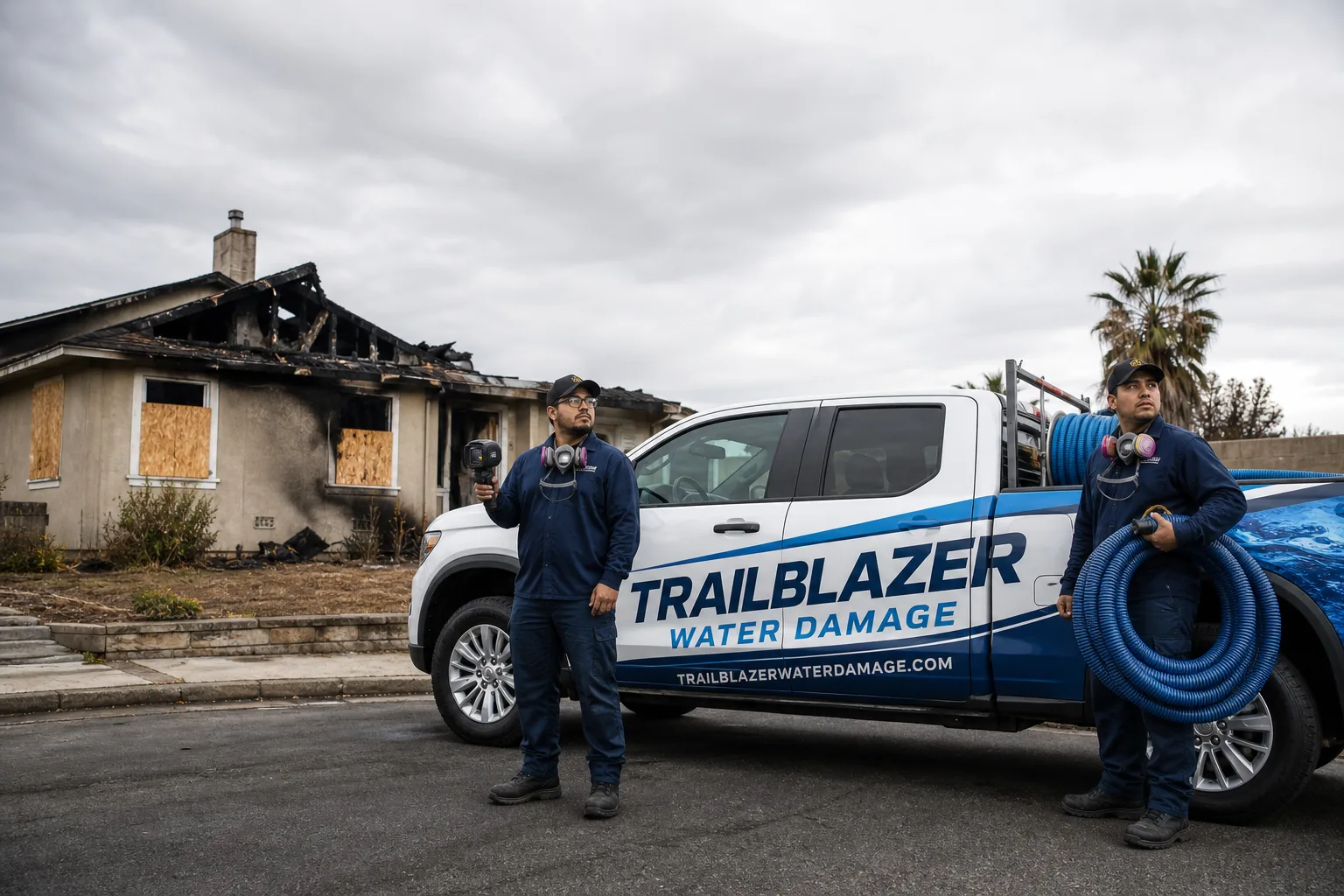
 Fire & smoke cleanup
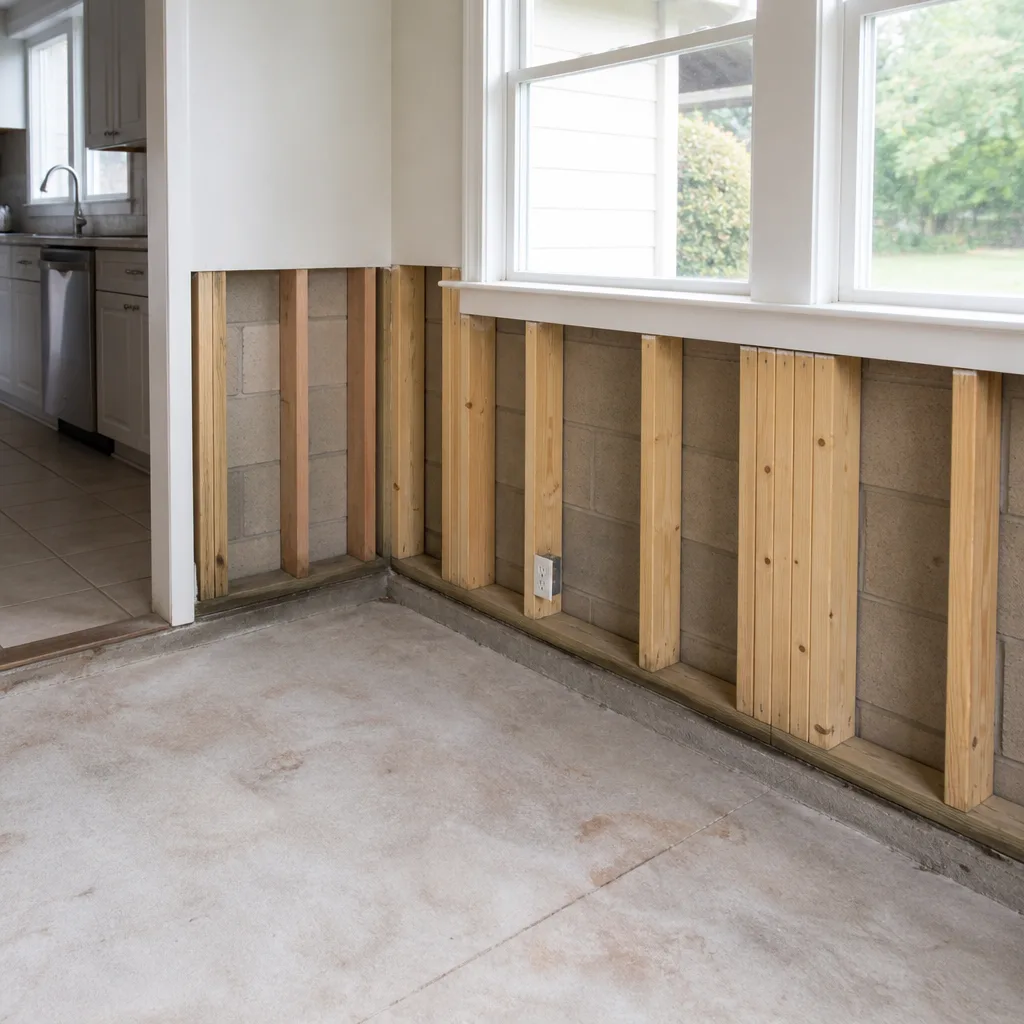 Mold remediation
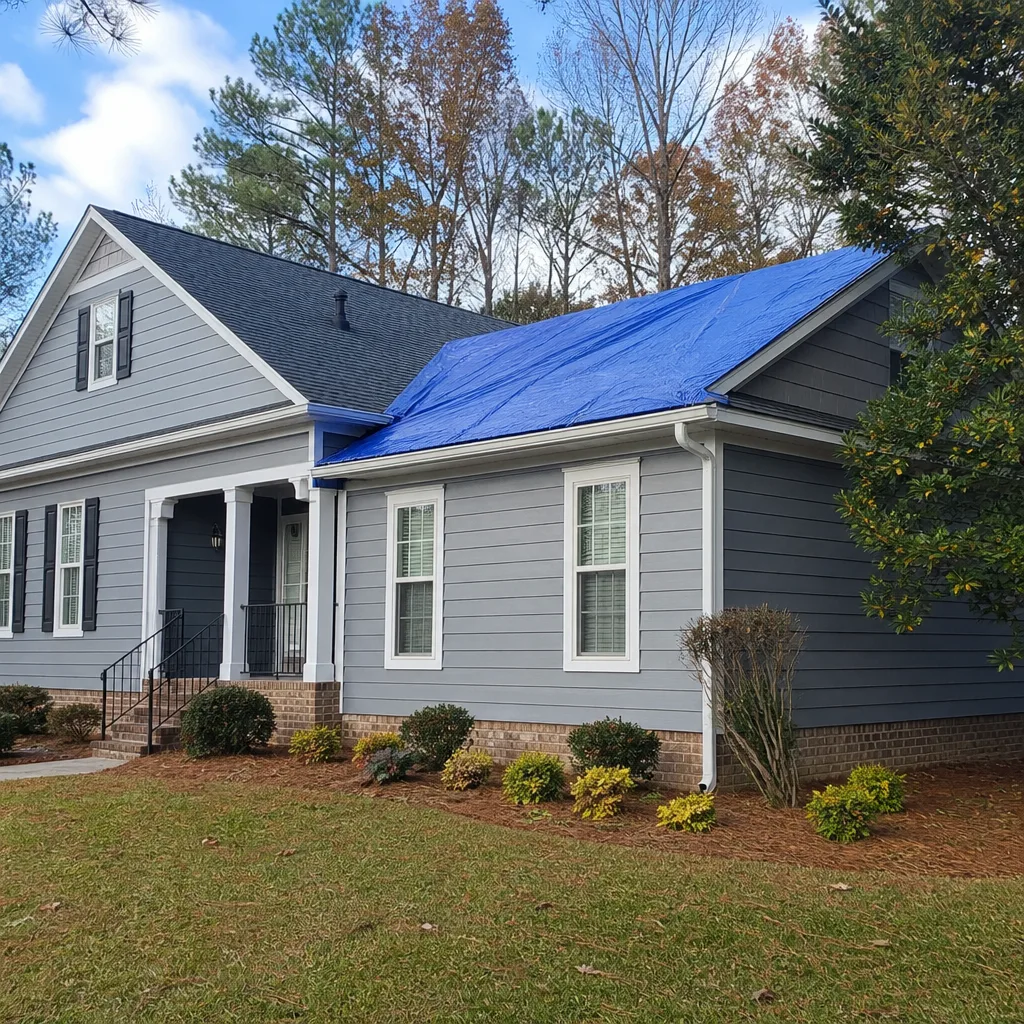 Storm response
 Sewage cleanup
 Reconstruction
Free visual inspection and a written scope of work before any mitigation begins - photos, moisture readings, and drying logs go in your claim file
The scope we write is the scope we bill. Anything new gets shown to you, in writing, before we touch it.
Get your free estimateFast, Reliable Water Damage Restoration Across Grand Terrace
When water is spreading through a Grand Terrace home, the first hour matters more than the next three days. Our team gets to Grand Terrace quickly because we know exactly how the city is built: single-story slab-on-grade ranch homes from the 1960s and 70s, hillside stucco houses backed against Blue Mountain, and the older tract streets between Barton Road and Main Street. That local knowledge means we don’t waste time figuring out how your house is put together. We already know. Call (866) 472-6137 the moment you spot standing water, a ceiling stain, or a wall that feels cold and damp. We’re the Water Damage Restoration team that treats Grand Terrace as home turf, not a drive-by service call.
Why Trailblazer Water Damage Is Grand Terrace’s Preferred Water Damage Restoration Company
We’re led by Troy Vandenberg, who built this company around a simple idea: restoration should run at the level insurance adjusters and commercial contractors expect, but serve homeowners who need it explained in plain English. Our IICRC-certified team has worked in Grand Terrace long enough to know which streets flood first when the Santa Ana River bottom saturates and which hillside lots catch the runoff off Reche Canyon. That experience shows up in how we scope a job. We don’t pad line items. We write a scope in detail before work starts, document everything with photos, and keep the documentation clean enough to hand straight to your adjuster.
We carry Dri-Eaz and Phoenix drying systems because those are the same brands national restoration franchises run. The difference is you’re dealing with one independent crew from first call through final inspection, not a rotating cast of subcontractors. Troy built this company to move toward damage situations others avoid. That’s the Trailblazer name, and it’s not marketing copy. It’s how we work.
Restoration work we handle
Water Mitigation in Grand Terrace
Water Mitigation in Grand Terrace is the controlled, documented process of stopping active water intrusion, removing the water that’s already moved in, and drying the structure back to a stable moisture state before it becomes a mold problem or a structural issue. Around here, that almost always means dealing with slab-on-grade construction, stucco walls, and water that’s moved sideways through hard-to-dry assemblies rather than straight down into a basement. A typical water mitigation job in Grand Terrace runs $1,800 to $4,200 depending on how far the water has traveled and whether you’ve got category 1 clean water or category 2/3 contamination from a broken supply line that’s been soaking for days.
Slab And Stucco Drying
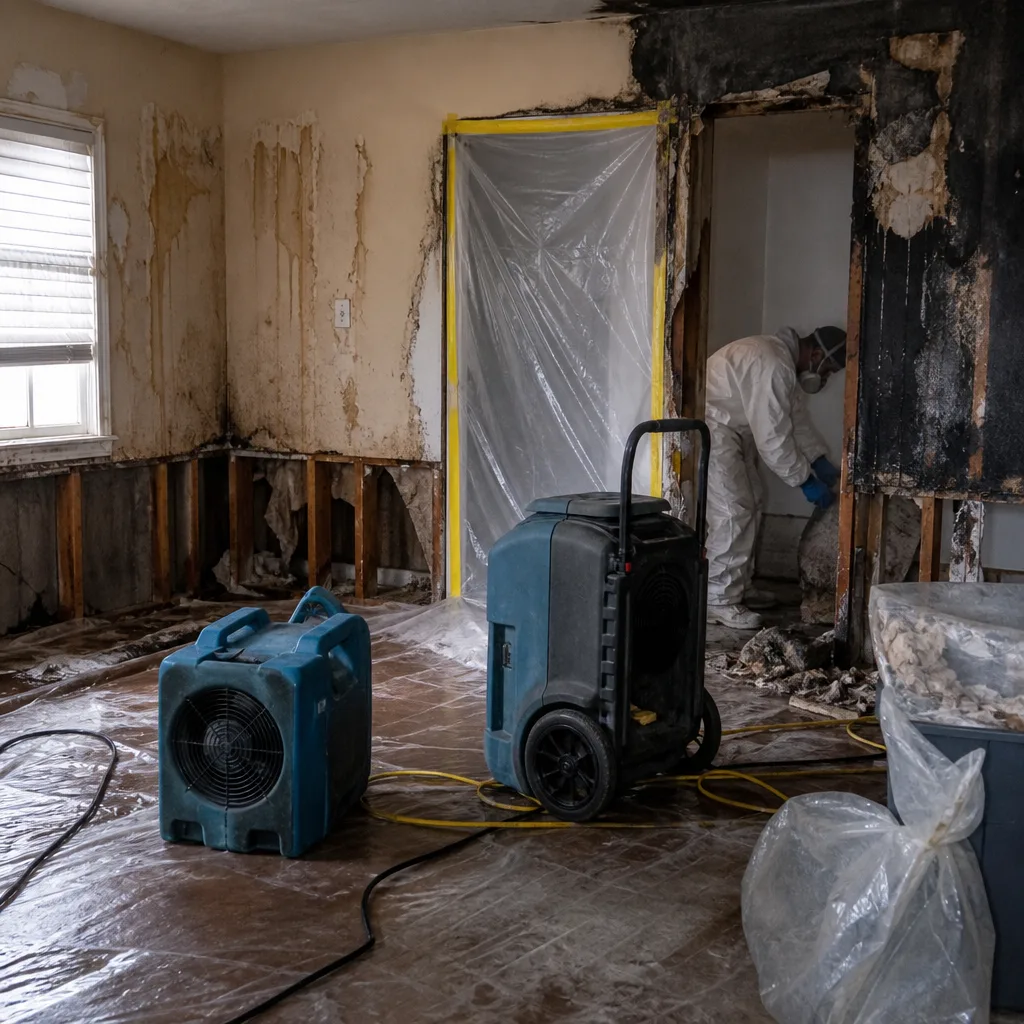
Slab homes don’t drain. Water that gets under vinyl plank or tile stays there and wicks up into baseboards and drywall. We run moisture mapping across the affected rooms first, then set up contained drying chambers with Dri-Eaz dehumidifiers and high-volume air movers. Daily drying logs track moisture readings against the dry standard for your home’s construction type.
Wall Cavity Drying Without Tear-Out
Here’s where our equipment stack changes the math. When water wicks up inside a stucco wall behind the baseboard, the old-school fix is to cut out drywall and open the cavity. We use Injectidry systems to pull air through the cavity from small access points. That saves you demolition, framing repair, texture matching, and repainting. On a Grand Terrace ranch home with original 1960s drywall, that can mean the difference between a $2,500 job and a $7,500 job.
Flooded Basement in Grand Terrace
Flooded Basement in Grand Terrace isn’t the classic Midwestern full-below-grade basement problem, but it happens in split-levels and the few true basement homes on the older streets, plus in the garage-level spaces under hillside construction where terrain drops away. When those spaces take on water, the concrete slab acts like a sponge and the stucco base wicks it upward. A typical flooded basement extraction and dry-out in Grand Terrace runs $2,200 to $5,800. The range depends on whether you’re dealing with clean rainwater, gray water from a failed washing machine line, or the category 3 mix that comes from a sewer backup or prolonged runoff carrying silt and organic matter off the slopes.
Extraction And Containment
We start with truck-mounted extraction on the standing water, followed by flooding cleanup of the corners and wall bases that hold water after the pump stops. Then we contain the affected zone so wet air doesn’t migrate into the rest of the house. Containment matters twice as much in Grand Terrace during Santa Ana season, because open windows plus drying equipment can pull smoke and ash into a newly dried cavity if we skip that step.
Structural Drying Under A Slab
Slab water doesn’t sit in one place. It channels through the gravel base, under footings, and back up where the floor meets stucco walls. We place floor mat drying systems and cavity-drying rigs to pull moisture out of the concrete itself, not just the air above it. Daily moisture readings prove the slab is actually moving toward dry standard, not just the room air.
Trusted Brands We Service in Grand Terrace
When you call us for water damage in Grand Terrace, you’re getting equipment that insurance adjusters recognize on sight. Our fleet includes Dri-Eaz dehumidifiers, Phoenix air movers, and Injectidry cavity-drying systems. That matters when an adjuster reviews your documentation, because the drying logs reference instrumentation and equipment they already trust from national restoration firms. We’re affiliated with the RIA and IFA, which means we answer to industry standards for restoration science and indoor air quality, not just our own word. And we stock the parts, filters, and drying accessories to run those systems on your job without waiting on a distributor shipment.
See the difference
 Before
 After
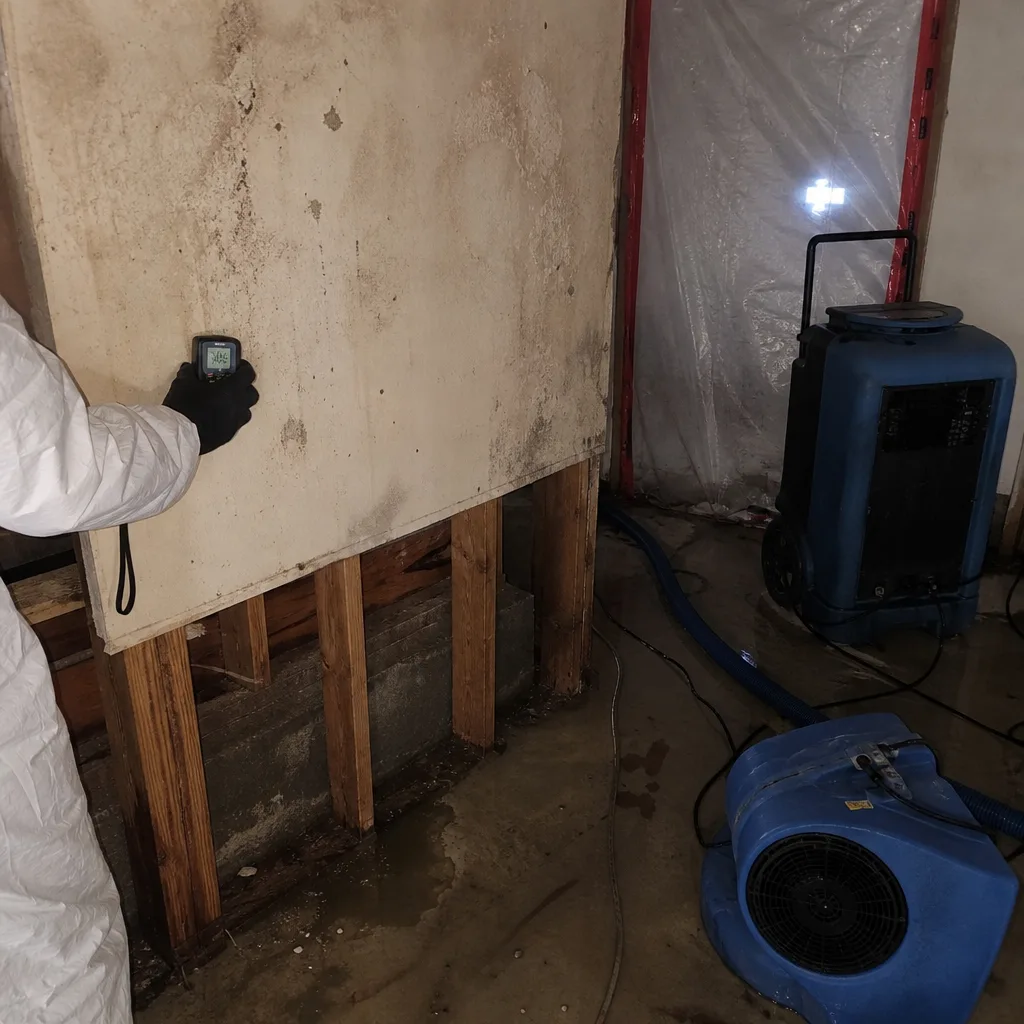 Before
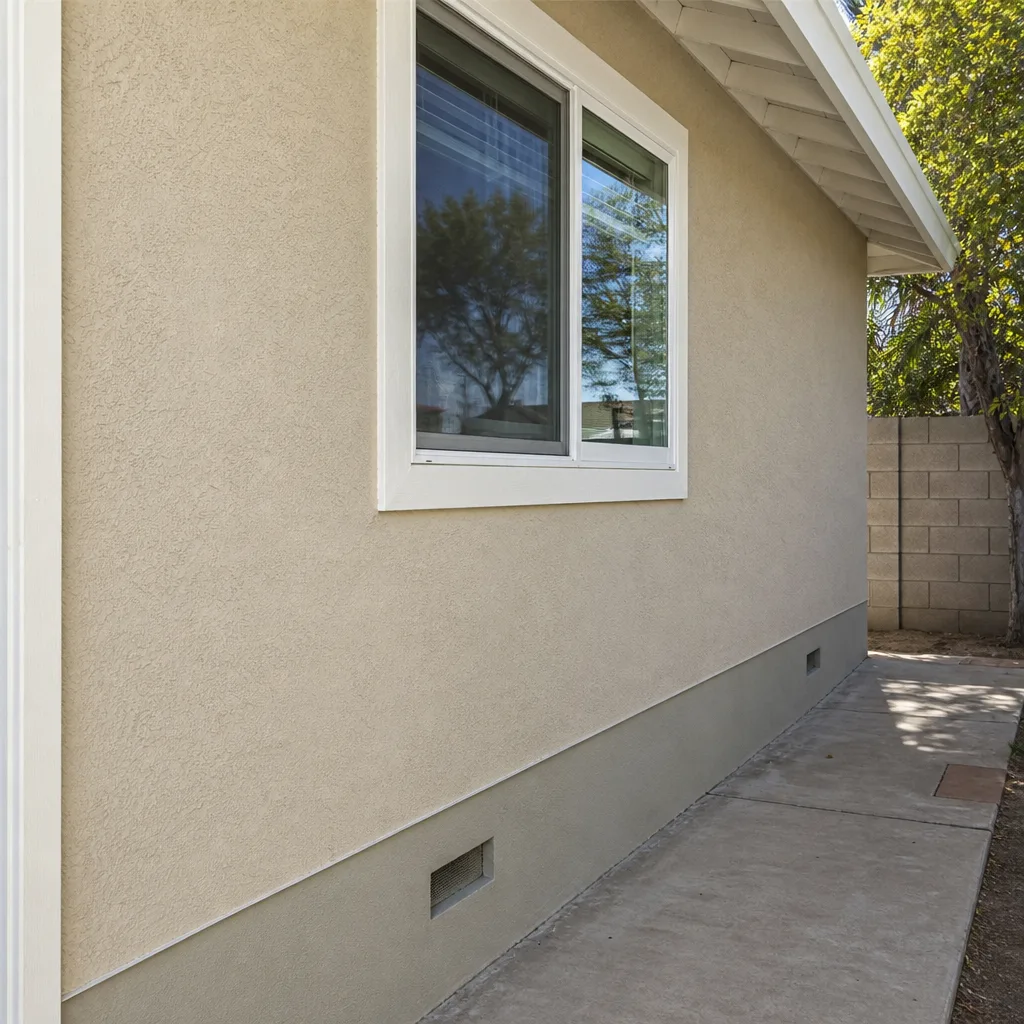 After
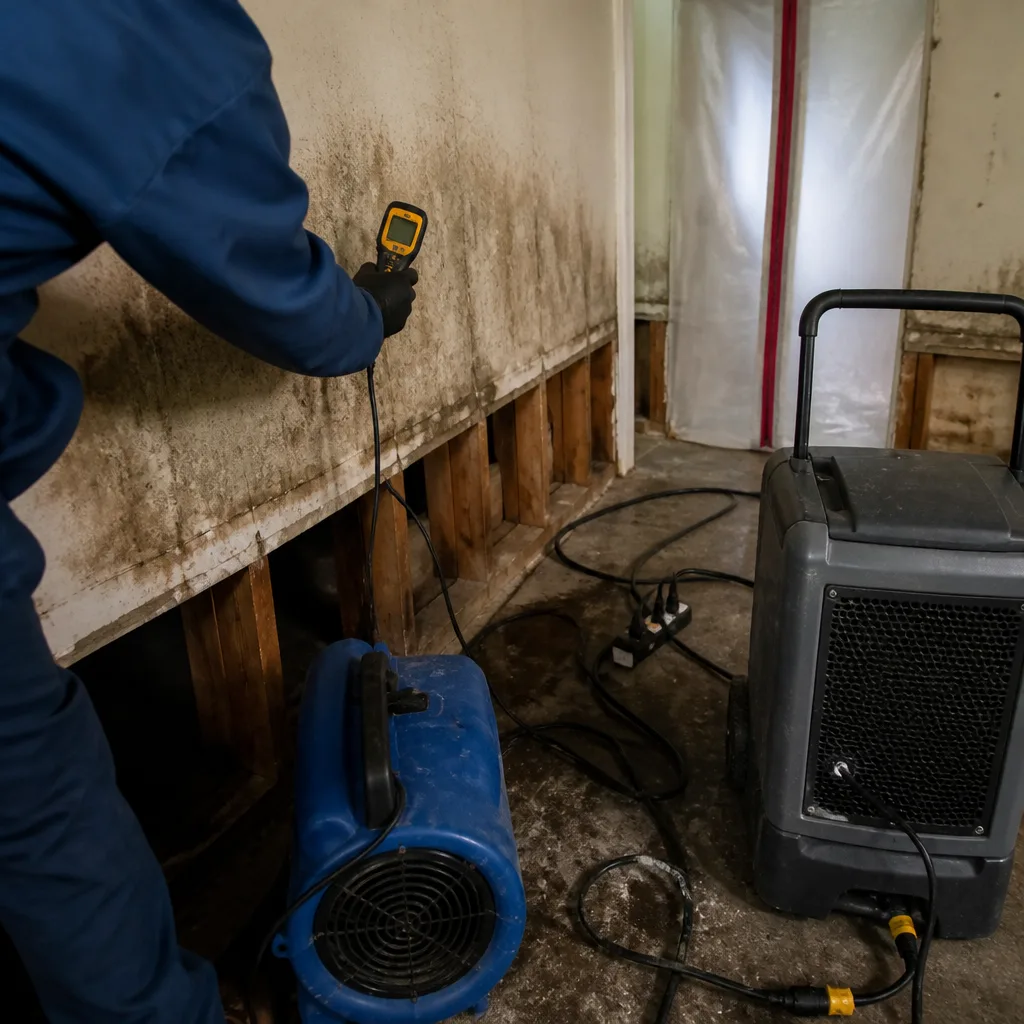 Before
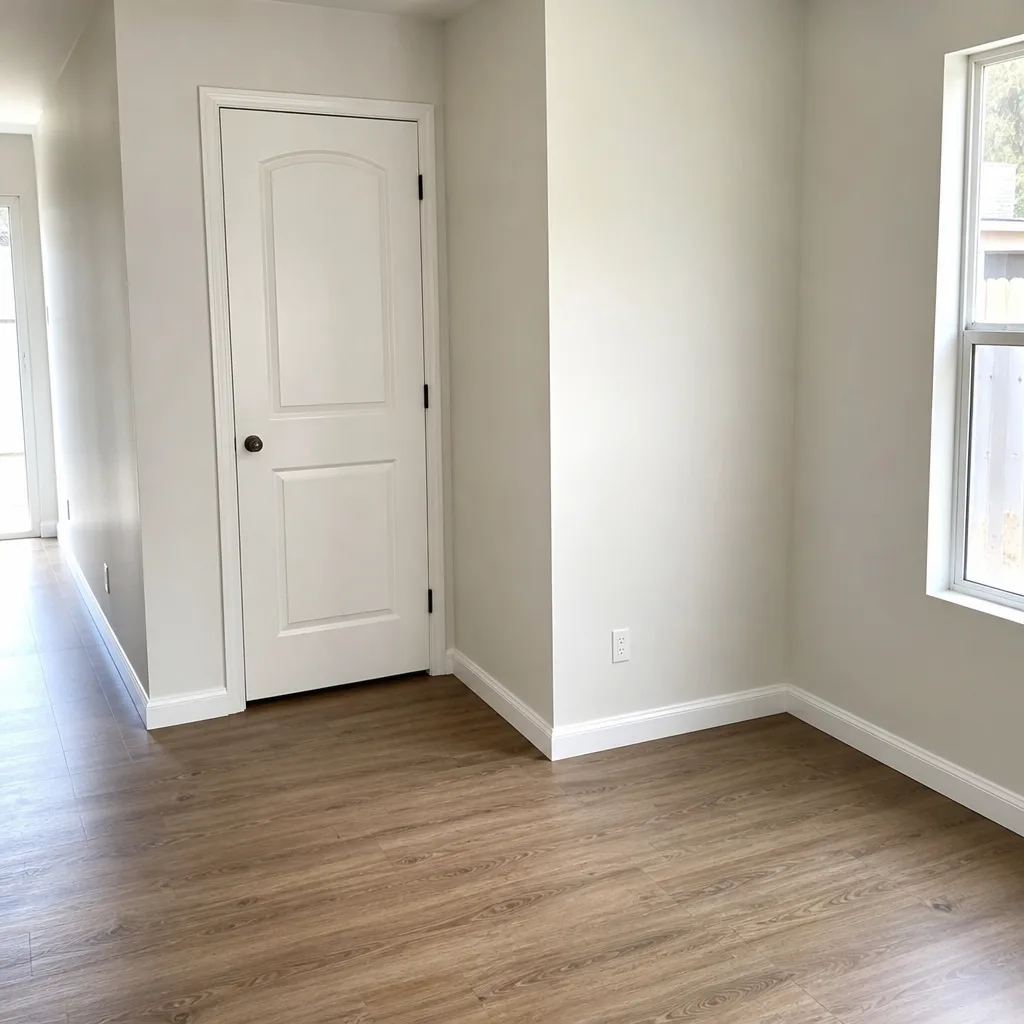 After
Common Water Damage Restoration Problems We See in Grand Terrace Homes
- Slope-shed runoff from Blue Mountain and Reche Canyon. When a storm cell drops rain on the ridgeline, water sheets down the canyon mouths and channels under garage slabs and into stucco bases. Slab-on-grade homes absorb it sideways, so the first visible stain is often ten feet from where the water actually entered.
- Aging galvanized and copper supply lines behind original 1960s and 70s walls. A pinhole leak in an original copper line can soak the inside of a wall cavity for weeks before a paint blister or baseboard stain appears. By then, we’re often looking at category 2 or 3 wicking and antimicrobial treatment, not a simple extraction.
- Santa Ana wind events pushing ash and smoke into wall cavities and HVAC returns. If water damage and smoke intrusion happen in the same week, which happens more than you’d think in fire-prone interface streets, we have to sequence containment and filtration carefully. Skipping that seals smoke odor into the drying structure.
- Stucco and slab assemblies that dry slower than framing. Grand Terrace homes aren’t built like modern platform-framed houses. Stucco holds moisture against the sheathing, and slabs release it slowly. Drying plans here need more days and more monitoring than the same square footage in a newer wood-framed build.
Pricing for Water Damage Restoration in Grand Terrace, CA
Here’s what we actually see on Grand Terrace jobs. Emergency water extraction alone runs $800 to $1,600 for a typical single-room event. Full water mitigation including drying equipment, monitoring, and documentation lands between $1,800 and $4,200. A flooded basement or garage-level space in a hillside home runs $2,200 to $5,800 before reconstruction. If a slab wicking event requires Injectidry cavity drying, add $1,200 to $2,800 to the mitigation scope depending on linear footage. If you have water anywhere it shouldn’t be, call (866) 472-6137 and we’ll give you a straight answer on what you’re facing and what it costs to stop it. Estimates are free.
We Also Serve Cities Near Grand Terrace
Our crews cover the full Inland Empire corridor around Grand Terrace, including Highgrove, Colton, Loma Linda, and Rubidoux. If your property sits right on the boundary where Grand Terrace meets Colton along Barton Road or where the 92313 ZIP brushes against Loma Linda, call us. We know the Grand Terrace streets, but we’re also minutes from the surrounding neighborhoods when the call comes in.
Serving Grand Terrace, CA — Our Local Coverage Area
We’re based in the Grand Terrace area and know this community well. Use the map below to see our service coverage — if you’re nearby, we can almost certainly help.
FAQs About Water Damage Restoration in Grand Terrace
Mold can begin colonizing damp materials within 48 to 72 hours in a Grand Terrace home, and slab-on-grade construction accelerates that timeline because the concrete holds moisture against baseboards and wall cavities longer than an elevated wood-framed floor would. In warm months, the soil under your slab is already warm, so the temperature is right. The practical answer is: call within the first day if you can. We’ve pulled mold prevention scope off many Grand Terrace homes where the homeowner waited a weekend. The earlier we extract and start drying, the less likely you’ll need mold remediation added to the bill. Call (866) 472-6137 when you first see water, not when you first smell the must.
Because your garage slab sits at grade, and in slope-adjacent Grand Terrace lots the ground slopes toward the garage door opening and the slab edge. Rain that sheets off the canyon sides hits your driveway, your garage apron, and then the slab itself, which is porous enough to channel that water underneath and up into the garage walls. The rest of the house may sit a few inches higher on a raised subfloor or a slightly built-up slab edge, which is why the garage floods first. The fix is extraction at the low point, mopping up the wall bases, and running drying on the slab itself, not just the air in the room.
Category 1 is clean water from a supply line or rain intrusion. Category 2 is gray water, meaning it has some contamination, like washing machine discharge, dishwasher overflow, or clean water that has sat long enough to support bacteria. Category 3 is black water, which carries sewage, silt, chemicals, or runoff that has been through soil and organic matter. In Grand Terrace, slope-shed runoff off the canyons often falls into category 2 by default because it picks up silt, ash, and organic decay on its way down. A burst copper supply line behind a wall starts as category 1, but after days of soaking drywall and insulation inside a warm wall cavity, we’re often scoping it as category 2 or worse.
Usually yes, and that’s one place our equipment choice changes the outcome. With Injectidry cavity drying and heavy dehumidification from Dri-Eaz, we can often dry wet walls and slab edges in place without moving every item out of the space. A full pack-out is only necessary when contamination reaches category 3, when the poured concrete or stucco is saturated beyond what in-place drying can handle efficiently, or when we need access to structural framing behind cabinetry. We’ll tell you early in the scope whether pack-out is required or whether we can dry in place and save you the moving and storage costs.
Yes, and it’s one of the differences between working in Grand Terrace and working in a flatter inland city like Colton. During Santa Ana wind events, smoke, ash, and fine particulate are moving through the air even when no fire is directly visible from your street. If we set up drying equipment in a home with open wall cavities or running air movers, we have to install filtration and keep containment negative before the equipment starts moving air. Otherwise, ash gets pulled into the drying structure and the smoke odor gets sealed in. Our IFA affiliation matters here, because indoor air quality during restoration is part of the standard we hold ourselves to.
Water won’t wait, and neither should you. Call Trailblazer Water Damage at (866) 472-6137 for a free estimate in Grand Terrace. Troy Vandenberg and our IICRC-certified team will get moving on extraction, drying, and full documentation your insurance carrier can act on the same day.
Written by Troy Vandenberg, Owner at Trailblazer Water Damage, serving Grand Terrace and the Inland Empire.