How to Choose the Right Damage Restoration Company in Rialto
The short answer: check the CSLB license first, verify IICRC firm certification second, and demand a written scope of work before anything gets signed. In Rialto, the company that knocks on your door first after a flood is often the one you should be most suspicious of, not the one you should hire. If you’d rather skip the homework and talk to someone who’s already been vetted, call (866) 472-6137 and we’ll walk you through what matters for your specific situation.
Why Rialto’s Restoration Market Makes Verification Non-Negotiable
Rialto sits in a strange spot in the Inland Empire restoration economy. We’re close enough to San Bernardino and Fontana that out-of-area crews can canvas neighborhoods within 20 minutes of a major storm event, but far enough east that county-level enforcement is spread thin. The result is a market where unlicensed operators and storm-chasers move in fast, do mediocre work, and disappear before the drywall starts to smell.
The company that shows up fastest after a flood is statistically the least likely to be properly licensed. That’s not a guess; it’s the pattern we’ve watched in this trade for years. In California, hiring an unlicensed contractor for structural drying work over $500 voids your ability to file a complaint with the CSLB if the job goes wrong. That’s a big deal. The Contractors State License Board is the only real enforcement body homeowners have when a restoration job fails. Hand that protection away by signing with an unlicensed crew, and you’re on your own.
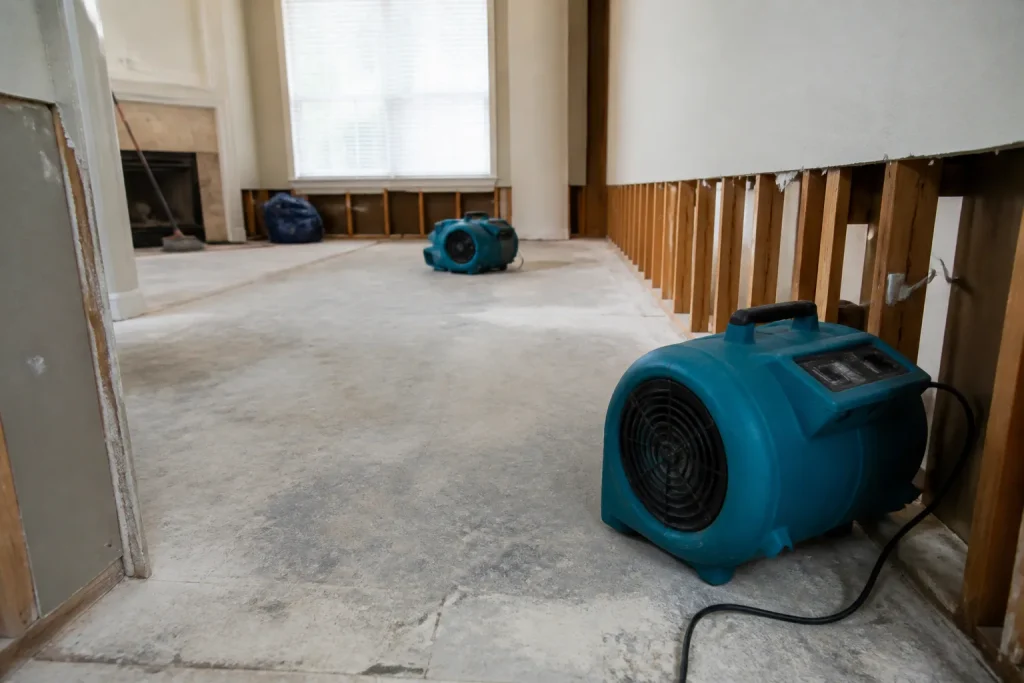
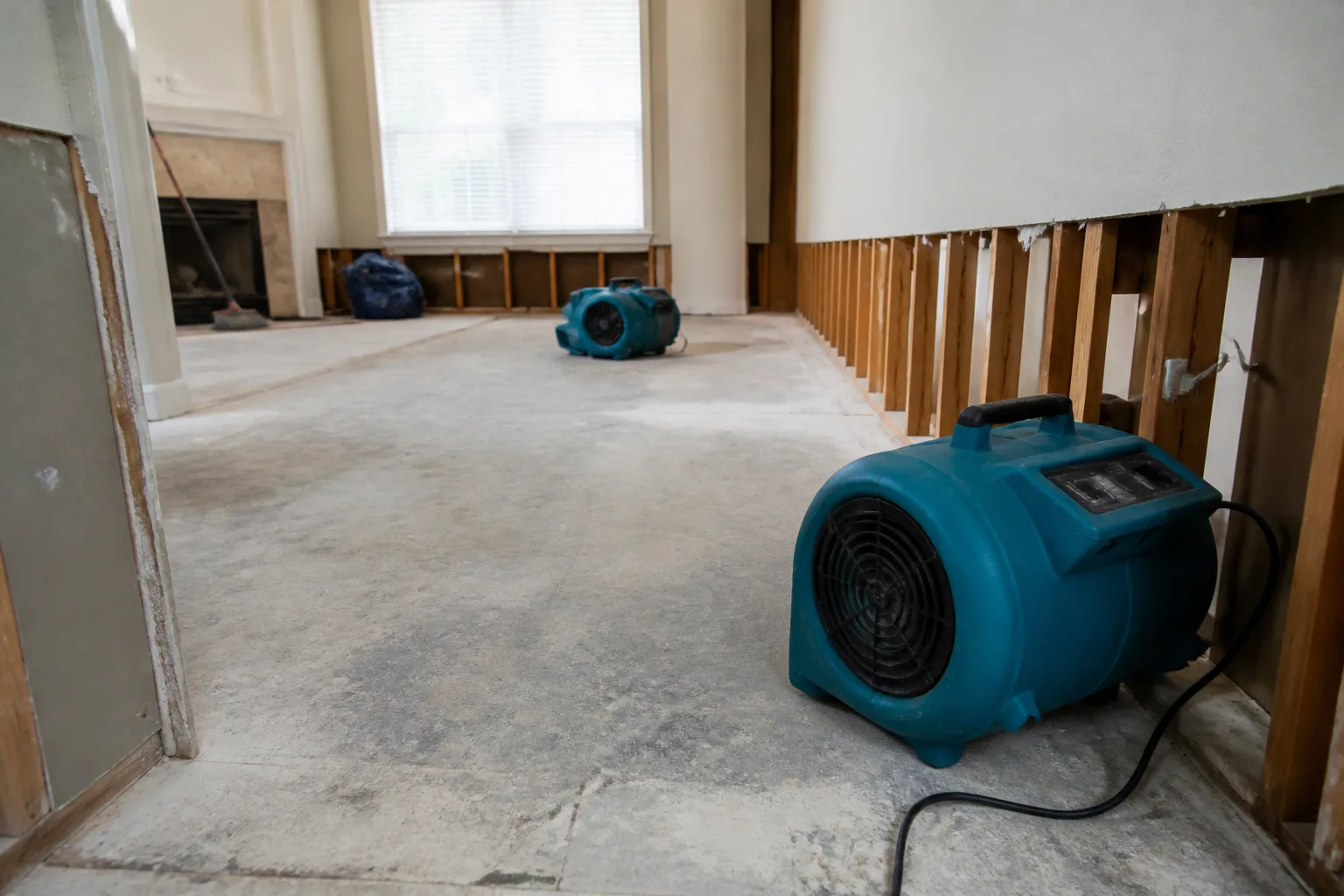
We’ve seen the aftermath in neighborhoods across Rialto, from the older housing stock near Foothill Boulevard to the newer developments north of the 210. The story is always the same: a crew showed up, promised the world, pulled up carpet, set a couple of box fans, and vanished. Two weeks later the homeowner calls us because the baseboards are swelling and there’s a musty odor coming from the wall cavity. By then the mold has moved in and the repair bill has tripled. That’s the expensive way to learn that box fans are not structural drying. A properly equipped team runs commercial dehumidifiers like Dri-Eaz LGR units, hygrometers to measure moisture content, and air movers positioned for cross-flow. We dry it right the first time, because the equipment and the training are actually there.
Step 1: Run the CSLB License Check Before Anyone Walks Through Your Door
This is the single most important step, and it takes 90 seconds. Go to the CSLB website, click license check, and type in the company name or license number. If nothing comes up, end the conversation. No exceptions, no sob stories about how the license is “in process.”
But here’s what most people in Rialto don’t know: the license classification matters as much as the license itself. Water damage work in California falls into two buckets, and the distinction determines what a company is legally allowed to do in your home.
A C-33 Painting and Decorating license is the classic loophole. Some operators hold a C-33 because it’s cheap and fast to get, then sell themselves as “water damage specialists.” A C-33 holder is licensed to paint. That’s it. They are not licensed to cut drywall, replace insulation, or perform structural repairs. If your Rialto home needs anything beyond surface cosmetics, a C-33 license is not sufficient.
What you actually want depends on the scope of work:
- B-General Building license: The broadest classification. A B-license holder can contract for reconstruction, structural repair, and most restoration work. This is the baseline for any company doing tear-outs and rebuilds.
- C-61/D-64 specialty (if applicable): Some restoration companies hold specialized classifications for specific trades. Ask what classification their license carries and whether it covers structural drying and mold remediation work.
Mitigation only, meaning water extraction and drying with no demolition, is a fuzzier area. But here’s the truth: any company doing real restoration work should hold a B license. We carry a B-General license and we’re happy to show you the number before we ever set foot in the house. If a company hesitates when you ask for their license number, that hesitation is your answer.
Step 2: Verify the IICRC Firm Certification, Not Just the Technician’s Patch
Anyone can print a logo. We’ve watched restoration companies slap an IICRC patch on a website without a single certified technician on payroll. The credentialing body does not play around with this, which is why you should verify rather than take a website’s word for it.
The IICRC, the restoration industry’s most recognized credentialing body, certifies both individuals and firms. There’s a difference, and it matters:
- Individual certification means a technician passed training and testing in water damage restoration, applied structural drying, or mold remediation. Good, but one certified tech on a crew of six is not the same as a certified company.
- Firm certification means the company itself met the IICRC’s requirements, including having certified technicians on staff, maintaining professional liability insurance, and agreeing to the IICRC’s code of conduct. This is the bar you want.
In Rialto, where the restoration market is crowded with general contractors who also “do floods,” the distinction separates specialists from opportunists. A handyman with a wet-dry vac is not a restoration contractor. Ask the company directly: “Do you hold an IICRC firm certification, and who is the certified technician assigned to my project?” Write down the names. You can verify individual certifications through the IICRC’s online registry.
Beyond IICRC, look for affiliations with RIA, the Restoration Industry Association, and IFA, which focuses on indoor air quality standards. These aren’t wallpaper. Companies that hold multiple industry affiliations are signaling that they operate at contractor and adjuster level, not as a side hustle. We affiliate with IICRC, RIA, and IFA because each body covers a different slice of the restoration picture: restoration science, industry standards, and indoor air quality. It’s three layers of accountability, and it’s the same standard the national franchises claim, deployed by an independent Rialto team.
Step 3: Understand Insurance Billing Before You Sign Anything
The insurance relationship is where honest homeowners get burned in Rialto, and it’s almost never talked about. Here’s the reality: restoration companies approach insurance in two fundamentally different ways, and each has a built-in incentive you need to understand.
Assignment of Benefits (AOB) companies ask you to sign over your insurance claim rights to them. They bill the carrier directly, you never see the paperwork, and the company has a financial incentive to inflate the scope. More square feet of drywall means more billable line items. Some AOB operations run genuinely inflated claims and leave homeowners holding the difference when the carrier pushes back. You sign an AOB before the assessment is complete, and you’ve handed over control of your claim.
Cash-and-claim companies work differently. They give you a written estimate, you submit it to your carrier, and the adjuster negotiates from there. The risk flips: some cash-and-claim operators knowingly underscore to win the bid, then hit you with change orders halfway through the job when the adjuster has already approved a number. Either model can work, but you need to know which one you’re dealing with and read the work authorization line by line.
Five questions to ask before signing any work authorization in Rialto:
- Do you carry pollution liability insurance? This is non-negotiable for Category 3 water damage like sewage backups. General liability does not cover mold or bacteria claims. If the company doesn’t carry pollution liability, they are not equipped for the job.
- Who holds the IICRC firm certification at your company? Get names. Verify them.
- Do you bill by line item or square foot? Square-foot pricing is standard for mitigation, but you want to see the full scope documented, not a one-page number.
- Will you provide photo documentation to my adjuster? This is non-negotiable. A company that won’t document moisture readings and damage photos is not built for insurance-level documentation.
- What are your drying logs and when will I see them? Real restoration companies record daily moisture readings. It’s the difference between professional-grade structural drying and a guy with fans.
We bill with photo documentation and written scopes from day one because that’s what adjusters in the Inland Empire actually respect. When the carrier sees a daily drying log with specific equipment and moisture numbers, the claim moves. When they see a handwritten invoice that says “dry out,” it’s going to be a fight.
Step 4: Look at the Equipment Manifest, Not the Website Photos
Restoration websites are full of stock photos of crews in branded shirts. None of that tells you anything about a company’s actual capacity. The equipment manifest does.
There’s a meaningful difference between a company that owns commercial Dri-Eaz LGR 3500i dehumidifiers and one that rents residential-grade units from a local tool yard. The Dri-Eaz LGR 3500i pulls roughly 350 pints per day at AHAM conditions. A residential dehumidifier from a hardware store pulls maybe 50 pints, and it’s not designed for continuous operation in a flooded structure. The residential unit will fail mid-job because it was never built for this type of work.
Ask the company what equipment they own and run on a standard water damage job in Rialto. Listen for brands like Dri-Eaz, Phoenix, XPOWER, B-Air, and Injectidry. These are the systems the large national franchises run, and if an independent Rialto team runs the same stack, that’s a good sign. It means they’re competing on competency, not on price.
Injectidry is the one worth asking about specifically. It’s a cavity-drying system that pushes air through wall cavities and under flooring without tearing out the drywall and baseboards. The technique limits demolition, reduces repair costs, and shortens the project timeline. Not every company runs Injectidry because the equipment is expensive and the training is specialized. But if you’ve got water trapped in a wall cavity, and someone wants to cut every wall open to dry it, ask whether they own Injectidry. The company that says yes is saving you a teardown you didn’t need. We pulled one out of a garage over in the Las Colinas area last month where the wall cavity reading was 45% moisture content. Two Injectidry mats later, the reading was back in the single digits, and the drywall never came down. That’s the difference between drying the structure and replacing it.
Step 5: Recognize the Red Flags Specific to the Inland Empire Market
Rialto and the surrounding Inland Empire have their own set of restoration scams, and you should know them before you’re standing in a flooded living room with your phone ringing.
- Post-storm canvassing crews: After a heavy rain event, crews from outside the Inland Empire will walk neighborhoods in Rialto handing out flyers. They are chasing insurance claim volume, not building a reputation. Legitimate local restoration companies don’t need to knock on doors after a storm.
- Verbal-only estimates: Any company that will not put a scope and a number in writing before starting work is planning to bill you for something else later. In California, written estimates over $500 are a legal requirement for home improvement work. If they won’t write it down, they’re not compliant, and they’re probably not licensed.
- Pressure to sign an AOB before the assessment is complete: This is the biggest red flag in the Inland Empire market right now. Companies that push AOB forms before they’ve even photographed the damage are selling claims, not restoration. Never sign an AOB under pressure.
- Unmarked trucks or out-of-state plates: Legitimate restoration companies brand their vehicles. A white van with no lettering is often a sign of an unmarked, uninsured operator.
One real-world example from our own backyard: we got called to a home near Rialto Avenue where a previous company had “dried” a Category 3 sewage backup with rented carpet fans and no containment. No PPE, no negative air, no antimicrobial application. The homeowner’s insurance company looked at the photos and denied the claim because the mitigation was not performed to industry standard. That homeowner paid twice: once for the bad mitigation, and again for the proper remediation. If the original company had been held to a written scope, with equipment and certifications documented, the claim would have gone differently.
When to Call a Pro
If you’re reading this while a leak is active, or you’ve already pulled back a carpet and found standing water, or there’s a musty odor in the wall that won’t go away, you’re past the point where this guide can help you make a leisurely decision. The window for mitigating water damage in Rialto’s climate is short. We run summers in the triple digits, and warm air plus moisture means mold growth starts within 24 to 48 hours. The faster the structure is dried to standard, the smaller the repair bill.
Related services in Rialto: Water Damage Restoration in Rialto, Mold Remediation in Rialto, and Fire Damage Restoration in Rialto. Each handles a different emergency, but the verification logic is the same: check the license, verify the certification, demand the written scope.
The Bottom Line
Choosing a damage restoration company in Rialto comes down to five verification steps: run the CSLB license check and know what classification you’re looking at, verify IICRC firm certification with names, understand how the company bills insurance, inspect the equipment manifest for commercial-grade tools, and recognize the Inland Empire’s specific red flags before signing anything.
This industry has operators who will take advantage of you when you’re at your most stressed. It also has serious, credentialed crews doing careful, documented work every day in Rialto. The difference is verifiable, not vibes. If you’re in Rialto and need help, Trailblazer Water Damage home offers free estimates. Call (866) 472-6137 and we’ll walk you through what matters for your situation, from extraction to clearance.
Frequently Asked Questions
A B-General Building license is the classification you want for most restoration work including structural drying, tear-outs, and reconstruction in Rialto. Some companies hold a C-33 Painting and Decorating license, which is not sufficient for restoration work beyond surface cosmetics. Ask for the specific license number and classify it on the CSLB website before hiring.
Most homeowners policies cover sudden and accidental water damage like a burst pipe or appliance failure, but not gradual leaks or neglect. Restoration companies that handle insurance work should provide photo documentation and moisture readings to your adjuster. Ask the company how they bill: some work on assignment of benefits and bill the carrier directly, while others give you a written estimate to submit yourself. Call (866) 472-6137 for help understanding your specific claim.
Ask for the equipment manifest: the dehumidifier models, air mover brands, and whether they own Injectidry cavity-drying systems. Companies that own Dri-Eaz LGR commercial dehumidifiers and Phoenix air movers are running professional-grade equipment. Companies that rent residential units from a tool yard are not equipped for structural drying.
Signing a work authorization or assignment of benefits form before reading it under pressure from a door-knocking crew or storm-chaser. The second biggest mistake is hiring an unlicensed operator because they showed up first. The CSLB license check, IICRC firm certification verification, and written scope of work take a few minutes and protect you from the most common restoration scams in the Inland Empire.
Written by the team at Trailblazer Water Damage, serving Rialto since 2013.
Need Damage Restoration Help?
Call Trailblazer Water Damage — licensed & insured, here with fast after-hours help in Rialto.
(866) 472-6137